 Bandcamp
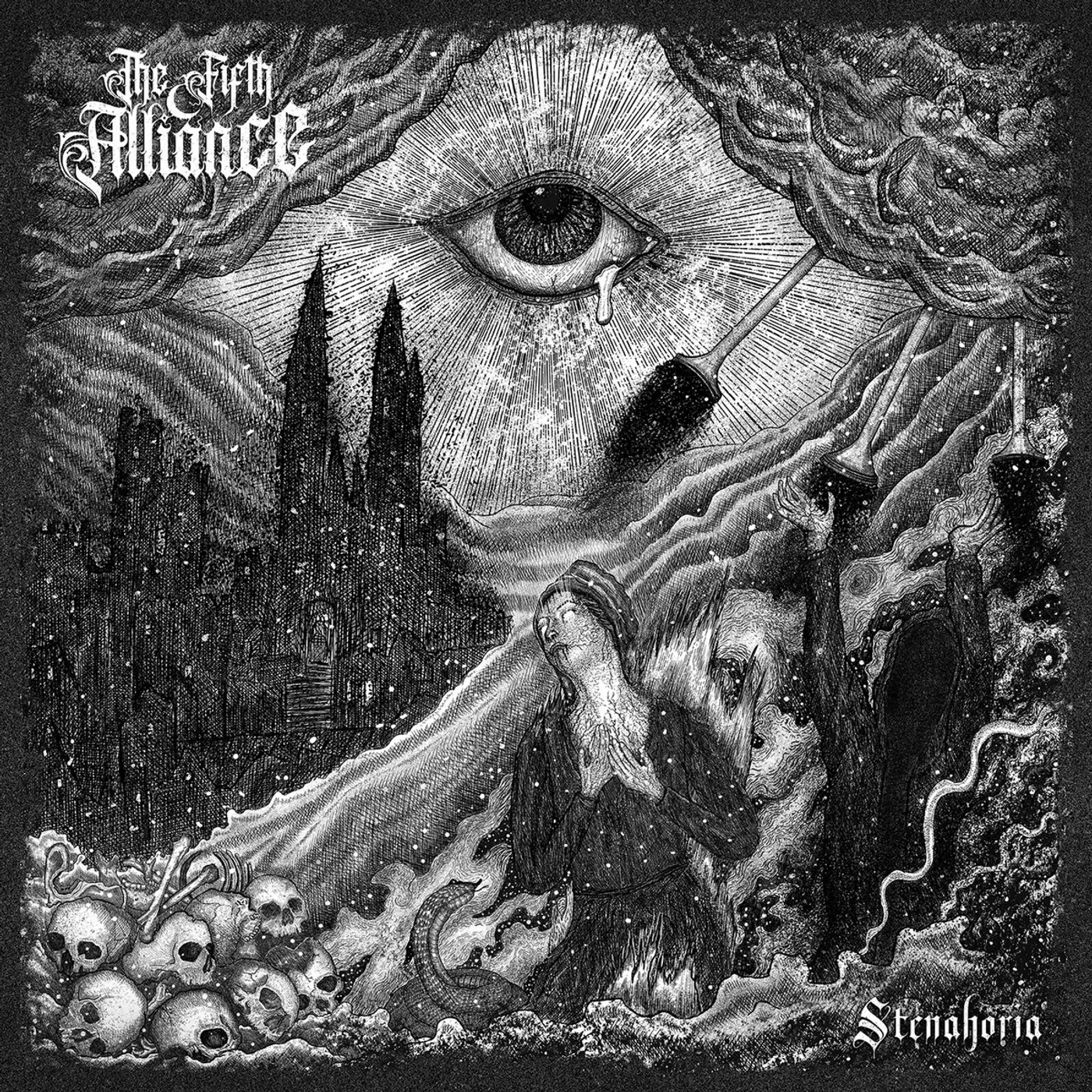
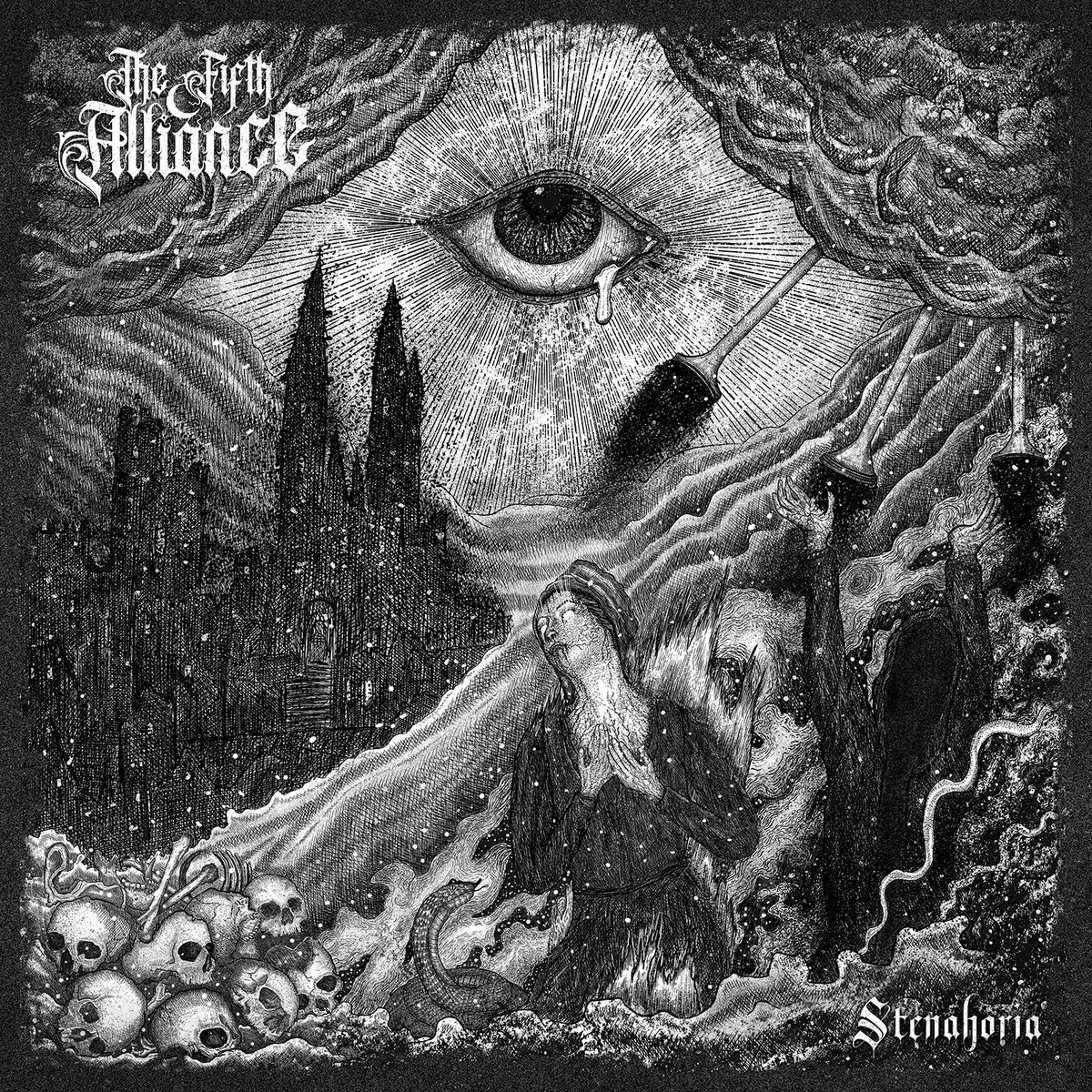
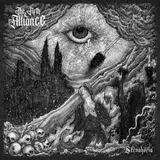
 The Greek word in the title is the kind of word reviews struggle to translate cleanly. Stenahoria (στενοχωρία) means something between sadness, distress and a kind of suffocating constriction, a feeling without clear edges. Choosing it for a blackened-doom record about psychological erosion is the right call. The Fifth Alliance, the Breda-based Dutch band, return with their fourth full-length on Tartarus Records, with two new members at the centre: vocalist Natalya Thelen, whose range from melodic cleans through to harsh extremity is the structural axis the writing is hung on, and drummer Peter Scheffer behind the kit. Five tracks averaging seven and a half minutes, recorded for atmospheric weight and pushed for modern loudness, with the contrast between the two as the central production drama.
The opening and the pivot
“Phoenix” sets out the album’s vocabulary in eight minutes: tuned-down rhythm guitars with thick saturation, a bass that anchors low without taking independent contour, drums where the kick has a triggered click-attack and the cymbals lean into harshness once the master pushes, and the new vocal axis switching between aggressive screams and the cleaner registers the previous record largely lacked. The mastering is hot to the edge of clipping, which gives the wall the immediate weight a record this concept-heavy needs, but the cost shows quickly in the densest passages where dynamic motion gets flattened and the kick loses contour to the low-mid stacking around 200 to 400 Hz.
“Benandanti” (the Friulian dream-warriors of medieval Italian folklore, fighting evil in their sleep) and the centerpiece “The Fool On The Hill” arrive as the album’s strongest stretch. Benandanti runs Natalya’s clean melodic singing against aggressive screams in the verses, and the production for once balances the wall against the breathing room the contrast needs. The Fool On The Hill (the band’s own composition, not the Beatles song that shares the title) carries the album’s thematic centre: solitude turned defiant, blast beats pushing hardest under the catharsis of the chorus, and the chestiness of Natalya’s clean register running seamlessly into the scream that follows. It is the cut where the new line-up’s writing logic crystallises.
“Battle of Barnet” and the closer “Jakob” push the most spatial, wettest reverb treatment on the album, with the drums sitting deep in the room and the master pumping audibly in the densest sections. The atmospheric strengths are real, but the trade-off is consistent: every time the band reach for the heaviest passage, the master’s loudness ceiling cuts off the dynamic argument the writing keeps building toward. The clean-passage interludes (the long restrained sections of “Benandanti,” the intro to “Jakob”) are where the project’s compositional ambition is most clearly audible.
The recurring production constraint across Stenahoria is a master pushed to the edge of digital clipping that delivers immediate wall weight but flattens the dynamic motion the songwriting keeps reaching for. Mix philosophy is dense, mid-focused and atmospheric-leaning: tuned-down rhythm guitars carry highly saturated thick textures that drone into low-mid mud at the densest passages and lose string definition at speed; bass functions as low-end foundation with limited independent contour and tends to merge with the synthetic low end on heavier tracks; drums vary from triggered click-attack kick with sterile snare (Phoenix) toward more roomy organic treatment with massive hall sustain (Battle of Barnet, Jakob) where the kick loses definition entirely in the densest passages. Cymbals tend toward harsh sibilance when the limiter pushes hard. Natalya’s vocals span clean melodic, harsh shouts, screams, and guttural registers; her clean melodic singing is the album’s most distinctive new element and is given the breathing room it needs on the calmer tracks (“Benandanti,” the openings of “Jakob”), but gets pushed back into the wall on the densest sections. Low-mid frequency stacking around 200 to 400 Hz is the consistent weakness on the dense passages; the recurring strength is the dynamic-contrast structural device when the master is given even a small amount of room.
Standout tracks: The Fool On The Hill for the album’s clearest centre of gravity, where the new line-up’s writing logic crystallises. Benandanti for the cleanest version of the harsh-against-clean axis the new vocalist enables. Phoenix for the album’s opening statement of intent.
The Fifth Alliance built a credible Dutch position in the blackened-doom landscape across their previous records, and Stenahoria takes the genuine compositional risk of pivoting around two new line-up members. The bones of a much better record are here in the clean-to-heavy contrasts and the structural ambition of “The Fool On The Hill”; what holds it at three is the master, where the loudness war eats the dynamic argument the writing keeps trying to make. The next record is the one to watch for whether the band keep pushing for that wall or back off the ceiling and let Natalya Thelen’s range do the work it is clearly capable of.