 Bandcamp
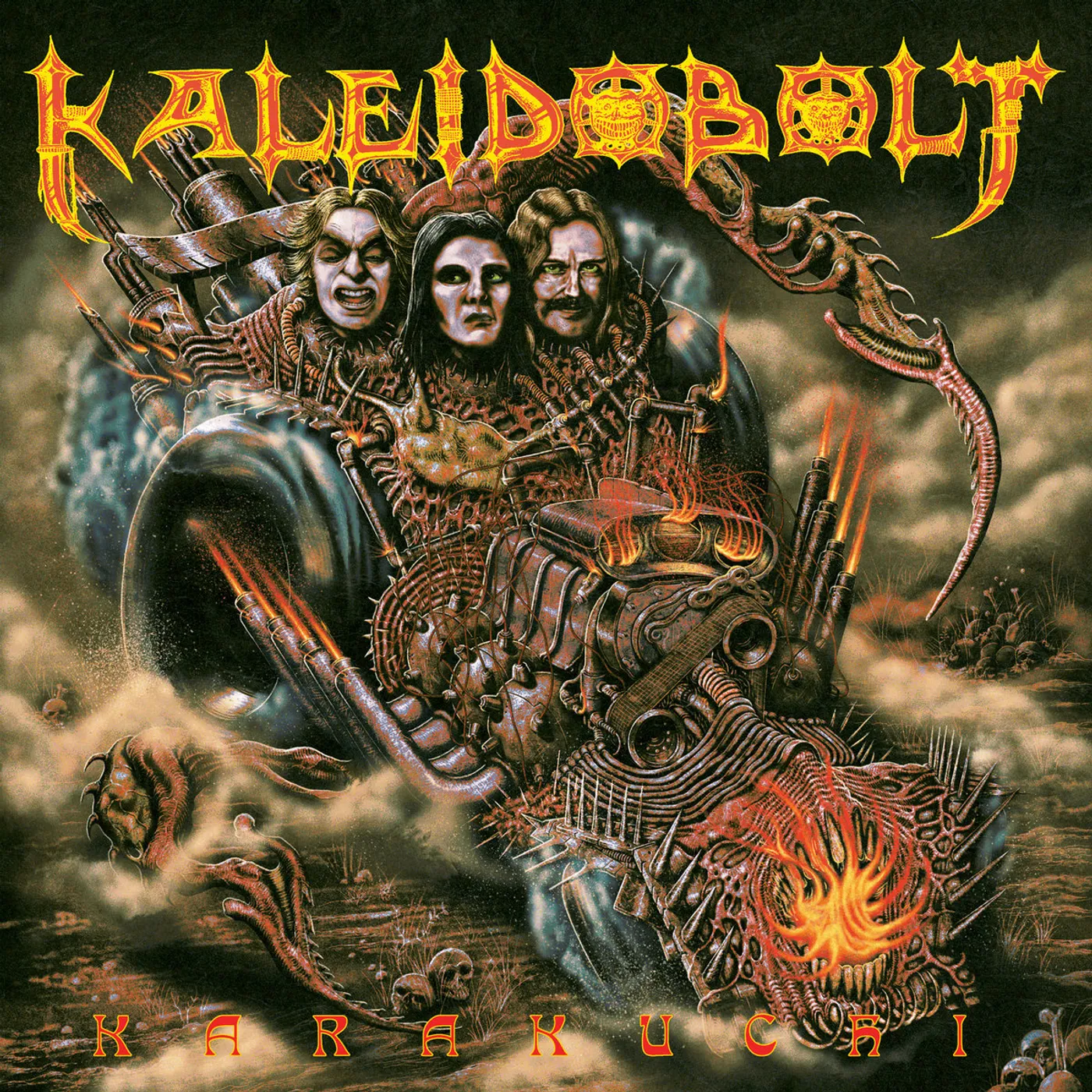
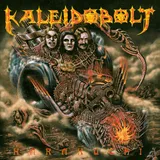
 The producer credit on Karakuchi is Niko Lehdontie, who plays guitar in Oranssi Pazuzu, and the production-personnel choice is the lineage anchor for this record. Kaleidobolt have spent four prior LPs working a particular kind of Finnish prog-psych-noise hybrid that runs through the Tortoise / Battles / Don Caballero math-rock lineage on one side and the Oranssi Pazuzu / Hexvessel / Atomikylä continental psych underground on the other. Karakuchi, their fifth full-length on Svart Records, is the album where the band have decided to strip the studio approach back and let the room hear what the trio actually do live.
The Helsinki three-piece is Sampo Kääriäinen on guitars and vocals, Marco Menestrina on bass and backing vocals, Mårten Gustafsson on drums. The compositional move on Karakuchi is to keep the prog architecture (odd time signatures, polyrhythmic interplay, sudden mood shifts) but to record it with greater sparsity, letting individual instruments register rather than stacking them into a dense wall. The trade-off is that the album reads less hypnotically than This One Simple Trick, the band’s 2022 predecessor, but more conversationally; you can hear the three musicians playing against each other rather than the dense arrangement they produce together.
“Tinkerbell” opens the record at five and a half minutes and uses its length to establish the album’s vocabulary: a clean-toned guitar line that interlocks with bass and drums in proper math-rock fashion, vocals that move between melodic and shouted registers without losing intelligibility, dynamic shifts that happen at the song structure level rather than within sustained passages. “Lights On, Nobody Home” runs almost five minutes of more sustained energy. “Coping” stretches to five and forty-two and develops the album’s most ambitious harmonic territory. “Astro Boy/Ochanomizu” pulls in the Japanese-pop reference points the band’s title acknowledges (karakuchi is a Japanese term that the band cite from Asahi Super Dry beer’s slogan) and lets the six-minute runtime work the contrast between manga-bright melodies and noise-rock weight. “Friends of Fire” pushes into shorter, more direct territory at three and twenty-two. “Ochanomizu Returns” closes the record at one minute and forty-four seconds as a coda that reframes the earlier track as a recurring motif.
The Lehdontie production approach matches the Svart catalogue’s standard for prog-psych ambition delivered with proper transparency. The mix lets the cleaner sections breathe and the noise-rock walls have enough air to read as compositional decisions rather than as production accidents. The mastering loudness sits at modern levels but with enough restraint to let the dynamic argument work across the songs. The Svart Records pressing context places the album in the company of the label’s broader Finnish prog-psych roster, and Karakuchi fits the catalogue cleanly.
For a fifth full-length from a Helsinki power trio that has spent twelve years working the prog-psych-noise intersection, Karakuchi is the kind of record that confirms a band’s mature sound while still pushing on its edges. The stripped-back approach (compared to the denser This One Simple Trick) reads as a deliberate compositional decision rather than as a budget choice, and the Niko Lehdontie production keeps the trio’s interplay legible across the nine tracks. Recommended without reservation, especially if you appreciate Finnish prog-psych that holds the math-rock and noise-rock lineages in active conversation rather than picking a side.
The mix is modern, transparent and committed to the trio’s live-in-the-studio approach across the nine tracks. Guitars sit at moderate saturation with retained string definition through the clean and dirty passages alike; bass holds its own articulate voice in the math-rock interplay rather than fusing into low-end support. Drums are recorded with natural room ambience and proper transient definition on kick and snare; cymbals retain enough air for the busiest sections. Vocals move between melodic and shouted registers and remain intelligible across the album. Mastering loudness sits at contemporary levels with enough dynamic restraint to let the cleaner passages register as the calm passages they’re meant to be; the noise-rock walls have enough internal air to read as compositional decisions rather than as production excesses. The stripped-back approach (compared to the band’s previous denser productions) is consistent and intentional across the running order.
Standout tracks: “Astro Boy/Ochanomizu” for the six-minute piece that develops the album’s Japanese-pop reference points against noise-rock weight. “Coping” for the five-and-three-quarter-minute track that pushes into the most ambitious harmonic territory. “Tinkerbell” for the opener that establishes the album’s stripped-back vocabulary.
Karakuchi is the kind of fifth full-length where a band has settled into their voice and decided to let the room hear it. Niko Lehdontie’s production keeps the Helsinki trio’s interplay clean across nine tracks, and the band’s commitment to the math-rock-and-noise-rock-in-conversation approach is what makes the record more than another Finnish prog-psych entry. Recommended without reservation, especially if you appreciate prog-psych that takes the production decisions seriously without making them the project’s entire story.