The Swedish word idag means “today.” It is a small word for a large idea, and it turns out to be exactly the right one. Witchcraft’s seventh album isn’t a nostalgia trip, even if it sounds like one at times. It is an accounting, of where Magnus Pelander started, where the band has wandered, and who they are right now, in this moment, on this record.
The title track opens the album at just over eight minutes, and it is the best possible way to begin. The riff arrives slowly, Pelander’s guitar layered with synth from Björn Ekholm Eriksson, the whole thing settling into a low, unhurried doom that sounds less like influence and more like inevitability. Pär Hjulström’s drums push the tempo without rushing it, and Philip Pilossian’s bass sits forward enough in the mix to feel like a lead voice rather than a foundation. By the time the song finds its centre groove, it has made its point clearly: this is the heaviest Witchcraft have sounded in their entire career, and they wear it without ceremony.
Side A then spends itself dismantling what the title track built. “Drömmar av is” is a slow, distorted nod; “Drömmen om död och förruttnelse” sounds like it was recorded live, the room bleeding into the signal in a way that feels intentional rather than accidental. “Om du vill” strips things down further, electric guitar and Pelander’s voice, no drums, no bass, and he is a good enough singer to make the nakedness work without effort. “Gläntan” closes the side in just over a minute of solitary acoustic guitar, wistful and slightly strange, like a passage from something longer that chose to end early.
Side B resets with “Burning Cross,” and the reset is welcome. There is a garage swing to the song, a blues riff slowed down and roughed up, and it lands like a reminder that Witchcraft can still do this, the swinging, dark, early-career thing, without it feeling like a concession. “Irreligious Flamboyant Flame” follows in the same spirit, looser and slightly boogie-adjacent, a song that would have fit comfortably on Firewood without sounding out of place here.
“Christmas” is the record’s emotional low point, and that is a compliment. Six minutes of acoustic guitar and a lyric that circles around a family estrangement, I was never sure that you love me at all, delivered quietly, in English, against sparse strumming, it is the kind of song that takes courage to include on a heavy record. “Spirit” follows immediately and goes the other direction: six and a half minutes of slow, grinding riff, Pelander’s vocals pushed to their most sorrowful, the tempo holding steady and deliberate across the full length. The album closes with “Om du vill (Slight Return),” forty-four seconds of acoustic guitar that mirrors the earlier song and brings the whole thing home gently, without fanfare.
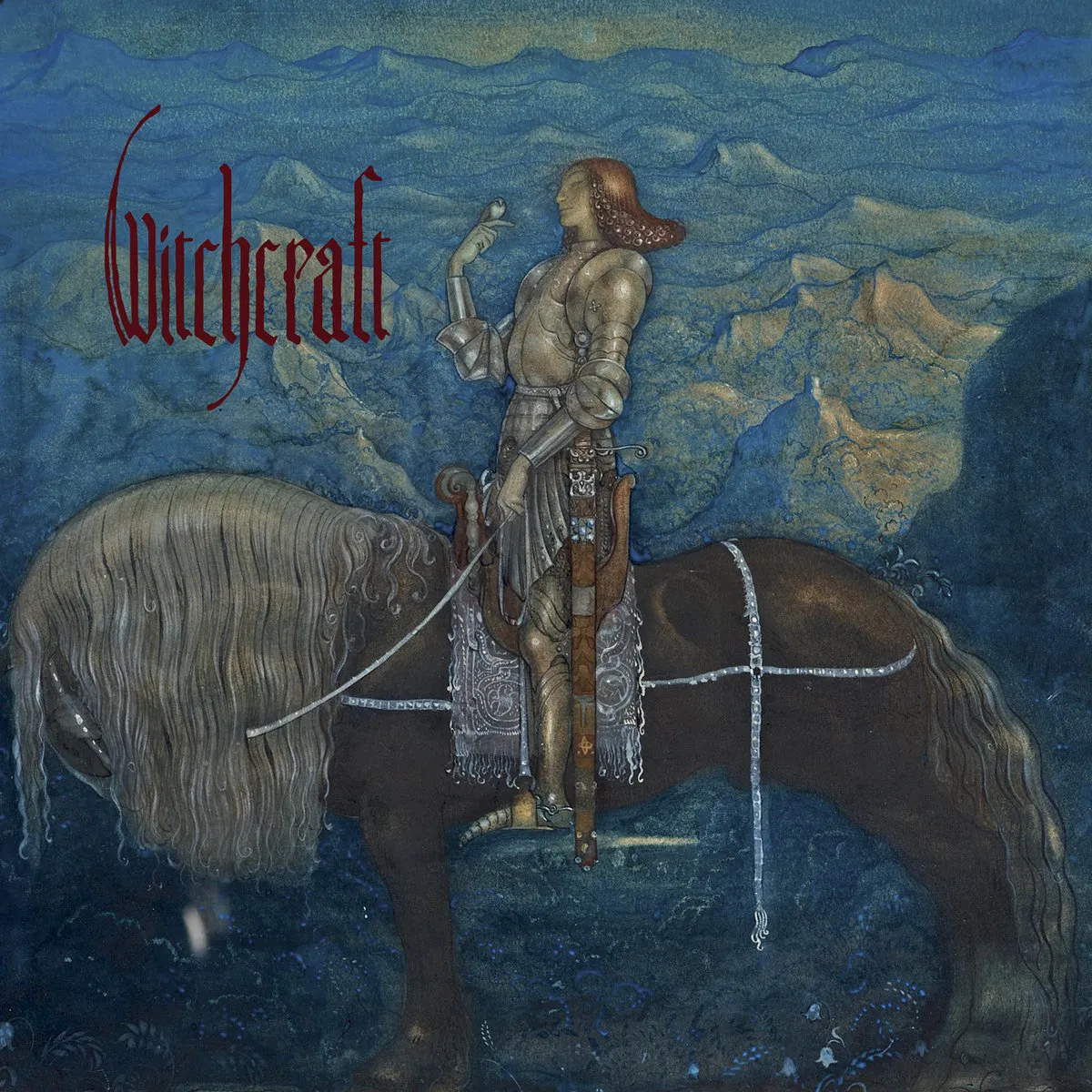
The sequencing is deliberate enough that the album functions as something close to a suite, heavy, then fractured, then heavy again, then quiet. That balance is its greatest achievement. Witchcraft have spent 25 years building a catalog that pulls in multiple directions at once, and Idag is the first record that holds all of those directions in the same frame without forcing them to reconcile. The artwork, illustrations by the Swedish painter John Bauer, long dead, and long associated with a particular strain of Nordic melancholy, suits it exactly.
Standout tracks: Idag, Burning Cross, Christmas, Spirit


