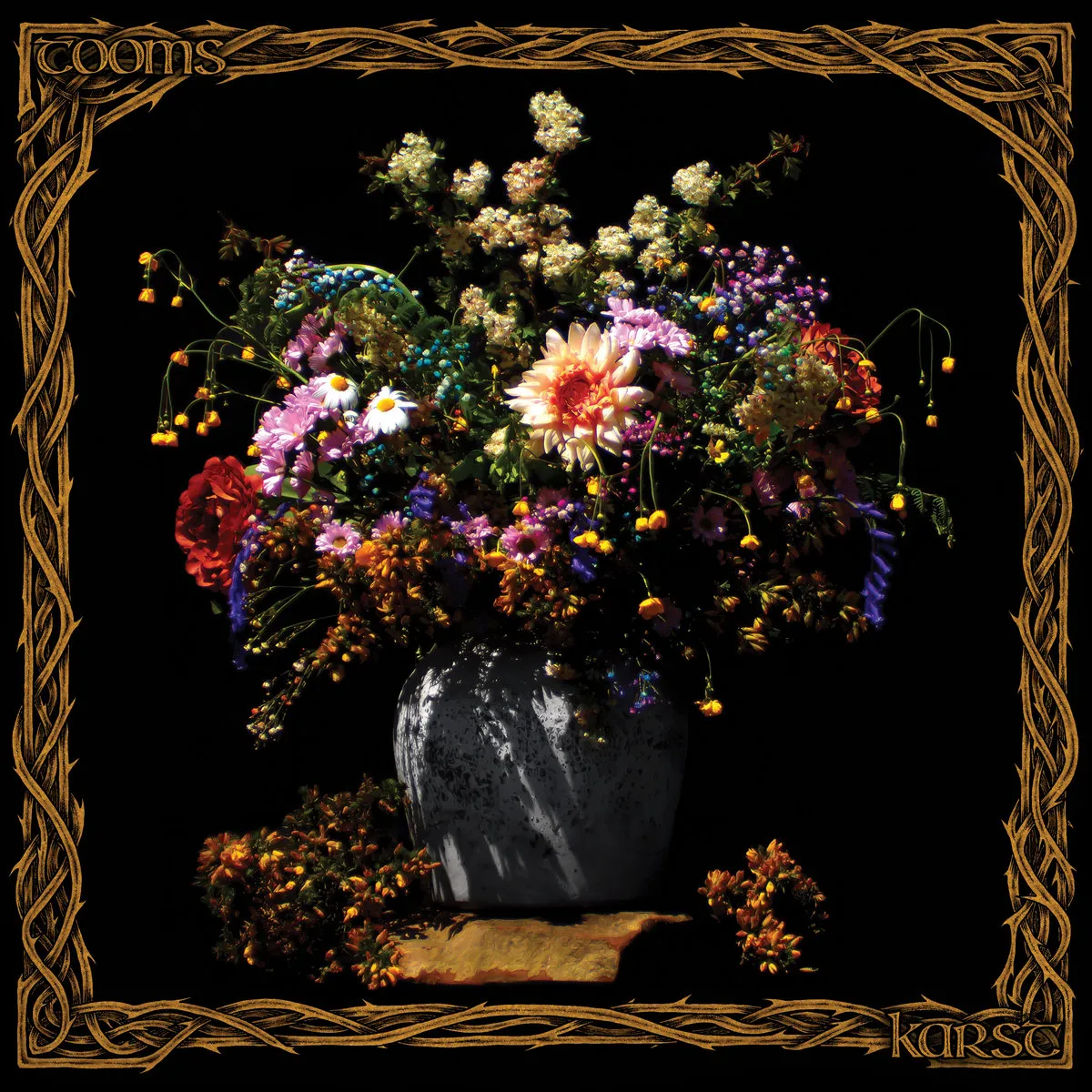
 Bandcamp
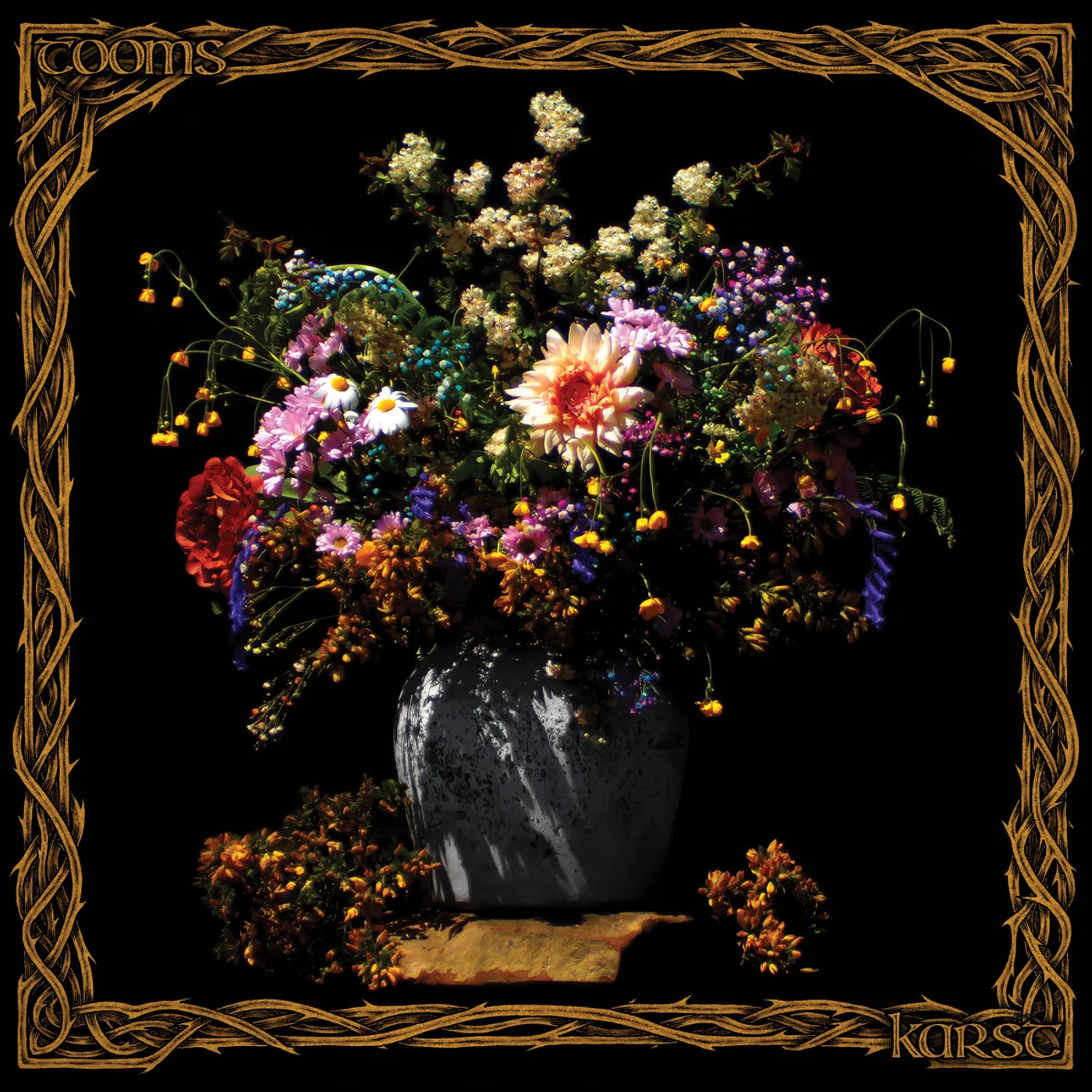
 The eighty seconds of “Blue Angel” sit just before the album’s midpoint. An acoustic guitar, intimate and dry, plays over a sub-bass swell that breathes out for so long it stops sounding like a bass and starts sounding like the room. Then a few distorted chord-stabs detune the harmony into doom, then it ends. No drums. No vocals. No structure to speak of. It is the single best minute on Karst, the new full-length from the Limerick trio Tooms (Anto Donnellan on bass, Kieran Grace on drums, Alex Hölzinger on guitars and vocals), and it tells you what the rest of the album is reaching for: not the wall, but the contrast that lets the wall mean something.
Tooms describe themselves as “metallic sludge from Éire’s west,” and the surface of Karst fits that. Nine tracks across forty-eight minutes, mixed by Matt Bayles (the producer who shaped Mastodon’s Leviathan, Isis’s Oceanic, Botch’s We Are the Romans) and mastered by Chris Fielding (Conan, Eyehategod, Electric Wizard). With that team it would have been easy to deliver a clean, modern, separation-forward sludge record. Tooms went the other way. The production is raw, mid-heavy, often cave-like, with the rhythm guitars and the distorted bass merging into a single dirty texture and the vocals frequently sitting back in the room reverb rather than positioned out front. Across the heavier tracks (“Blood Rust of Cudgel and Quill,” “Drinkvlt,” the closer “Physics Beyond The Standard Model”), this commitment to raw mid-density is where the trade-off shows: the wall is genuine but the low-mid stacking around 250 Hz buries the string definition the writing is doing.
Where the record opens up is where it finds its real argument. “Tower of Silence” runs a wide-reverb intro into a compressed main body, and the dynamic gap between the two is what makes the heavy hit. “Whitehorn,” at eight minutes, is the cut where the live-room aesthetic works best: the snare carries a natural wooden crack, the cymbals stay dark instead of harsh, the kick rounds out the low end without any artificial click-attack, and Hölzinger’s guttural vocals sit in the middle of the mix rather than on top of it. “Two Silver Pieces” pulls the same trick at a shorter scale, a cavernous intro that builds into a dense climax with the bass holding contour cleanly during the quiet sections. And the closer, “Physics Beyond The Standard Model,” runs eleven minutes through every register the album has established, with the vocal sunk deepest into the room reverb of any track on the record.
The honest reservation is that “Karst” is committed enough to its raw, mid-heavy aesthetic that the heaviest passages flatten into a single dense layer. That commitment is the point of the record, and trad-sludge listeners will likely call it a feature rather than a bug. The strongest argument for that reading is exactly that the album lets the eighty seconds of “Blue Angel” exist, gives them the cleanest production on the whole album, and trusts the listener to hear the silence as load-bearing.
The defining production decision across Karst is a raw, mid-heavy live-room aesthetic that prioritises atmosphere and density over frequency separation. The trade-off is consistent: heavily saturated, fuzz-leaning rhythm guitars merge with a distorted, dominant bass into a single dirty texture, with string definition lost at speed and low-mid frequency stacking around 250 to 400 Hz the recurring weakness on the densest tracks. Drums vary between live-room treatment (Whitehorn carries the cleanest version, with natural wooden snare crack, rounded acoustic kick punch, and dark non-sibilant cymbals) and more compressed industrial-leaning treatment (Lowlander, Drinkvlt) where the kick clicks through with attack but the snare flattens. Vocals (guttural, screamed, harsh registers from Hölzinger) sit consistently sunk into the room reverb rather than positioned out front, which serves the cavernous atmosphere at the cost of text intelligibility. The album’s strongest production statements are the dynamic-contrast cuts where the mastering is allowed to relax: “Blue Angel” (the eighty-second acoustic interlude, clean string definition, generous sub-bass swell, no compression) is the album’s clearest single moment of production restraint; “Two Silver Pieces” (cavernous intro into dense climax, bass holding contour cleanly in the quiet sections); “Whitehorn” (the most balanced live-room mix, organic untriggered drum sound). “A Release of Tension” runs the most extreme contrast on the record, an intimate acoustic guitar-and-bass intro abruptly cutting to a digitally over-saturated synthetic wall-of-noise in its second half.
Standout tracks: Blue Angel for the eighty-second interlude that carries more weight than tracks four times its length. Whitehorn for the cleanest live-room production on the album. Physics Beyond The Standard Model for the eleven-minute closer that runs the project’s full register.
There are sludge records that want the wall to be the point, and there are sludge records that use the wall as the absence the quiet passages give shape to. Karst is mostly the first kind but is at its strongest when it lets itself be the second. The thing to take away is that the Limerick trio kept eighty unaccompanied seconds of acoustic guitar and sub-bass swell on a forty-eight-minute album mixed by Matt Bayles, and they put it where the heaviest track has to follow. Whatever else this band do next, that decision earns them the patience to see where it goes.