 Bandcamp
 Georges Perec’s Un homme qui dort is a book about a student who stops. He does not break down, he simply withdraws, and the whole thing is written in the second person: the narrator says you did this, you felt nothing, you are learning to be indifferent. The 1974 film Perec made from it with Bernard Queysanne keeps that device and gives the voice to Ludmila Mikaël, so for seventy minutes a woman calmly tells a silent young man what he is becoming.
Shalor Howell built this album as an unofficial soundtrack to that film, at home, while his main band Canopy were on pause. Every sample on the record comes from it. And the album is called You’re Not Yourself Lately, which is the same grammatical move: somebody addressing you about a change you have not noticed.
The voice is the structure
All seven tracks are framed by that voice. Not scattered through them, framed: she speaks at the start, or at the end, or both, and between those bookends the music plays alone. It is the only voice on the record. Nobody sings, nobody screams, and the one human presence is a woman from 1974 saying you to a man who is not listening.
That decision does more work than any vocalist would have. “Fleeting Moment” is close to four minutes of a single clean guitar figure repeating with nothing underneath it before she arrives, and the arrival is the event. “Unsaved” runs the opposite way: six minutes of the heaviest material here, then a sudden drop into a bare outro where she gets the last word. The album never lets the two things occupy the same space.
What it sounds like
Dark, consistently, and warmer than almost anything in this genre. Across all seven tracks less than a tenth of the energy reaches above five kilohertz, which for post-metal is unusually little, and the tonal centre barely moves from first track to last. There is no brightness here to relieve anything, by design.
What does move is the distance between quiet and loud, and it moves a lot. The opener “Distant Sirens Wailing” is the shortest piece on the record and the widest, over twenty decibels between its softest and loudest passages, which is a lot of album to compress into two and a half minutes. Howell plays guitars, slide and bass, with Matt Hendler on drums and Ethan Fogus adding pedal steel and violin, and Greg Hendler engineered and mastered it at Meadowlark without flattening any of that.
The weakest stretch is the middle. “How Quickly The Ground Falls Out Beneath You” holds the narrowest range on the album and sits slightly brighter than its neighbours, and it is the one track where the formula, quiet frame then crushing body, reads as a formula rather than a decision.
The sleeve
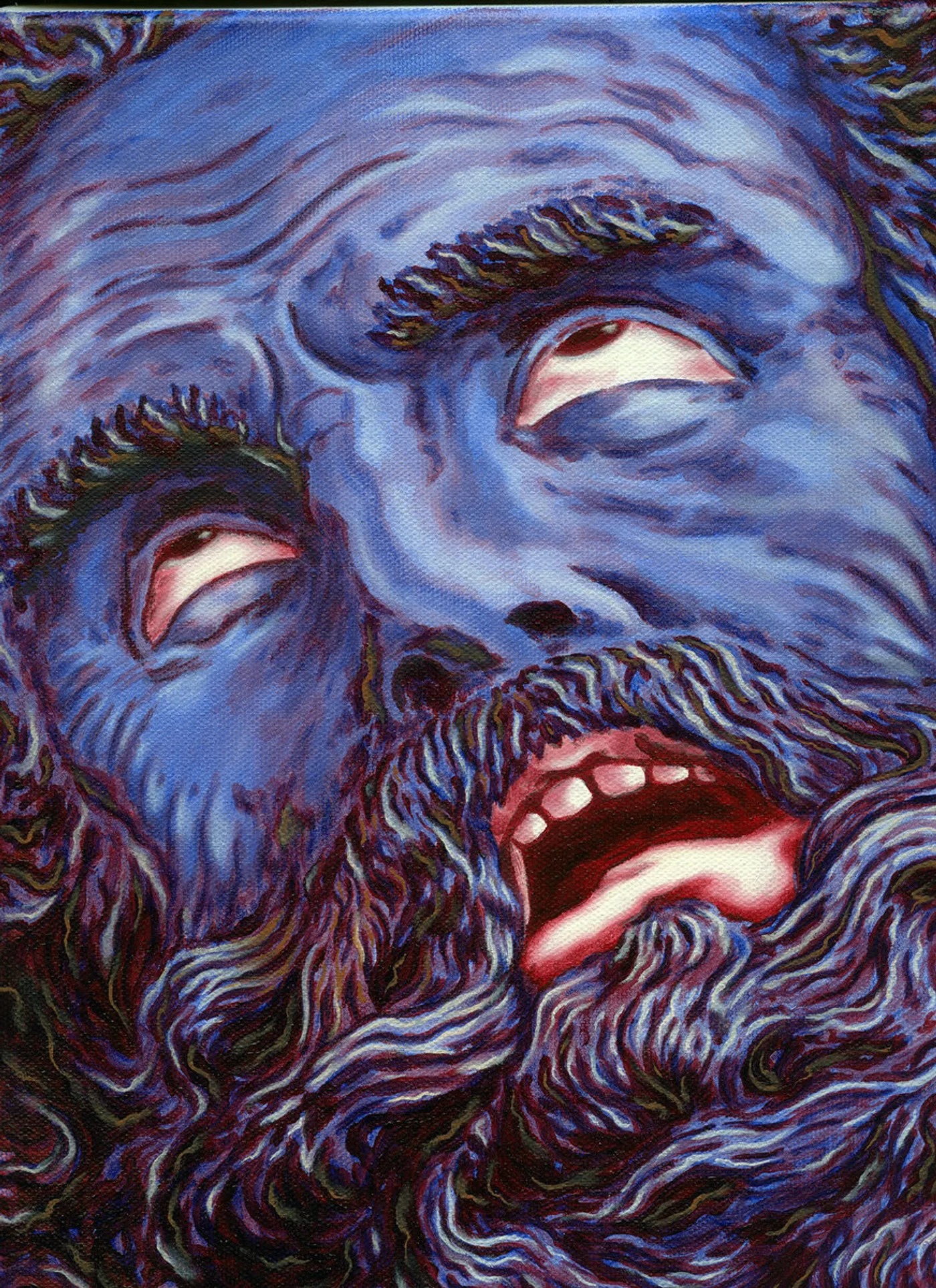
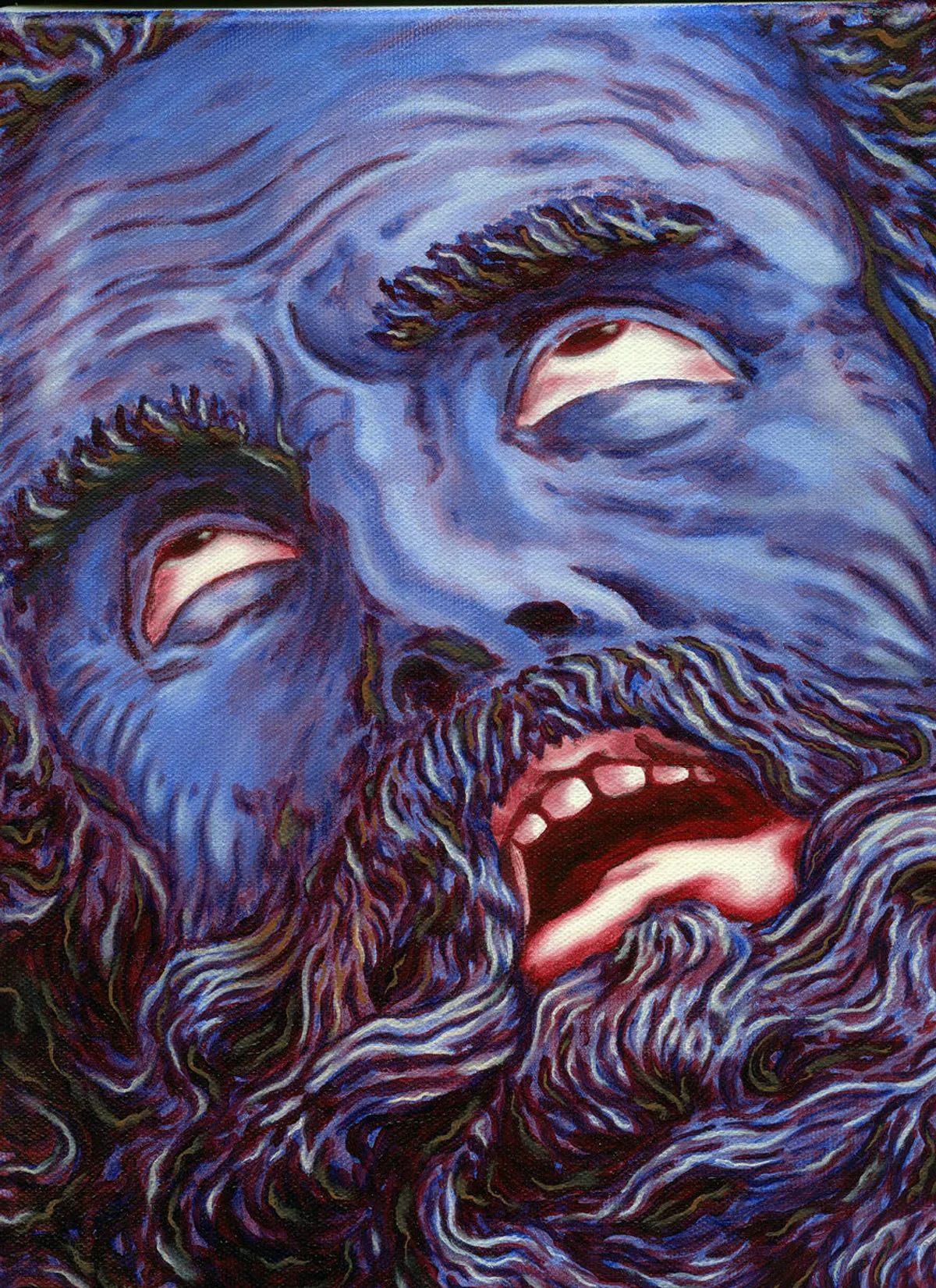
A painted close-up of a bearded face by Michael Ray Marks, blue and violet, eyes rolled back to the whites, mouth open. It is not clear whether the man is asleep, unconscious or beyond either, and that ambiguity is exactly right for a record named after a film about somebody who chooses sleep over participation.
So
Yes, and more enthusiastically than I expected from a solo side project. The concept is not decoration: the voice, the title and the structure all do the same thing, and the music is strong enough to carry forty minutes without a singer. The reservation is that the record holds one tonal world so tightly that the middle three tracks start to blur, and the quiet-to-loud device is used seven times out of seven. Come for the opener and the closer, and give “Fleeting Moment” the patience it asks for, because it is the track that explains what the rest is doing.
This is a uniformly dark record. All seven tracks hold their tonal centre between roughly 1.7 and 1.9 kilohertz and keep less than a tenth of their energy above five kilohertz, which is a narrow band for an album that moves between near silence and full weight. The movement is all in level rather than in colour: the distance between quietest and loudest passages runs from eleven to over twenty two decibels, with the opening track “Distant Sirens Wailing” the widest of all and also the shortest at under three minutes. “How Quickly The Ground Falls Out Beneath You” is the narrowest at just over eleven decibels and carries the highest tonal centre on the record, which is why the middle of the album feels less eventful than either end. The low midrange is consistently heavy, around a fifth of total energy on every track, and nothing has been mastered flat: peaks keep a wide distance from the average throughout.
Standout tracks: Distant Sirens Wailing, To Keep From, Fleeting Moment