 Bandcamp
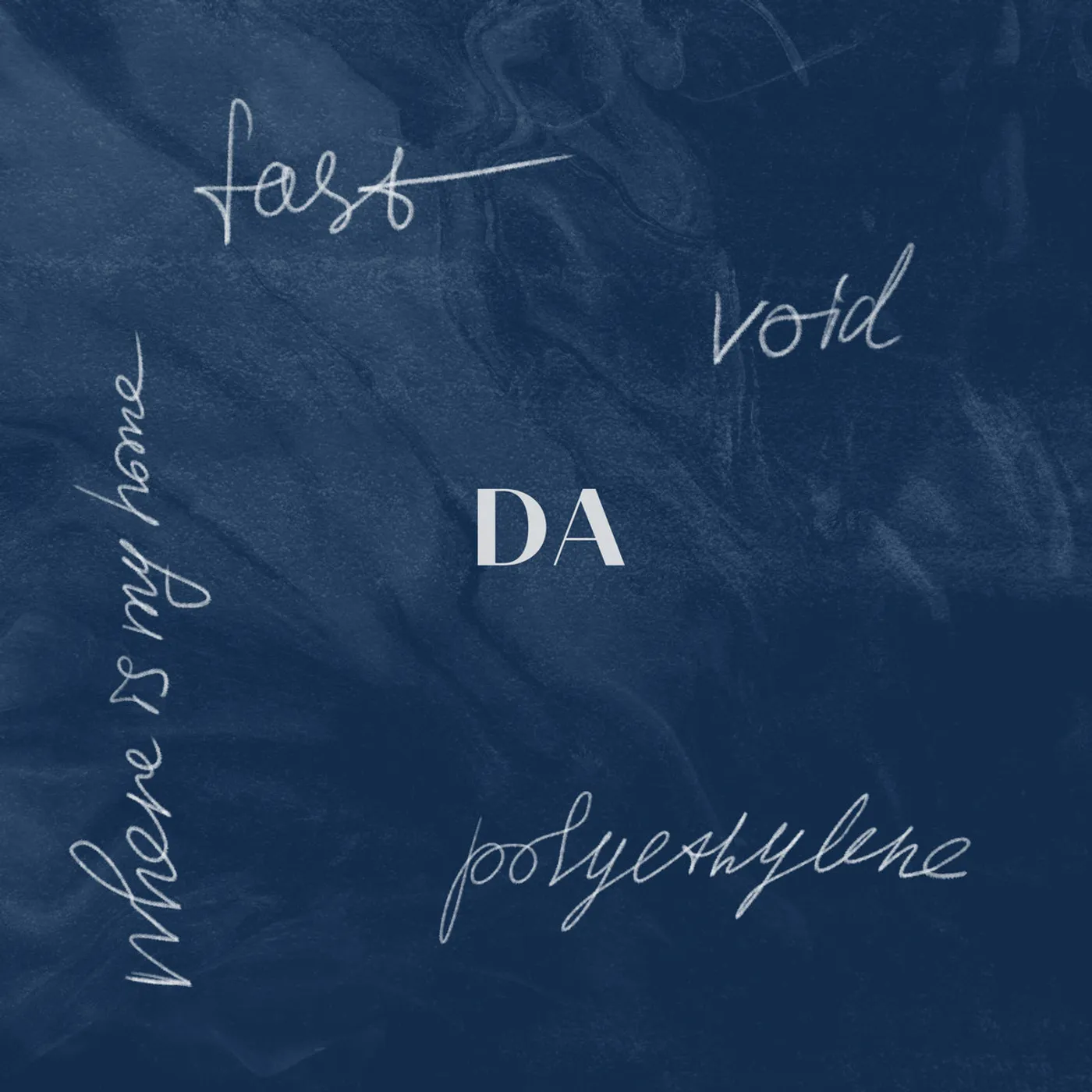
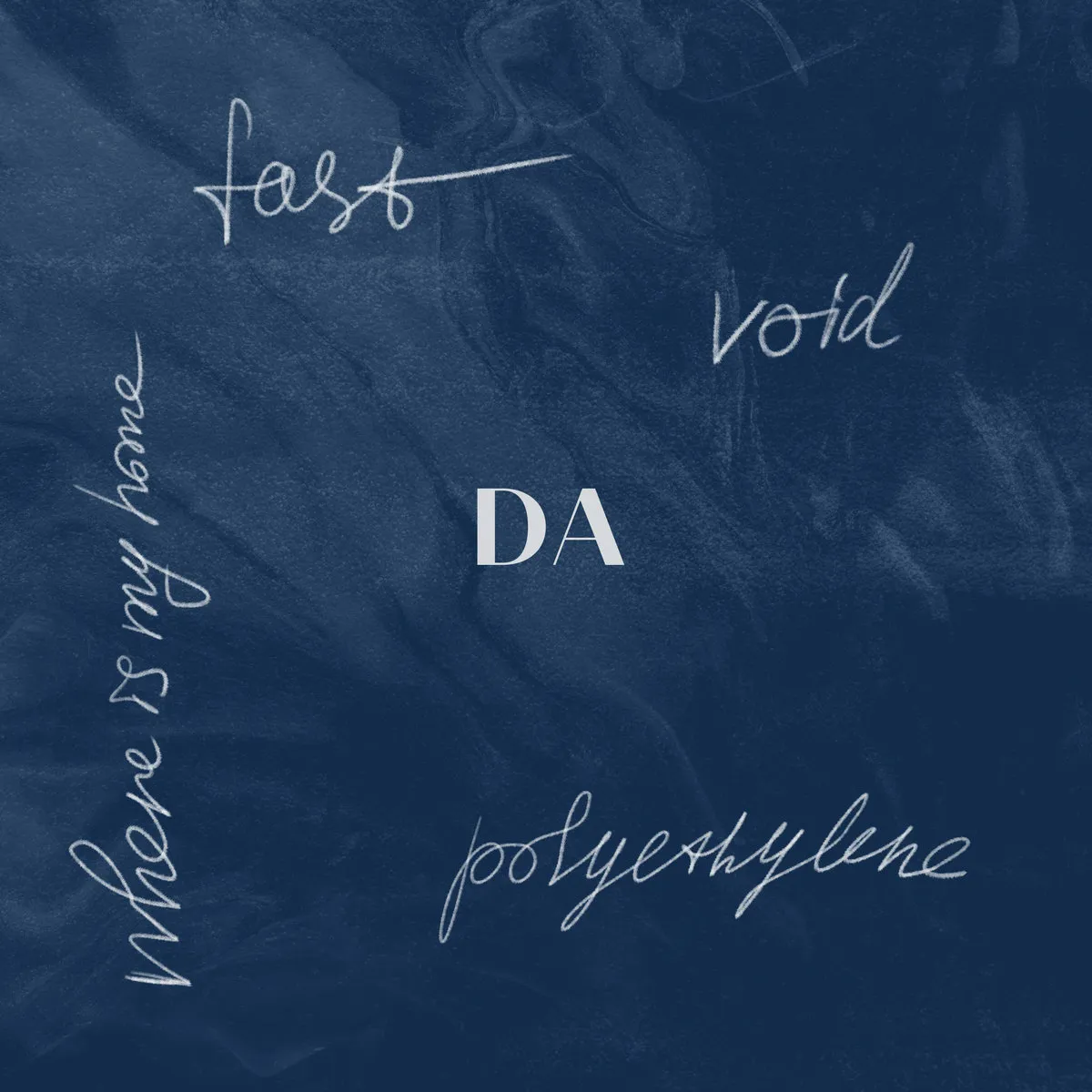
On the cover of DA the four song titles are scrawled in chalk around the two capital letters, and the last letter of one of them runs out into a long stroke, as if someone had started to strike the word through. It is “fast”, the opener, and its lyric ends on exactly that wish: mon désir, t’oublier, mon désir, t’effacer, my desire is to forget you, to erase you. The song follows a relationship in three short verses that mirror each other almost word for word. Fingers in your hair, I throw you on the bed. Then fingers in your hair, I throw you against the wall. Then my fingers in my own hair, and my gaze falls on my own shadow. Laughter, sarcasm, silence. It is a love song, a hate song and a breakup in under three and a quarter minutes, and the music follows the turn: after about a minute and twenty seconds at full strength the song drops to a much lower level for close to a minute before the band comes back in full.
OMIDARI are a shoegaze band from Serbia, formed in 2023, singing in French, and this is the first time a Serbian band appears on Riff Vault. DA is the second part of a planned trilogy of EPs. The first was called OMI, the third will be RI, and together the titles spell the band’s name. That sounds like a concept with a plan, but singer Ria told us the opposite happened. A full set of songs for DA had already been written and was mostly thrown away, because it lacked something “both musically and emotionally”. Only one song survived. “I imagined it as red,” she wrote. “For me, red means power.” The artwork ended up blue, but the brief stuck: “I knew that this EP had to be powerful, both in its sound and in what it had to say.”
Going round
What holds the four songs together was not planned either. Ria only recognised it afterwards, and her word for it is cyclicality. “The cycles we go through in relationships. The feeling of a home becoming unfamiliar. The endless cycle of consumption.” Once you have that word, the lyrics keep confirming it. “where is my home” walks past lit windows at night, books on shelves, a pan on the stove, a lampshade hanging crooked, and every chorus ends on the same question, où est passée ma maison?, where has my home gone. Happiness looks close, but never here. Ria calls it slow and almost waltz-like, in 12/8, and says the chorus is where her voice tips into a fry scream, “something breaking inside”. Someone who does not speak French, Ria says, “might hear it as a beautiful, melancholic love song. And that’s perfectly fine.”
The second half turns the circle outward. “void” is built around one chant, tout a un coût, tout a un goût, même le vide se vend mieux quand il brille, everything has a price, everything has a taste, even emptiness sells better when it shines. Between the repetitions comes a list of what we are: old trees covered in printed nonsense, the coins laid on the eyelids of the dead, oxygen sealed in aluminium cans, water evaporating in data centres without ever reaching exhausted stomachs. It is the most political lyric here and the most direct, and the song keeps one level from start to finish, the evenest of the four. That fits a mantra. It does not build, it insists.
“polyethylene” closes the loop with the image both songs share. Burnt dust becomes glass, and with enough pressure you can make a diamond out of nothing, cut it until it shines, and sell it for the years of a human life. “void” had already named the price of the diamond next to the price of bread; here the diamond is the thing we make out of emptiness. Swallow your polyethylene words and your plastic ideals, the chorus says, look at the rainbow sheen on a puddle of petrol, only there does your life take on colour. And then the one question the record is really asking: pourquoi tout ça? What is all this for?
Middle chapter
The obvious weakness of a middle chapter is that it neither starts nor finishes anything, and DA does not pretend otherwise. Under thirteen minutes is short, and the second half leans on repetition by design, so if “void” does not grab you, a quarter of the EP will feel like a refrain on loop. But the four songs are tightly written, the lyrics are good enough to be worth the translation effort, and the turn from the private songs to the public ones gives the EP a shape most EPs never bother with.
The band’s own tag list runs from shoegaze and heavygaze through darkwave and doom pop to gothic, and that breadth is fair. This is for listeners who like their heavy guitars in service of a mood rather than a riff, and who do not mind not understanding every word the first time. Start with “where is my home”, read the lyric on Bandcamp, then go back to the long chalk stroke after “fast” on the cover. RI, Ria says, may come out slower and more sensual than they first planned. On the evidence of DA, that will be worth waiting for.
All four songs share the same mid-forward colour, with most of the energy in the range where guitars and voice sit and a solid but not dominant low end. None of them is squeezed for loudness: the peaks stand well clear of the average on every track. The interesting differences are in how the songs move over time. “fast” and “polyethylene” each drop into a clearly quieter stretch before coming back at full strength, “where is my home” opens softly and then holds its level, and “void” barely moves at all, which suits a song built on one repeated line.