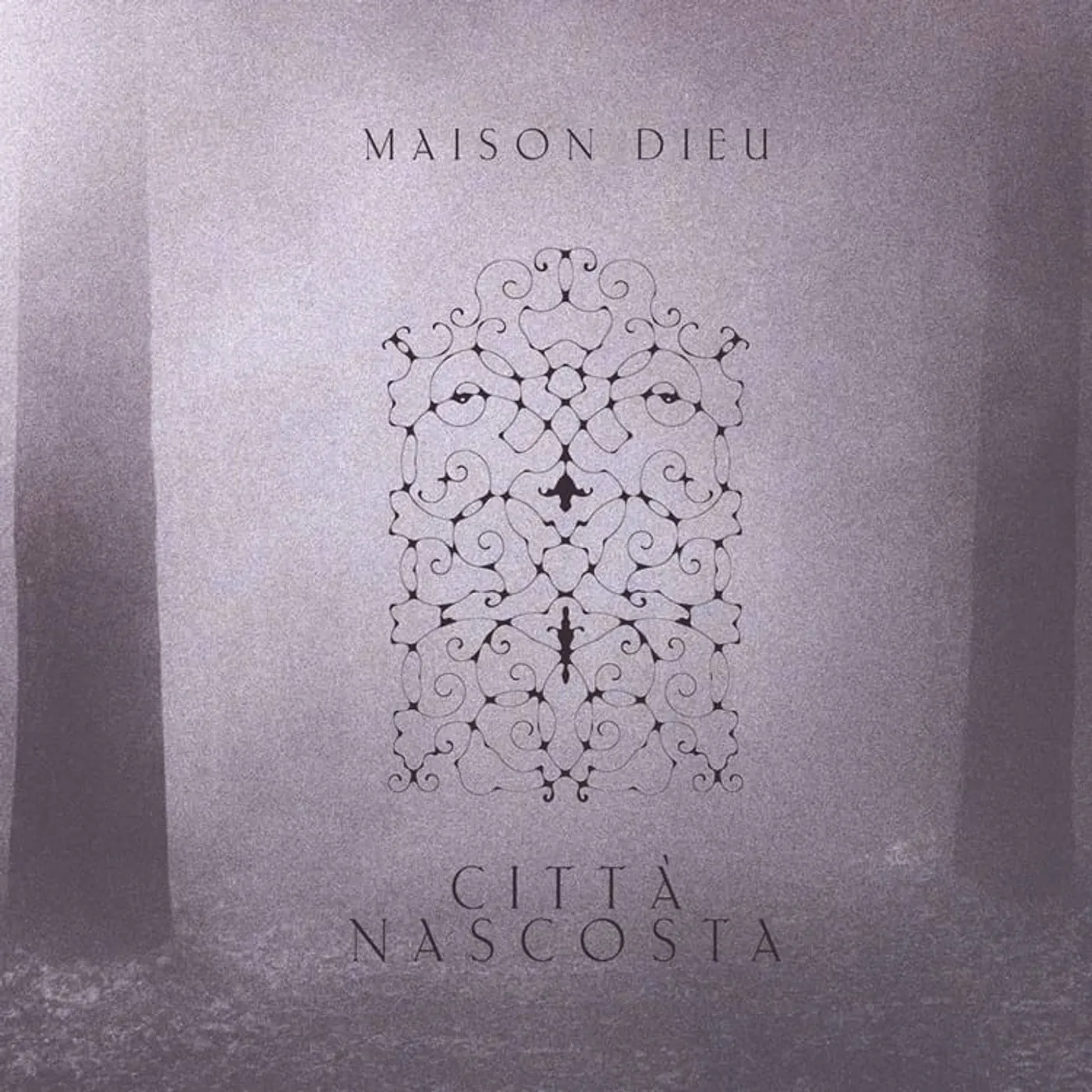
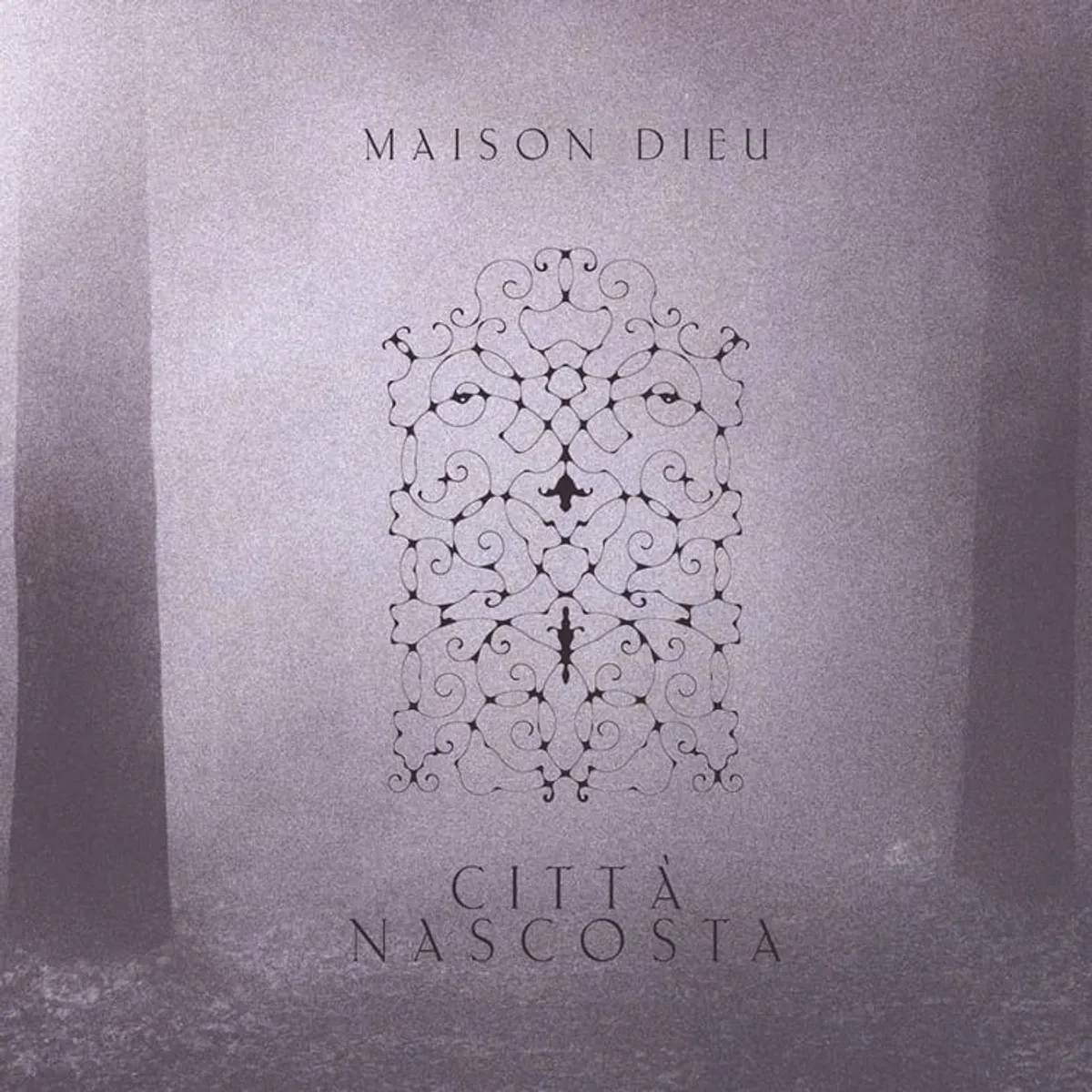
Part of this record is sung in a language that does not exist. Ester fronts Maison Dieu on vocals and guitar, and the lyrics move between Italian, English and a language she invented. For most of the people who will hear Città Nascosta that distinction collapses immediately, because Italian is already a closed door, and the invented language is only a door closed slightly harder. What survives the collapse is the sound of a voice deciding what it wants to mean, and the Senigallia trio have built nine tracks around that decision.
They are not new, though the press calls this a debut. The debut was Herbacea, an EP on Sliptrick Records in March 2025. This is the first full length, and it arrives on Octopus Rising through Argonauta with Mauro on bass and vocals and Ivan on drums.
What the record does with its volume
The most useful thing the measurements say about Città Nascosta is that it refuses to sit still. The gap between its most tightly held track and its most open one is 20.3 dB. Across the sixty-nine other albums we have measured with at least five tracks each, the median gap is 12.6 dB, and only seven of them spread wider than this one. That is the album’s main strength, and it is a choice rather than an accident, because the spread is not random noise across nine tracks but a shape with a beginning and a middle.
The beginning is “CALIGRAMMA”, and it is the most clenched thing here. It is the loudest track on the record and simultaneously the one with the least room to move, and those two facts are the same fact. An opener that holds itself this rigid is a statement of intent, not a mastering failure, and the proof is that nothing tonally unusual is happening underneath it. On brightness, on bass weight, on treble, it never once leaves the range the other eight tracks occupy. Only the grip is unusual.
The middle is “RIVER”, and it is where the record finally lets go. It is the quietest piece here, the most dynamic, and the shortest at a little over three minutes. More interesting than any of that: its midrange empties out and its low end swells to a degree nothing else on the album approaches. What is left standing is the bottom of the arrangement and the room around it. If you want one piece of evidence that this band knows what it is doing with nine tracks rather than simply recording nine songs, it is that “RIVER” arrives at track six, after five tracks of accumulated pressure, and spends three minutes not applying any.
The one that goes dark without going quiet
“RESTA” is worth separating out because it is easy to describe wrongly. It is the darkest track on Città Nascosta: clearly the lowest of the nine in how far its energy reaches upward and how much of it lands above five kilohertz, and narrowly the lowest in where that energy sits. The obvious assumption is that darkness here also means retreat, and it does not. Its dynamic range lands on the album’s median to the decimal, and nothing about its level or its peaks separates it from the eight tracks around it. It gets dark without getting smaller, which is harder than it sounds and much harder than the alternative.
“DIO CI VUOLE NUDI” went out as the first single, and the label’s description of it leads with a tagelharpa, the bowed Scandinavian lyre. That is their claim rather than ours, and we cannot verify an instrument from a frequency reading. What we can say is that the track has the highest spectral centre of gravity on the record, which is at least not in tension with a bowed string instrument sitting on top of the arrangement.
Then the record closes across “UROBORO”, “LOBA” and “ANGRY CLEMENT” without any further structural surprises, and that is the reservation. The second half has one idea fewer than the first. “LOBA” runs past six minutes and earns perhaps five of them. After “RIVER” has shown what this band can do when it subtracts, the closing stretch adds back a little too obediently.
So: recommended, and recommended specifically to people who already live in the Messa and Chelsea Wolfe corner of this music and want something from it that has not been flattened. Forty three minutes, nine tracks, one tone and a deliberately unsteady hand on the volume. Where it falls short is ambition in the back third, not execution anywhere. A band on their first full length who already understand that the loudest track and the best track do not have to be the same track are a band worth following into the second one.
The thing that jumps out is how differently the songs are treated. Most of them sit within a few decibels of each other in level, though how much they move varies widely, and then “RIVER” drops the level, empties out the middle of the picture, and lets the low end take over the room for three minutes. That contrast is the record’s architecture rather than an inconsistency. “CALIGRAMMA” is the clearest case of the opposite approach, pushed hard and held there, loud in a way that leaves it very little space to grow. Tonally the nine tracks are much more alike than their volumes suggest, sitting in an ordinary middle of the catalogue for how far they range in brightness, with “RESTA” the one clear move toward the dark end and it manages that without dropping its energy. Even the tightest track sounds held rather than squeezed.