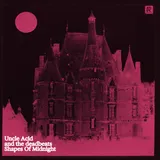
 Bandcamp
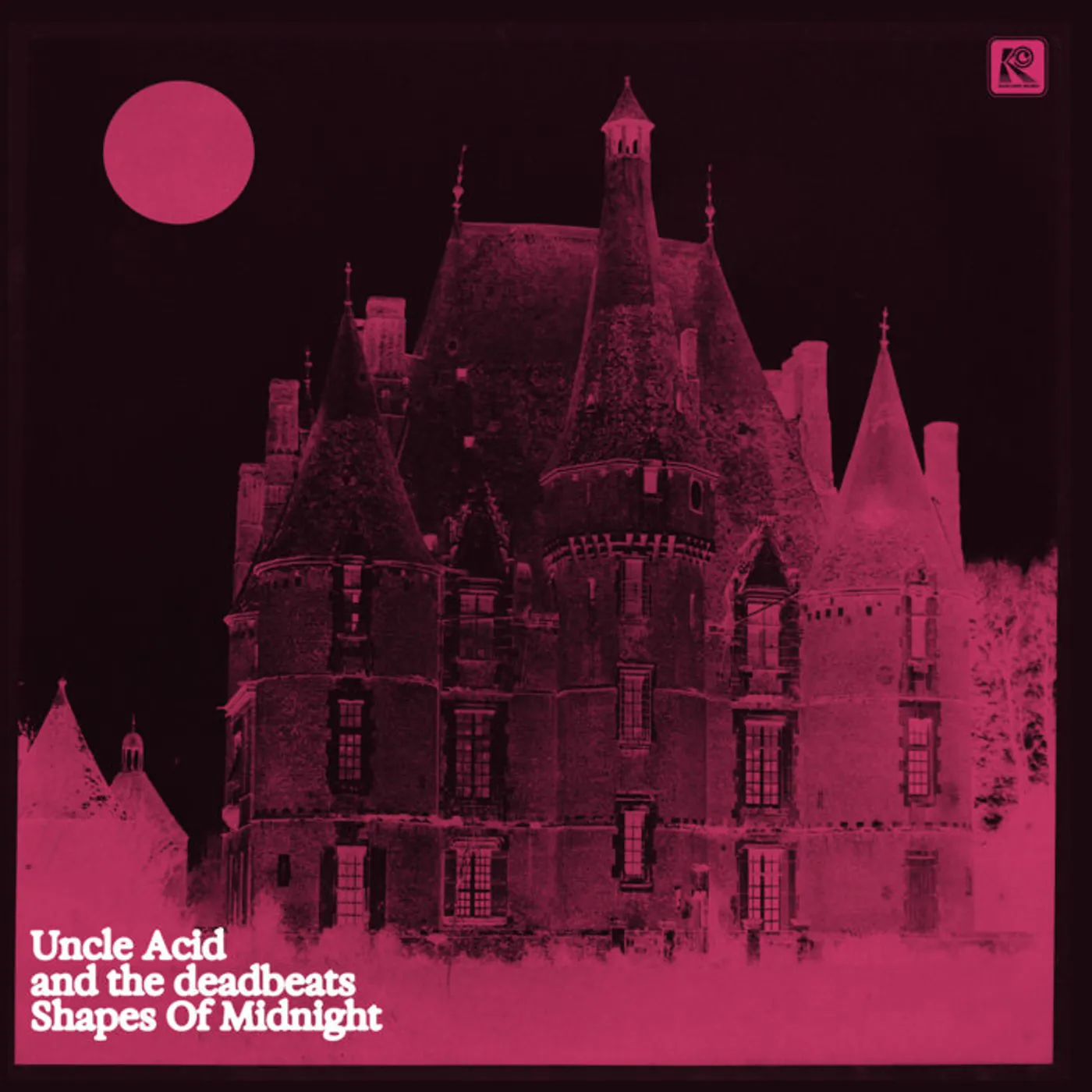
We have never written about Uncle Acid, which is an odd gap for a site that spends most of its week in exactly this neighbourhood. Forty five minutes of Shapes Of Midnight and the gap is now closed, with one observation that the press cycle around the record has not made.
The album is built from Poe’s The Masque of the Red Death, which is a story about people sealing themselves into a building to keep something out and discovering it is already inside. That shape is in the record. It is not in the song titles, which are pulpier than the source, and it is not announced anywhere in the music. It is in how little the album lets itself move.
Seven tracks holding the same narrow band
“House By The Grave” through “Sleep No More”, with one exception I will come to, run between five and ten decibels from their quietest passage to their loudest. That is tight. On most doom records that number means a master pushed flat, and here it does not, because peak-to-average stays between thirteen and fifteen on every single track. The peaks survived. The band simply never stops playing at the same intensity.
That is a choice and it is the right one for the material. A record about a party that refuses to acknowledge what is outside should sound like a room where nobody changes volume.
The track that breaks
“I Won’t Sleep (‘Til You’re Gone)” moves seventeen and a half decibels, nearly double the next widest thing here. It is the sixth of eight, which puts it exactly where the masked figure walks into the seventh chamber.
I am not going to pretend the band mapped it that precisely. What I can say is that the only track that behaves differently sits at the point where the story turns, and that on an album this disciplined about dynamics the exception reads as deliberate.
The ending goes dark rather than loud
“Sleep No More” closes with the least treble and the most midrange on the record. Against “Psycho On The Loose” four tracks earlier, which is the brightest thing here by a distance, the closer gives up over a third of its high end.
So the record does not finish by getting bigger. It finishes by getting murkier, which is a harder ending to pull off and a more honest one for the source material.
Where it leaves me
Recommended without hesitation, and the sound is exactly what anybody arriving here expects: the fuzz, the double-tracked vocals sitting high and thin over it, the sense of a cheap horror film scored properly.
Two reservations. The consistency that makes the concept work also means that by the fourth track you have heard the album’s full vocabulary, and “Don’t Let It Control You” at three forty five is the one piece that feels like it is holding a place rather than earning it. And this is a record that gives up more on a second listen than on a first. Whether that reads as depth or as reticence will depend on what you came for.
Start at “I Won’t Sleep (‘Til You’re Gone)” if you want to hear what the record can do, then go back to the top and hear what it is refusing to do.
The album keeps an unusually narrow dynamic band, five to ten decibels across seven of eight tracks, without flattening the transients. Peak-to-average sits between thirteen and fifteen throughout, which is healthy headroom for this genre and the reason the record pushes without fatiguing.
“I Won’t Sleep (‘Til You’re Gone)” is the single exception at seventeen and a half decibels. The widest gap between peaks and average belongs to the closer instead, which is part of why the ending lands the way it does.
The brightness tells its own story. “Psycho On The Loose” puts over twenty eight percent of its energy above 5 kHz, the closer “Sleep No More” barely eighteen, and the spectral centre falls almost seven hundred Hertz between them. The album darkens as it ends.