 Bandcamp
 Look at the tracklist before you play anything. Hričov. Pod Skalnou bránou. Súľov. Dolu Váhom. Lietava. Posledný zárez v čase. Three of those are castles in the Váh valley in northwestern Slovakia. The others are, in order, a rock gate, a passage down the river, and a last notch cut into time. The record is a route, and it tells you so before the first note.
What is remarkable is that the route survives contact with the music. The three castle pieces sit loud and bright, within a decibel and a half of each other in level, with a fifth of their energy up above five kilohertz. The three pieces between them drop five to eight decibels, darken, thin out and open their peaks wide. Castle, road, castle, road, castle, road. Six tracks alternating with a regularity that would be dull if it were arbitrary and is the opposite of dull because it is not.
That structure only works because the band commit to it. The quiet stretches are not interludes in the usual sense, the short ambient breath that lets a black metal album pretend it has range. “Dolu Váhom” carries the lowest level on the record and the second highest peak-to-average distance, which in plain terms means it is sparse and it moves. It behaves like walking rather than like waiting.
This is also the first Krolok record sung in Slovak, which the band flag themselves. For a project that has spent three albums on Carpathian mythology and the figure they call the immortal Count, switching into the language the legends were told in is the obvious move and it took them fifteen years. Hearing it, the delay makes sense. Slovak has a different weight in the mouth than English does, more consonant and less sung, and the vocals sit far enough back that the language works as texture before it works as meaning. You do not need the words. You need the sound of those particular words.
The opening track is where the album spends most of its dynamic capital. “Hričov” runs from near silence to full weight across a span wider than anything else here by a factor of two, and everything after it settles into a narrower groove. On a lesser record that would be front loading. Here it reads as the climb: you get up to the first castle the hard way, and after that you are travelling at altitude.
Where it gives ground is the middle castle. “Súľov” is the most tightly held of the six and the one that sounds most like generic second wave, competent and unremarkable, and it sits at the exact centre of the running order where the album can least afford to coast. Between two stronger pieces it functions, but it is the one track that would not be missed.
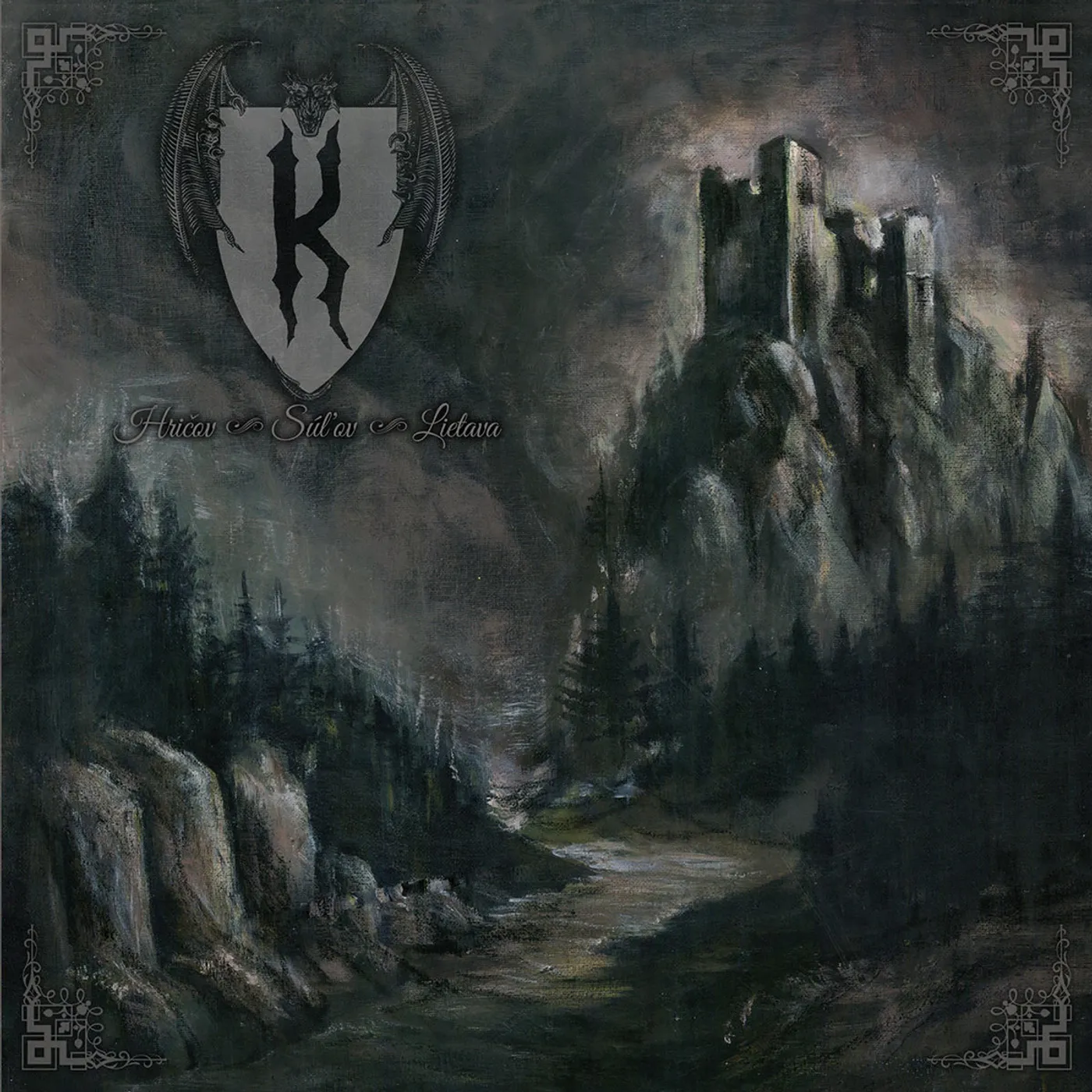
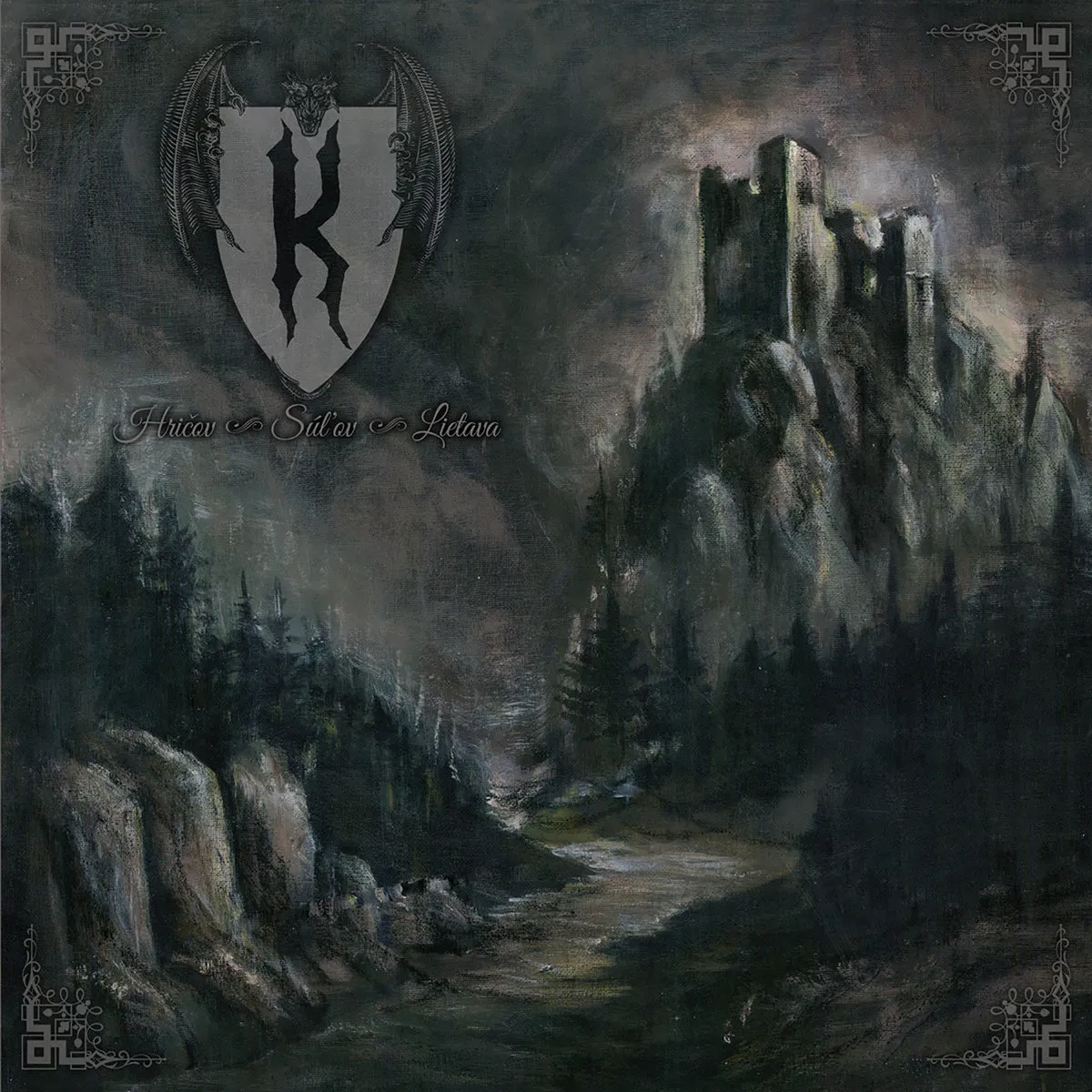
The painting on the sleeve does the same work as the tracklist. A ruined keep on a crag in the top right, black conifers, and a pale river running down the centre of the valley toward the viewer. The castles are where you are going. The river is how you get there. Somebody thought about this.
Fifteen years in and a band with an established mythology has made the record where the geography stopped being scenery and became the form. That is a harder thing to do than another album about castles.
The six tracks fall into two groups of three, and the split lines up exactly with the titles. The three named after castles run loud and bright: their levels sit within about a decibel and a half of each other, their tonal centre stays high and roughly a fifth of their energy reaches above five kilohertz. The three named for the ground between them drop five to eight decibels in level, lose brightness and open a much wider gap between their peaks and their average, which is the measurement signature of sparse arrangements with room around them. “Hričov” is the outlier at the top: its span from quietest to loudest passage is roughly twice that of anything else on the record. “Posledný zárez v čase” is the outlier at the bottom, carrying the heaviest concentration in the low midrange on the album and the least energy up top, so the record finishes thicker and more clouded than it began.
Standout tracks: Hričov, Dolu Váhom, Lietava