 Bandcamp
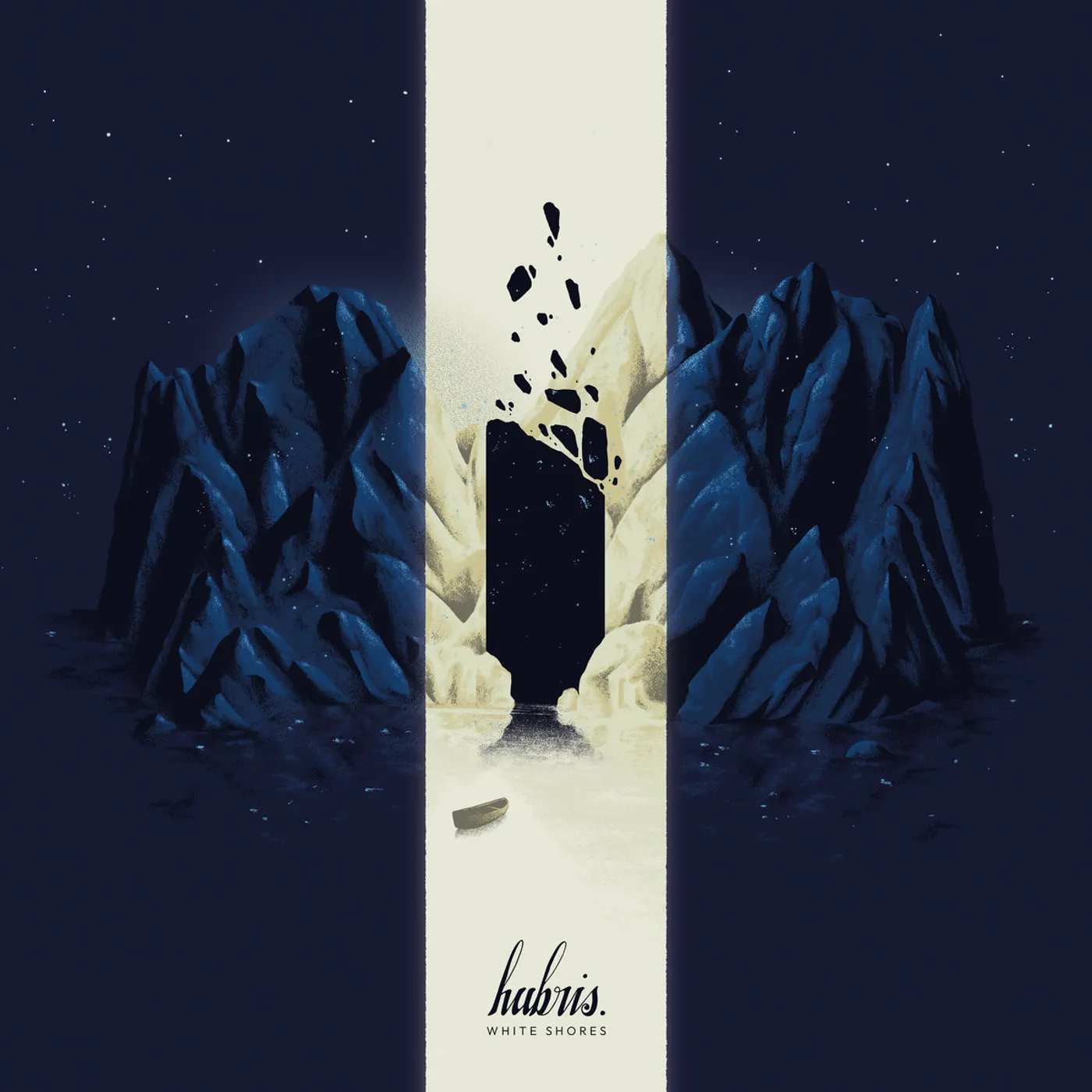
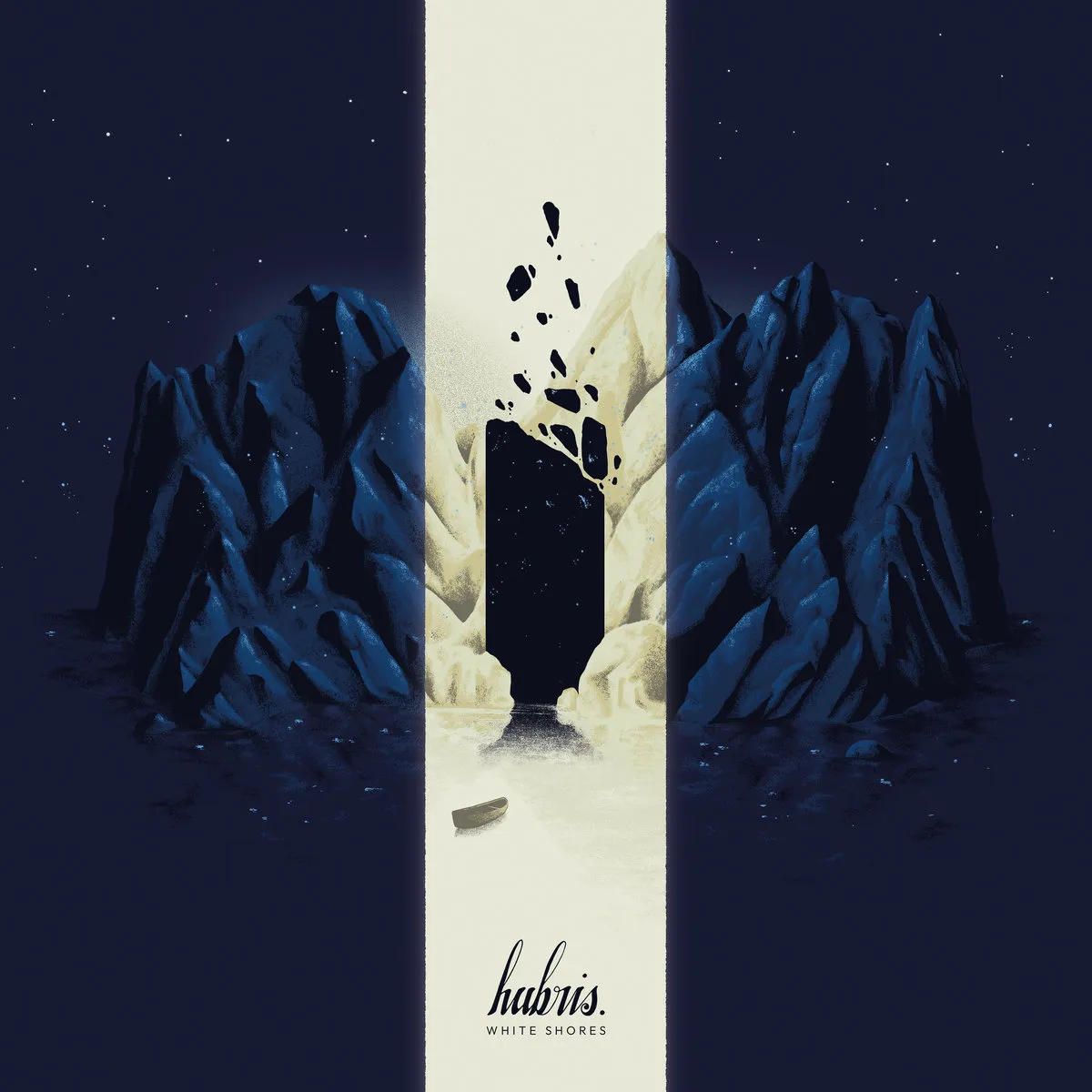
 Two thirds of the way through White Shores, hubris. stop playing instruments. The first four tracks are a band in a room: electric guitars, a bass holding the low middle, drums with real air around them and a master that leaves the crescendos somewhere to go. On the fifth track there is no electric guitar and no bass being played by hands. The foundation is a saturated synth patch, the percussion is electronic, and sequencer patterns take over the melodic work. The sixth track goes further into that and never comes back.
Read the six titles in order and the reason is obvious. “death”, “is”, “just”, “another”, “path I”, “path II”. The tracklist is a sentence, and the instrumentation changes exactly when the sentence reaches its last word.
That sentence is worth getting right, because it is usually misattributed. The line comes from the Peter Jackson film, where Gandalf says it to Pippin during the siege; it is not in Tolkien’s prose. The album title is the other half of the same speech, and that half is Tolkien, lifted from a dream Frodo has early in the story and then delivered to him literally at the end, when the grey curtain rolls back and the shore appears. So hubris. have built a record on a scene the films invented using an image the books earned. For a band whose previous four albums ran on Greek mythology, moving to a modern text about mortality is less of a swerve than it looks.
What makes it work is that the form commits. The human voice appears twice on this album and then leaves. On “death” a heavily reverbed harsh vocal arrives in the final third, set so far back in the room it functions as another layer of guitar. On “is” the screams come in around the four minute mark, high and genuinely strained, at the top of a crescendo the track has spent nearly four minutes building out of almost nothing. After that, nothing. “just” runs nine and a half minutes with no voice at all, and by “path II” the only human sound left is a vocoded fragment used as texture. The record empties itself of people as it moves toward what it thinks is on the other side.
The band half is the better half, and that is not a criticism of the plan so much as an observation about where the strengths sit. “just” is the centrepiece and the best thing here: patient, room-lit clean picking that accumulates into a fuzz-driven wall without the master flattening the journey, and the arc holds across a running time that would expose a weaker idea. “another” is the most technically impressive, because the dynamic spread survives completely intact from a fragile intro to a monumental middle, and the lead motifs stay readable on top of real pressure. In a genre where everything tends to get pushed until the loud parts stop being loud, this is a record that actually swings.
The reservations are small and they cluster in the same place: the densest passages. When everything arrives at once on “death” and “just”, the kit loses transient definition and the snare recedes into the wall, which costs some of the impact the build has earned. On “another” the bass merges into the guitars around 150 to 250 Hz and gives up its contour. The finale of “is” lets the cymbals wash. None of it breaks anything, and all of it is the standard cost of this much saturation.
Whether the electronic third act lands will depend on the listener, and it is the honest question about the album. It is well made, transparent, and deliberately not crushed, so it is not a lazy coda. But the band spent four tracks earning their weight with a room and six microphones, and then answer the sentence’s final word with something that has no room in it at all. That may be exactly the point. It is also the moment where a record that had been overwhelming becomes merely interesting.
Thirty-nine minutes, five albums in, and a group confident enough to dismantle their own sound to finish a thought.
“path I” and “path II” carry no electric guitar or played bass at all: the low end is synth, the percussion is electronic with a clicked kick over deep sub, and “path I” drops a brief spoken “Countdown” sample into otherwise wordless sequencer work. “just” preserves the most headroom of anything here across nine and a half minutes, the kit plastic and close in the quiet passages. “is” spends nearly four minutes on a minimal reverbed build before the screams arrive. “death” has the warmest room on the record and the biggest transient loss once the full band lands on top of it.
Standout tracks: just, another, is