 Bandcamp
 Four tracks called “Age of Decadence I” through “IV”, nothing else, and one line of instruction on the Bandcamp page: please enable gapless playback. That is the whole framing, and it tells you what to expect better than any genre tag would. This is one piece of music in four movements, forty-nine minutes long, made by one person in Denton, Texas, over three months at the end of last year.
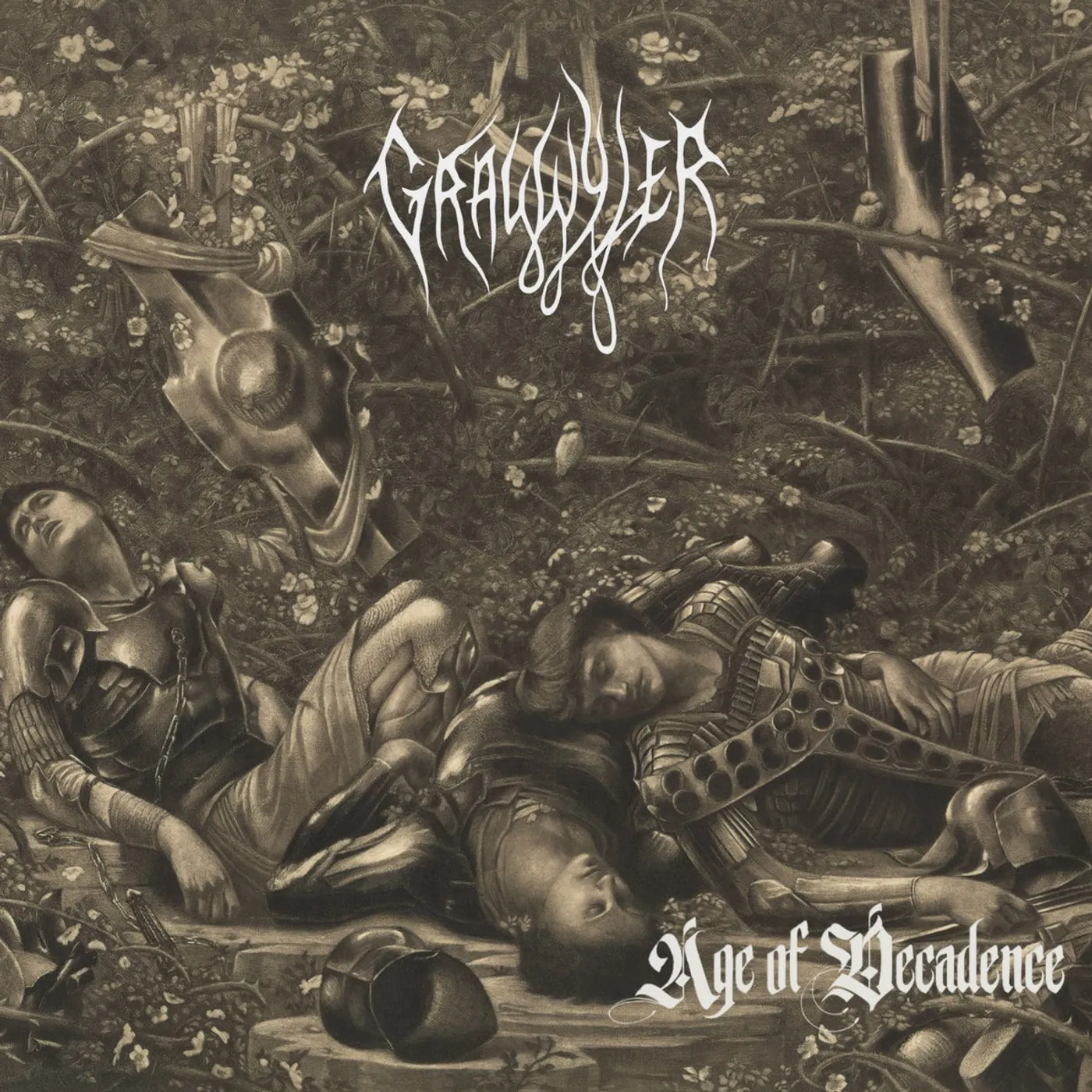
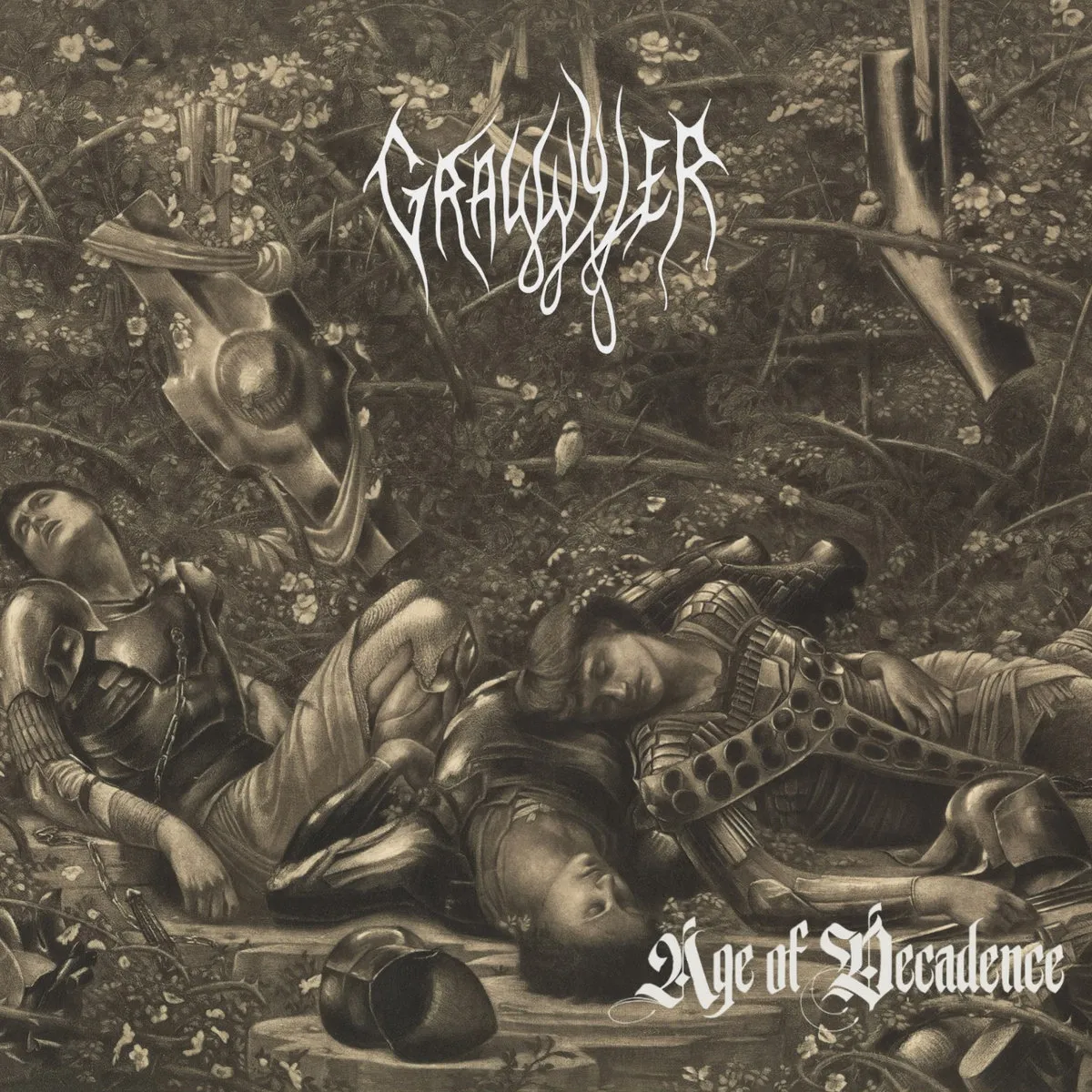
The cover is worth a paragraph before the music. It is “The Briar Wood” by Edward Burne-Jones, and that painting is not a standalone: it opens a cycle of four, sleeping figures overgrown by thorns, a knight arriving to find everyone already unconscious. Four panels, four movements. Whether E intended that symmetry is not stated anywhere, but the choice of a late Victorian painter for a record called Age of Decadence is not an accident either, and it sets up the album’s real subject, which is not evil or war but exhaustion.
Where the record is genuinely good is in the space it builds and in its patience. The first movement is mixed with an enormous room around it, the guitars tuned far down and held for maximum sustain, and the drums sound microphoned rather than assembled: the kick pushes dry and low with no click layered over it, the snare trails a long tail. Above that wall, single melodic guitar lines cut through with delay behind them and stay locatable, which is the hardest thing to get right in this style. The third movement is the best thing here and the boldest: it spends nearly seven minutes building with no voice at all before the first growl arrives, and it never feels like a delay tactic.
The problems are in the fast material. When the blast beats arrive, the cymbals turn into a hard hiss that wears on you by the fourth movement, and the compression flattens exactly the passages that need impact most. The bass is the other recurring cost: across all four movements it is a low rumble holding up the mass rather than an instrument with its own line, and in a piece this long that absence starts to register. Some of this is the genre speaking. A tremolo wall where individual notes dissolve is the vocabulary, not a fault. But cymbals that fatigue the ear and blast sections with no dynamic room are not the style, they are the mix.
What saves the closer is the choice to bracket it with long stretches of drone and feedback at the start, the middle and the end. That structure is the thing E clearly understands: how to make forty-nine minutes feel like a shape rather than a duration. The instinct for form is well ahead of the execution at the desk, which is the usual order for a solo project and the more promising way round.
Four releases in and this is a musician who can build the arc. Handed to someone else for a mix, the same material would be considerably more than promising.
The whole album is built around an unusually large room, and the best of it comes from that decision. Guitars sit far down with long sustain, and single melodic lines are placed with enough delay to cut through the wall without leaving it. On the first and third movements the drums genuinely sound played: a dry kick with low push instead of a click, a snare with a long tail, cymbals that wash rather than cut. Two things recur as costs. The bass never becomes its own voice across the full forty-nine minutes, holding up the low end as mass rather than as notes. And the fast passages are where the top end gets tiring, with the compression squeezing the dynamics flat underneath it, most noticeably on the closing movement. The dense tremolo texture where individual notes disappear is the style rather than an error, but the high end and the flattened fast sections are mix decisions, not genre. The strongest production stretches are the long drone and feedback sections that open, break up and close the final piece.
Standout tracks: Age of Decadence I, Age of Decadence III