 Bandcamp
 Nine short ones
Traditional doom usually arrives in long form. This does not. Nine tracks, forty minutes, and only one of them past five and a half. For a band whose founder came out of Pagan Altar, that is a deliberate break with the house style rather than an oversight, and it changes what the record is for. These are songs, not passages. You can play any of them on their own.
The cost is that the album never accumulates. Doom at this tempo normally earns its weight through duration, by making you wait, and nine self contained pieces keep resetting that clock. “Creeper” and “Horrors of the Night” open strongly and then hand over to something that starts again from nothing.
The brightness question
The more interesting thing is where this record sits in the frequency range. It is bright. Not slightly: across the album a large share of the energy sits above five kilohertz, and on “Beasts of Doom” it approaches a third, with the lower middle thinner than on anything else here. For music named after beasts, that track is the least physical on the record.
Some of this is tradition rather than error. The British doom lineage this comes out of was never a low end genre, it was built on trebly guitars and air, and judging it against modern down tuned production would be the wrong yardstick. Vinny Konrad recorded, mixed and mastered the album himself as well as playing most of it, so what we are hearing is one person’s ear all the way through, with nobody to argue the other side.
But the consistency works against the variety. Nine songs at the same brightness and a similarly narrow dynamic range start to sound like one long song after all, which is the opposite of what the short running times were presumably trying to achieve.
Where it turns
And then there is “Angels Without Words”. It is the longest piece here, the darkest by a clear margin, the warmest in the lower middle, and it carries no conventional vocal at all. The title is not being poetic, it is a description. Given room and no voice to arrange around, the record finally settles into weight rather than reaching for the top of the register, and it is far and away the best thing on the album.
That is worth saying plainly: the strongest track is the one that stops doing what the other eight do.
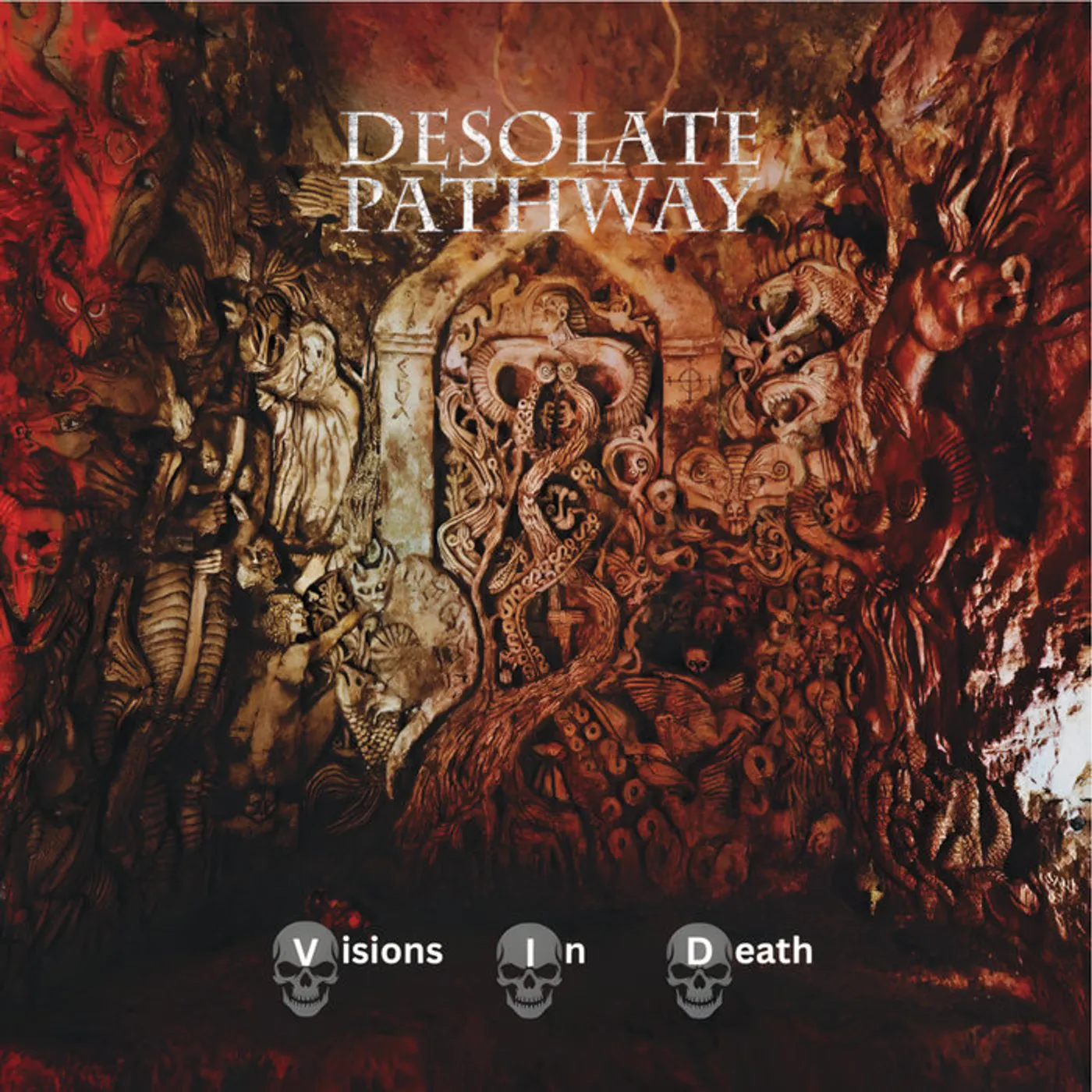
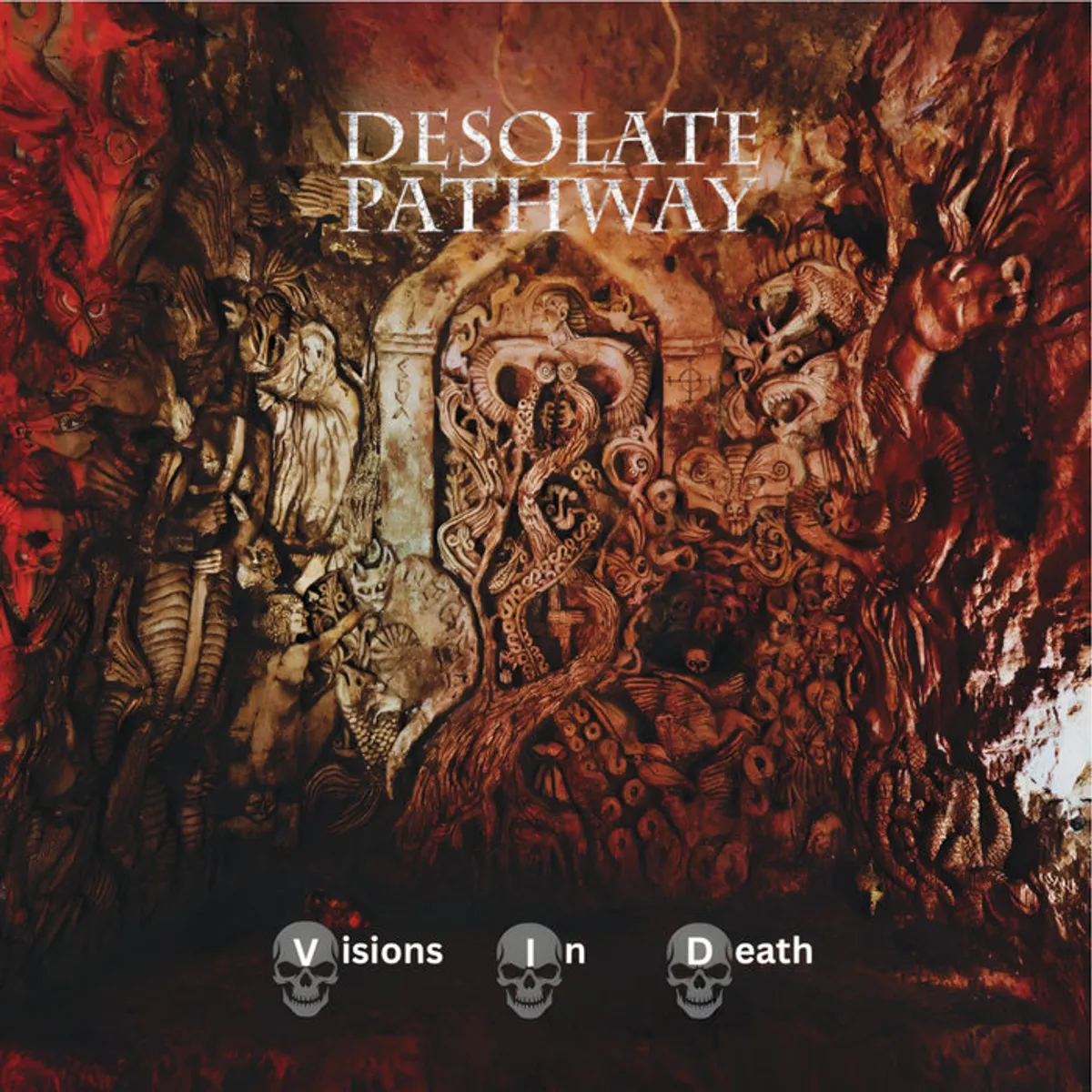
The sleeve matches the maximalism. A cave wall crawling with carved demons, skeletons, serpents and a hooded figure, rendered in red and rust, so dense there is nowhere for the eye to rest. Three small skulls sit as bullet points before the title, which is either charming or homemade depending on the hour.
Five years went into this, and you can hear the care in the playing. What it needed was somebody in the room to ask why everything was reaching upward.
This is a noticeably bright record for traditional doom. Across all nine tracks a large share of the energy sits in the upper register, peaking on “Beasts of Doom”, which measures as the brightest and thinnest through the lower middle despite what the title promises. The dynamic range stays narrow throughout, mostly under ten decibels between the quiet and loud passages, so the songs hold a fairly constant intensity rather than building. The exception is “Angels Without Words”: darkest track on the album, most weight in the lower middle, least energy up top, and the only one where the arrangement is allowed to open out. That it is also the longest is unlikely to be coincidence.
Standout tracks: Angels Without Words, Horrors of the Night, Visions In Death