 Bandcamp
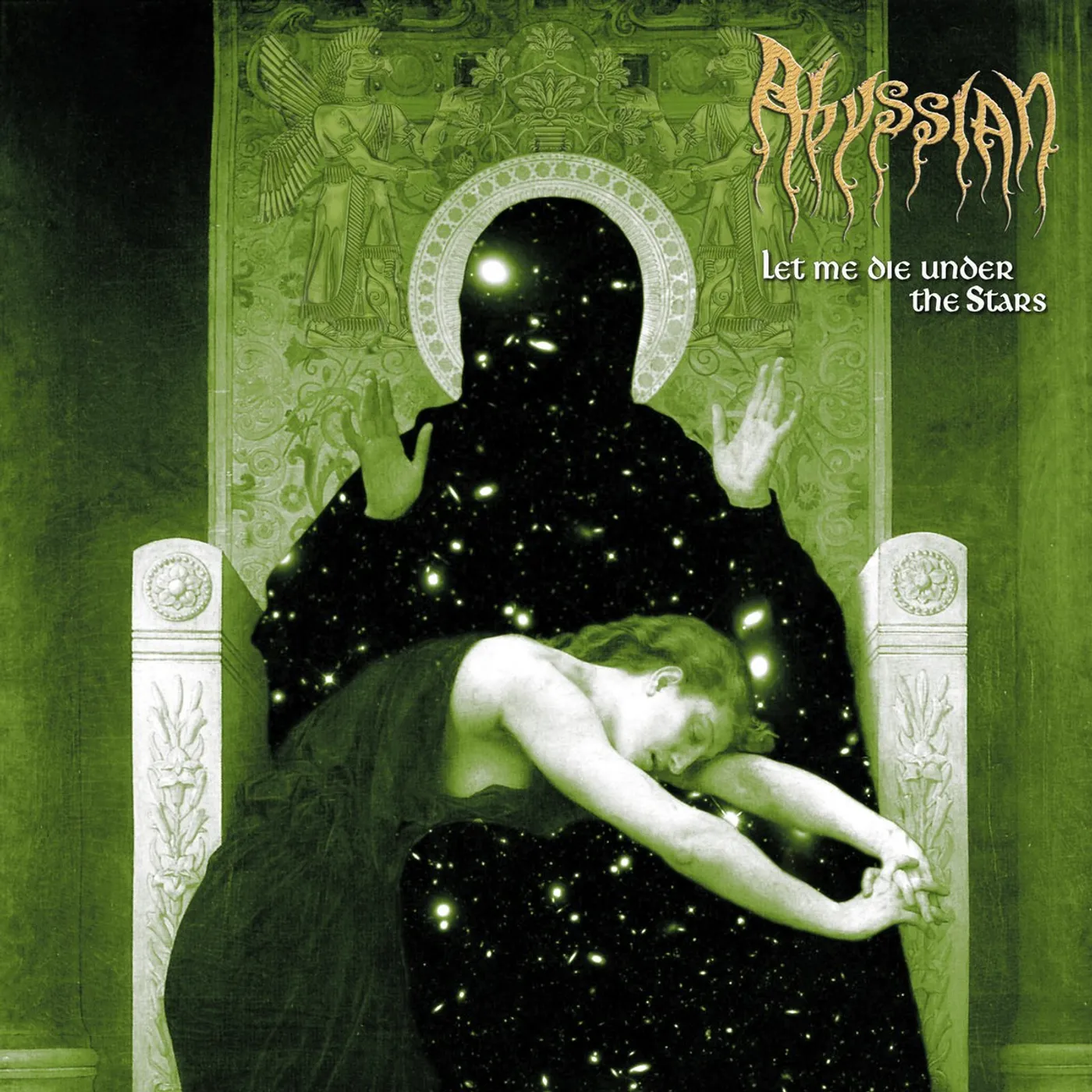
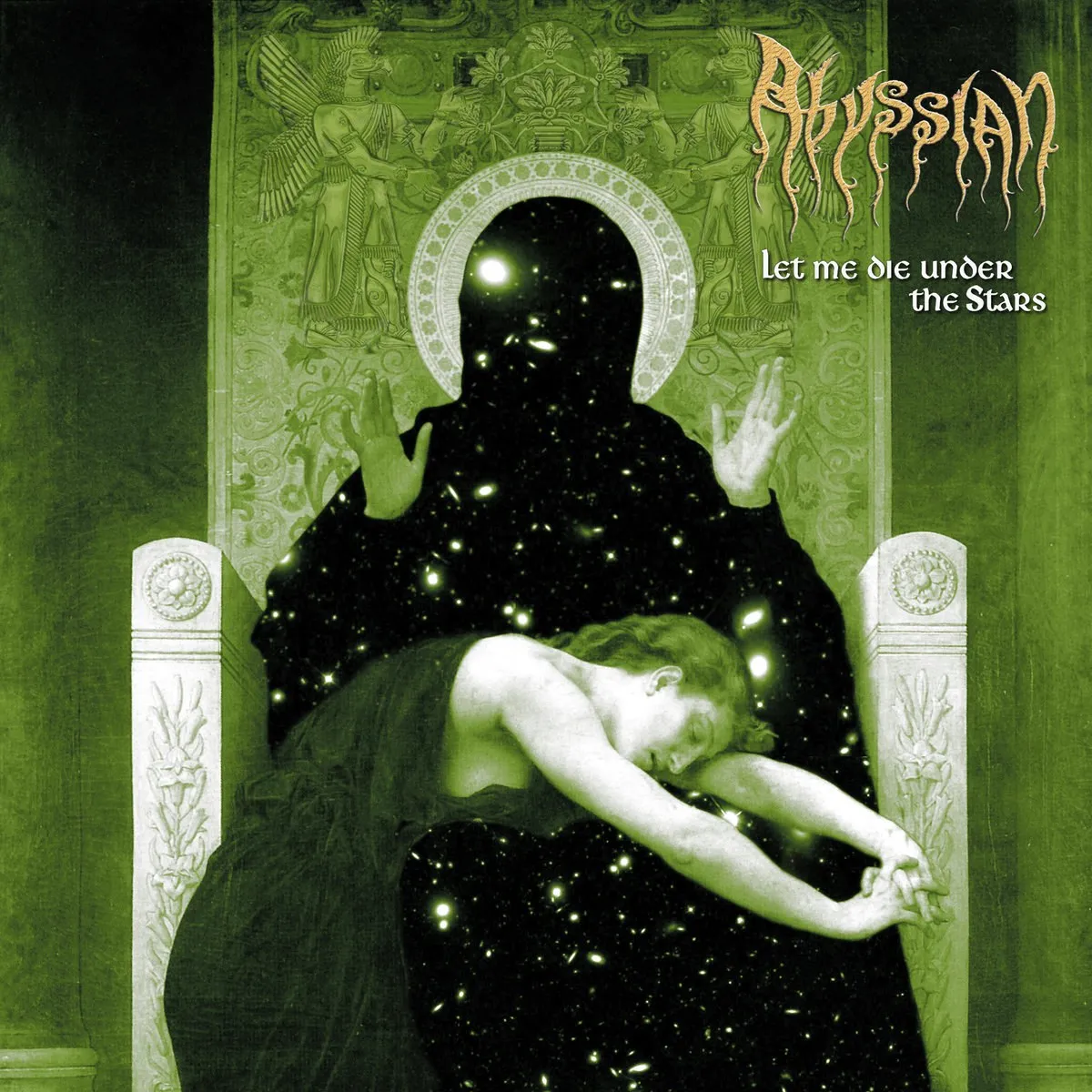
 Abyssian is the long project of Roberto Messina, formerly lead guitarist of Sinoath (the Catania death/doom band that worked the underground of Sicilian metal across the 90s and beyond). Let Me Die Under the Stars, released May 18 on Black Widow Records, is the band’s third album and the most fully developed instance yet of the “Atlantean dark/doom” frame the project has been working since the start. Five musicians: Umberto Vono (vocals), Messina (lead guitars, backing vocals), Francesco de Francisco (rhythm guitars, keyboards), Vincenzo Arienti (fretless bass), Daniele Ferru (drums and percussion). Six tracks, around forty-eight minutes, with the band’s most ambitious conceptual frame to date.
The Bandcamp text spells out the concept. Humans descended from demigods who descended from absolute gods; the demigods set humans on earth to enslave them; humans developed self-determination; the resulting war kills humanity under indifferent stars. Across the six tracks the album reads as the chapters of that romance -- beginning, middle, end. In My Times of Forlorn opens the album in clean-acoustic mode (no drums, no bass, just guitar arpeggios and analogue warmth, almost four and a half minutes of patient pre-narrative); the three-part Let Me Die Under the Stars I, II, III form the core of the record; Back to Tilmun + AD 2026 is the album’s most ambitious dynamic piece; Avalon (Roxy Music cover) closes the record at eight minutes, recontextualised in Vono’s gothic baritone with the original’s romantic atmospherics dragged into the band’s heavier vocabulary.
The Three-Part Centre
The middle three pieces are where the album asks the most of the listener. “Let Me Die Under the Stars I” at seven minutes works in the band’s established gothic-doom register, with Vono moving between raw spoken passages and melodic singing, Messina’s lead guitar interlocking with the rhythm section, and the fretless bass adding the harmonic mobility that distinguishes Abyssian from straighter doom acts. “II” at nine minutes opens with an extended electronic intro before the metal arrives, then settles into a long sustained wall with isolated clean vocals over a dense low-mid bed. “III” at ten and a half minutes is the album’s most arrived-at composition, with the gothic baritone placed forward, the rhythm-section interplay at its tightest, and a structural contrast between the heaviest passage and a back-third atmospheric break.
The Roxy Music cover at the close is the album’s most surprising move and probably its most successful one. Bryan Ferry’s Avalon is the kind of song every gothic-leaning band has thought about covering and almost none of them have; Abyssian’s reading keeps the original’s slow-burn romanticism but pushes the production weight up and the vocals down into Vono’s deep baritone, and the cover works as both tribute and statement of intent. Roxy Music’s avant-pop has always sat closer to gothic metal than the genre’s listeners admit, and Abyssian’s Avalon makes that lineage explicit.
The Production Question
The honest reservation on Let Me Die Under the Stars is the mix. Across the record the production sits in dense, mid-focused territory with stronger sample-leaning drum processing than the band’s heavier-vocal register really wants. The clean acoustic opener and the orchestral-electronic passages on Back to Tilmun + AD 2026 have proper space; the full-band heavier passages (especially Let Me Die Under the Stars II and III) accumulate frequency stacking in the low-mids, the drums read as triggered rather than recorded, and the clean vocals occasionally float above the instrument bed rather than sitting in it. Whether you read that as the gothic-metal lineage’s traditional production aesthetic (Type O Negative, Moonspell, early Paradise Lost all leaned this way) or as a genuine limitation depends on the listener.
Where the album lands consistently is in the conceptual frame, the long-form compositional ambition, and the Avalon closer -- three reasons enough to recommend it, with one production caveat in front of the fourth star.
Six tracks across forty-eight minutes, recorded at Elnor Studios with a 5-piece lineup. Mix philosophy varies by section: the opener “In My Times of Forlorn” has analogue warmth and proper spatial depth (clean guitars only, no rhythm section); the full-band heavier passages run brick-walled with sample-leaning drum processing, mid-heavy frequency stacking, and isolated clean vocal placements. The fretless bass is articulate where the mix gives it room (“Let Me Die Under the Stars I” and “III”); the rhythm guitars carry dense saturation across the album with varying string definition. Vono’s vocal range (raw spoken, melodic clean, gothic baritone) is consistently intelligible but occasionally placed too far forward against the dense instrumental beds. The electronic and orchestral textures on “Back to Tilmun + AD 2026” integrate cleanly; the Roxy Music cover that closes the album has the most production restraint of the heavier cuts, with Vono’s deep baritone given proper room. The album’s production sits in the contemporary gothic-metal range -- the lineage’s traditional dense-mid aesthetic plus modern loudness, with the predictable cost in dynamic range.
Standout tracks: Avalon (Roxy Music cover) for the closing tribute that recontextualises the original’s slow-burn romanticism into gothic-doom weight. Let Me Die Under the Stars III for the central piece’s compositional ambition and gothic-baritone showcase. In My Times of Forlorn for the patient clean-acoustic opener that sets the album’s stakes.
Worth your time if you appreciate Italian gothic-doom that takes its conceptual frame seriously (Atlantean mythology and demigod warfare are not a casual gesture) and if you can hear the album through its production constraints rather than against them. Let Me Die Under the Stars confirms Abyssian’s place in the Black Widow Records gothic-metal roster.