 Bandcamp
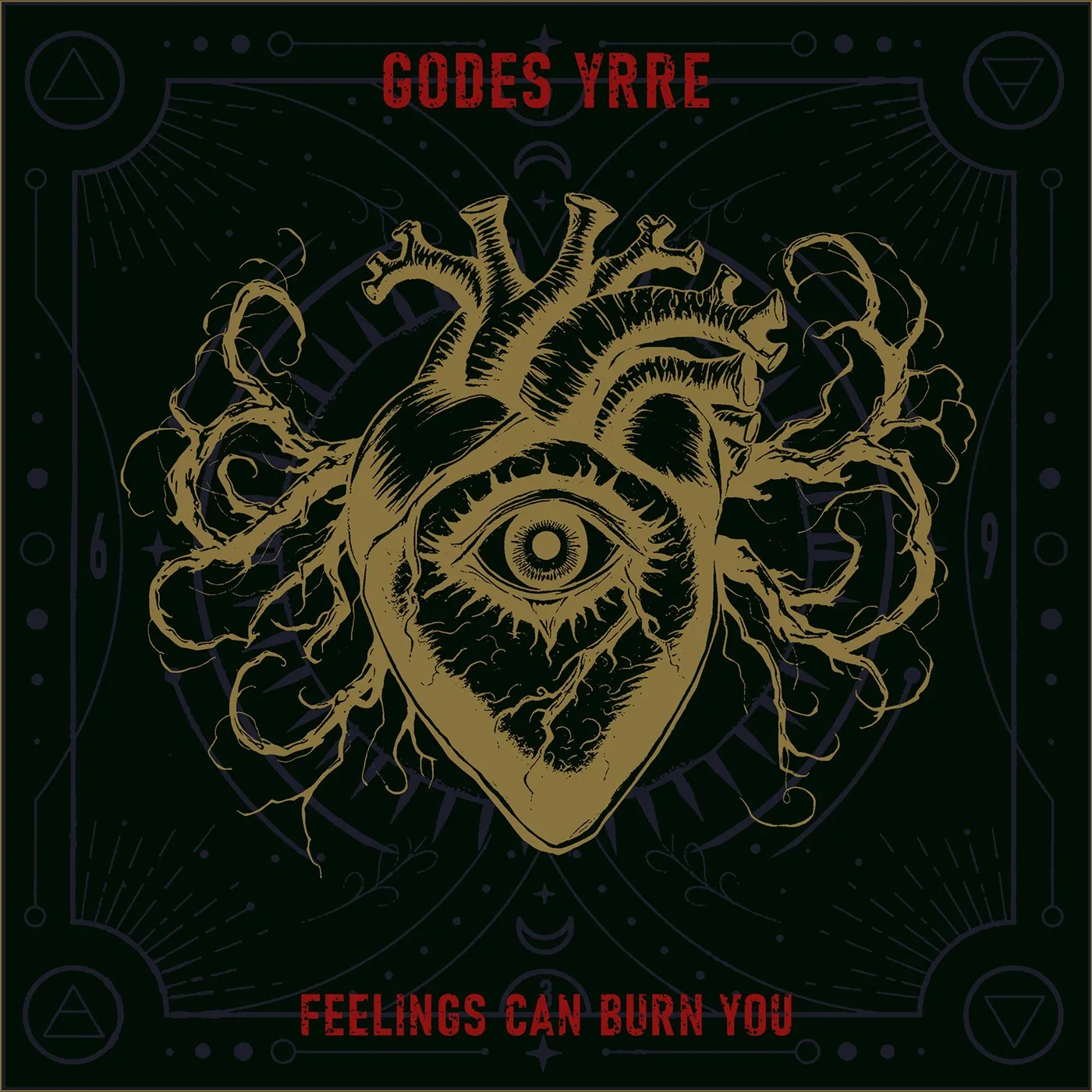
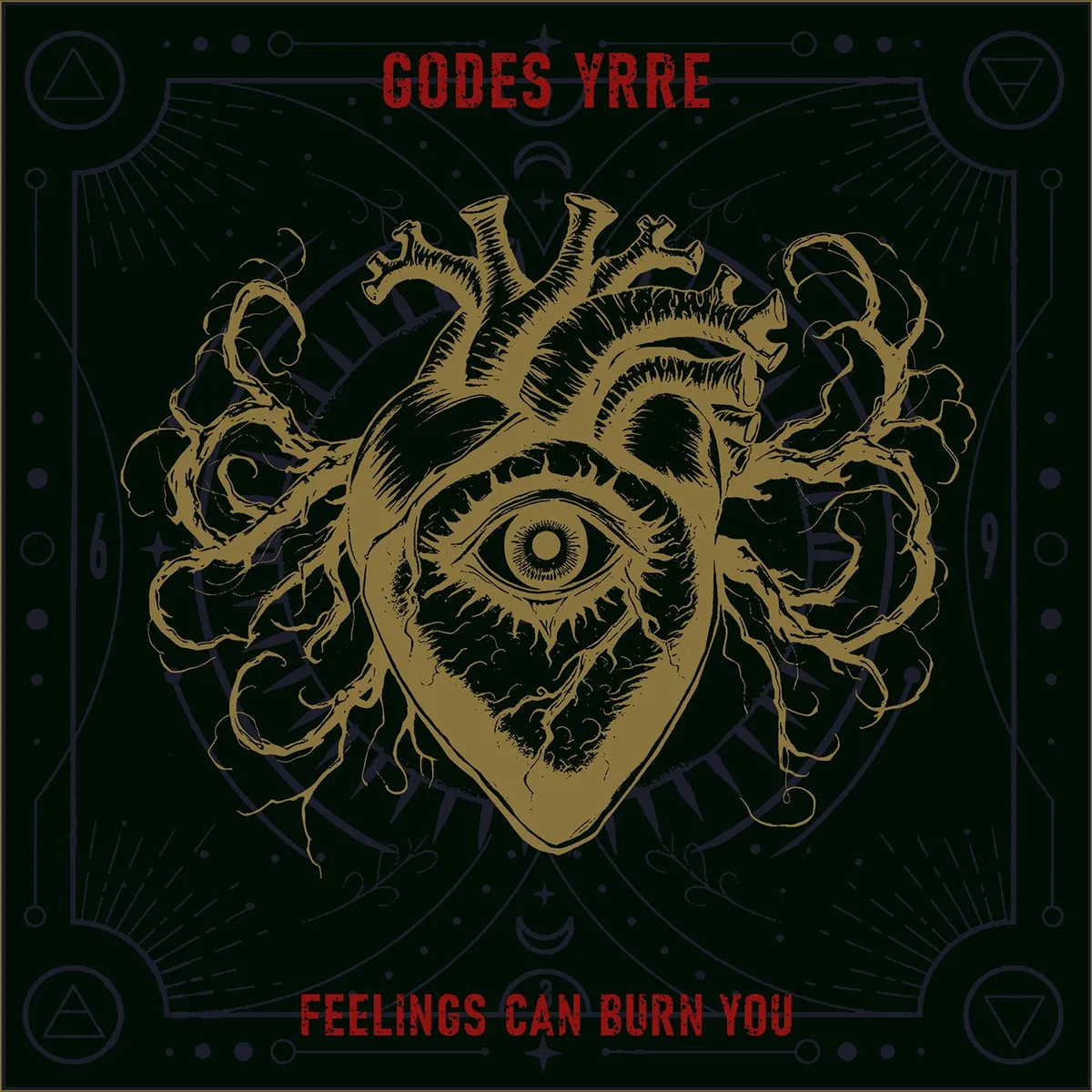
 The Godes Yrre story is older than most of the bands it now shares a release schedule with. Oliva started the project in 1994, the same year he was playing in the Swiss death-metal band Sectarium, put out a demo called A Divine Image, and then let it sleep for more than twenty years. The reactivation came in 2017 with Inside the Whale, a doom record with an industrial edge, followed by Ghost Warriors (2018) and Das Nichts (2020). Those three closed what the band’s own press calls a “numerological cycle”: three albums, seven songs each, seven minutes each, three years running. Symphony of Termination (2021) reorchestrated the back catalogue; a 2023 double compilation rearranged it again. Feelings Can Burn You, due June 26 on Bitume Prods, is the fifth studio album and the close of a newer cycle.
That newer cycle is the thing to understand before the first track. In 2024 Oliva began releasing a set of three EPs, three six-minute songs apiece, and for the first time in the project’s three-decade life he brought in guests. Feelings Can Burn You gathers those nine pieces (plus a bonus) into a single sixty-minute album, remixed and remastered. So this is not a through-composed record. It’s a compilation of a deliberately modular project, and it should be heard as one.
One Man, Many Guests
The structural signature of the album is the guest-soloist-per-track model. Oliva writes, plays and produces everything (guitars, bass, keys, programming, vocals, lyrics, at his OLI-Studios), then hands one slot per song to a different player. Neiver Diaz takes the solo on “Meditating Inside a Coffin,” Iolanu on “Stranger Black Things,” Jorge Almarales on “Medusa’s Sighs,” Hansel Arrocha on “Swimming in the Sea of Fire,” Mike Haller on “She Kisses Like a Mummy,” Manuel Varela on “Loving with Hate,” Juan Paz on “Poisons & Spells.” David Nieves brings organ and orchestral arrangement to the title track; Ismel Leal plays the violin solo on “Kill the Jocker.” Iolanu returns for guitars and vocals on the closing bonus, “Meditating Inside.”
That guest model is the album’s most interesting idea and also its structural limitation. Each song is built to host an outside voice, which gives the record variety (the violin on “Kill the Jocker,” the organ-and-orchestra on the title track, the clean-baritone-into-shouts arc of the bonus closer) but also means the album reads as a sequence of self-contained set-pieces rather than a developing whole. For a project that has always been “conceived to release studio albums” rather than to tour, that’s a coherent way to work; for a listener, it asks you to take the record as a gallery rather than a narrative.
The Sound, and the Production Question
Musically Feelings Can Burn You sits where the press positions it: the stoner-and-gothic turn away from the older death/doom-with-industrial sound. The riffs are saturated and mid-forward, the vocals move between aggressive shouts and (on the title track and the bonus) a clean gothic baritone, and the guest solos give each track its distinguishing colour. “Medusa’s Sighs” and “Swimming in the Sea of Fire” lean most clearly into the melodic-gothic register; “Poisons & Spells” and “Meditating Inside a Coffin” are the heaviest, most death-doom-rooted cuts; the title track is the most ambitious, with Nieves’s organ and orchestral arrangement giving it the widest dynamic frame on the album. The bonus “Meditating Inside” is the strongest argument for where the project could go: clean-baritone passages against massive eruptions, the contrast doing real work.
The reservation is the production. Across all ten tracks the master is pushed for maximum loudness, the drums read as heavily triggered and processed, and the dynamic range is consistently flattened into a dense wall. That approach gives the record a uniform aggressive presence, but it also levels exactly the dynamic contrast the songwriting reaches for, particularly on the quieter intros and the orchestral passages, where a less compressed master would let the arrangements breathe. The instrument separation is good (you can track the riffs and the guest solos clearly), but the mechanical perfection of the rhythm section and the brick-walled mastering keep the album from the organic weight the doom-and-gothic vocabulary rewards. For a self-produced one-man project this is an understandable trade-off; it’s still the thing standing between this record and a higher mark.
Ten tracks, composed/produced/recorded by Oliva at OLI-Studios, mixed and mastered at DeepBlast. The mix philosophy is consistent across the album: maximum-loudness mastering, heavily processed and likely triggered drums (very click-forward kick, dry compressed snare), mid-forward frequency balance, and a dense wall-of-sound that flattens most of the dynamic argument. Guitars carry high saturation with generally readable riff definition; bass functions as a low-mid foundation rather than an independent voice. Vocals (aggressive shouts, with clean gothic baritone on the title track and the bonus closer) sit forward and stay intelligible. The guest solos read cleanly through the density. The quieter intros and the orchestral/organ passages on the title track show real spatial depth, but the full-arrangement sections compress that depth away. Strengths: instrument separation under heavy density, consistent presence. Weakness: brick-walled mastering and mechanical drum processing remove the dynamic contrast the songwriting and the orchestral guests are reaching for.
Standout tracks: Meditating Inside (bonus track) for the clean-baritone-into-eruption contrast that points where the project could go. Feelings Can Burn You for David Nieves’s organ-and-orchestral arrangement giving the album its widest frame. Kill the Jocker for Ismel Leal’s violin solo as the record’s most distinctive single moment.
A preview verdict: Feelings Can Burn You is a confident, ambitious close to Godes Yrre’s EP cycle, and the guest-per-track model gives it more variety than most one-man doom projects manage. The brick-walled production is the real reservation, and it’s consistent enough across the record to keep this at three stars rather than four. Worth your time on June 26 if you appreciate Swiss one-man doom that takes its conceptual cycles seriously and isn’t afraid to hand the spotlight to a different player on every track. Final verdict on release.