 Bandcamp
 Martin Sällström plays guitar in Vulture Neck, and he also recorded and mixed this album. Then the trio sent it to Brad Boatright at Audiosiege, the man behind masters for Nails, Full of Hell and Sleep. That split, a band mixing itself and a specialist finishing the job, explains almost everything about how this record sounds, including the one thing that holds it back.
What the arrangement gets right is air. Nothing here has been flattened for volume. The drums keep a room around them, the snare has a dry wooden crack instead of a sample, the kick works on push rather than click, and the cymbals stay soft at the top instead of turning into hiss. “Phantom Carriage” is the clearest case: warm, unhurried classic epic doom with a sustained clean vocal sitting centred and steady, and enough headroom that the slow riff lands with weight rather than loudness. That kind of finish is a choice, and for a self-released debut it is the right one.
What the arrangement costs shows up on all seven tracks, and it is a mix problem rather than a mastering one. The fuzzed guitars and the bass occupy the same ground low in the middle, somewhere between 150 and 400 Hz depending on the song, and when everything is running the individual note attacks lose their edges. On “Raining Fire, Raining Stones” it takes the space the drums need. On “Hand Of A Drowning Man” it turns the loudest third into a single mass. Boatright cannot fix that at the master stage, because separation is decided before he gets the file, and the band mixed itself.
The other thing worth knowing is how much ground these seven songs cover, because the record is not the one-note thing its genre tags suggest. Magnus Öhrn sings and plays bass, Sällström sings and plays guitar, and having two voices lets the album move: harsh, forward shouts on the opener, guttural and reverb-buried on “Rat Riders”, a sustained baritone on “Bright Lights Descending” with Elin and Hanna Jäderberg on backing vocals, and a swing between sonorous cleans and desperate roars on “Hand Of A Drowning Man”. Musically it runs from epic doom through dry hardcore-adjacent sludge to a psychedelic fade on the closer. “Höst” opens the record in under three minutes, acoustic and quiet, before the first riff arrives.
Whether that range reads as ambition or as indecision is the honest question about this debut, and after one listen I would say ambition, because the two ends of it are the two best songs. “Phantom Carriage” and “Bright Lights Descending” are where the trio sounds most like itself, and both are the ones that lean on a real melody and a voice carrying it rather than on mass alone.
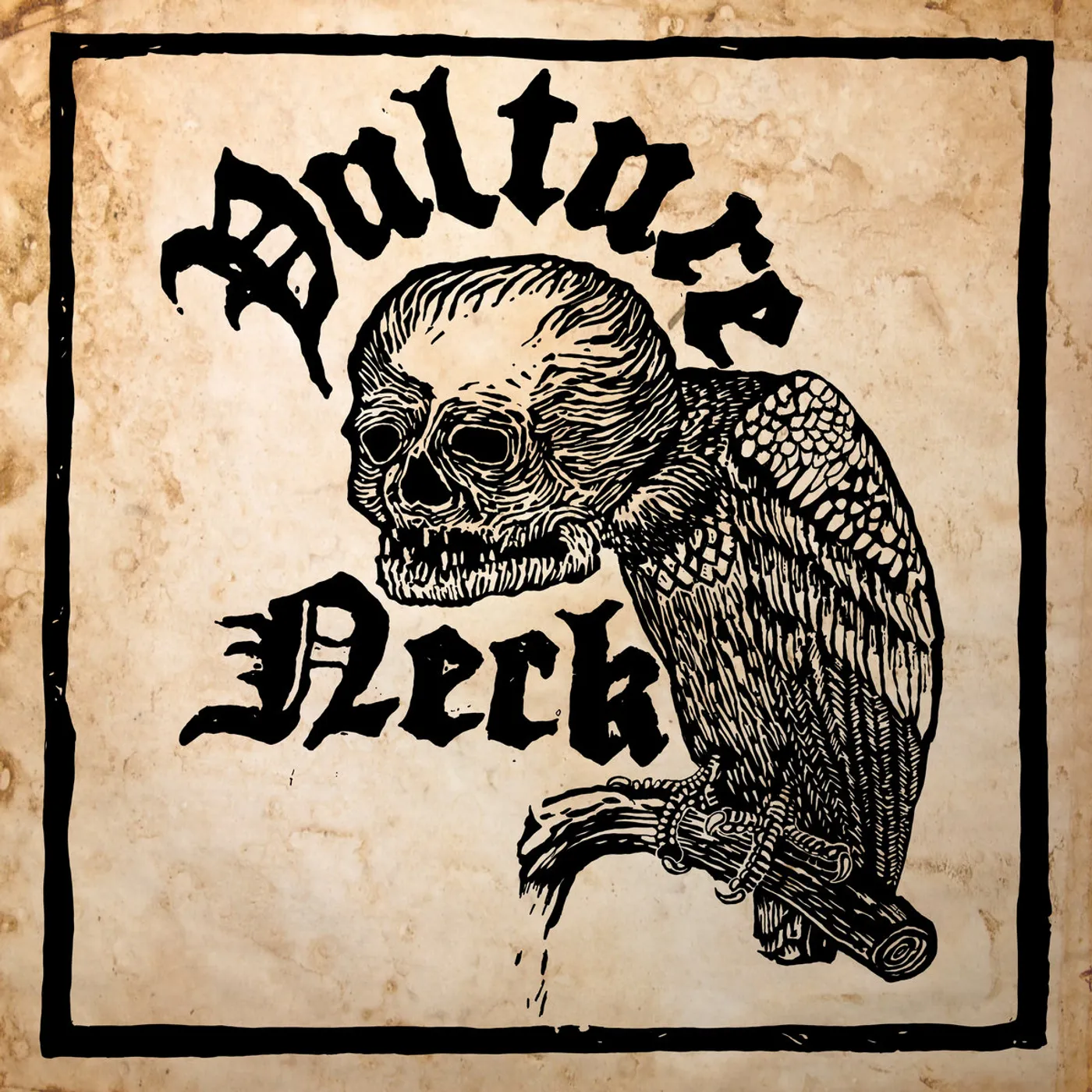
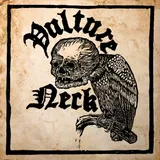
Seven songs, thirty-eight minutes, no label, artwork drawn by the bass player. What Vulture Neck have made is a debut with a genuinely good finish and one recurring technical cost, and the cost is the kind a second set of ears at the mix would remove entirely.
The mastering is the standout, and it is worth naming what it does not do: there is no loudness push here, so the quiet passages stay quiet and the peaks arrive with somewhere to go. Drums sound played rather than assembled throughout, with a dry snare that has wood in it, a kick built on low-end shove instead of attack, and cymbals that stay silky rather than sharp. Vocals are consistently well placed, forward and dry on the harsh tracks with unusually good intelligibility for the style, deeper in the reverb field where the song wants atmosphere. Guitars carry a grainy, heavily saturated fuzz that keeps riff shapes readable at slow tempo. The one flaw is consistent across all seven tracks and sits in the mix rather than the master: fuzz guitars and bass crowd the same lower-middle band, roughly 150 to 400 Hz depending on the song, and at full density that costs note definition and occasionally squeezes the drum transients. On the two slowest, most melodic songs it barely registers. On the fastest and heaviest it is the first thing you notice.
Standout tracks: Phantom Carriage, Bright Lights Descending, Abyss Made Of Stone