 Bandcamp
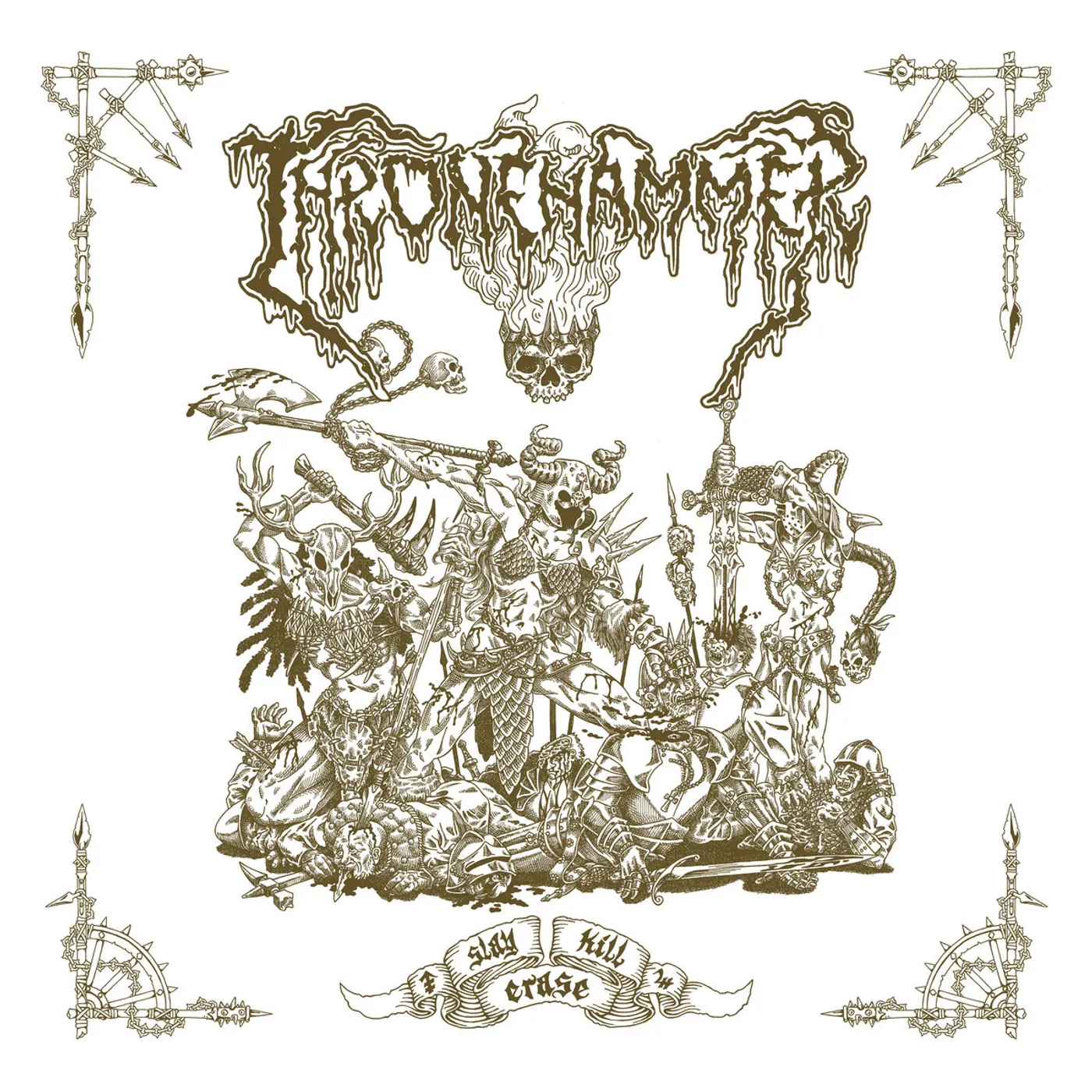
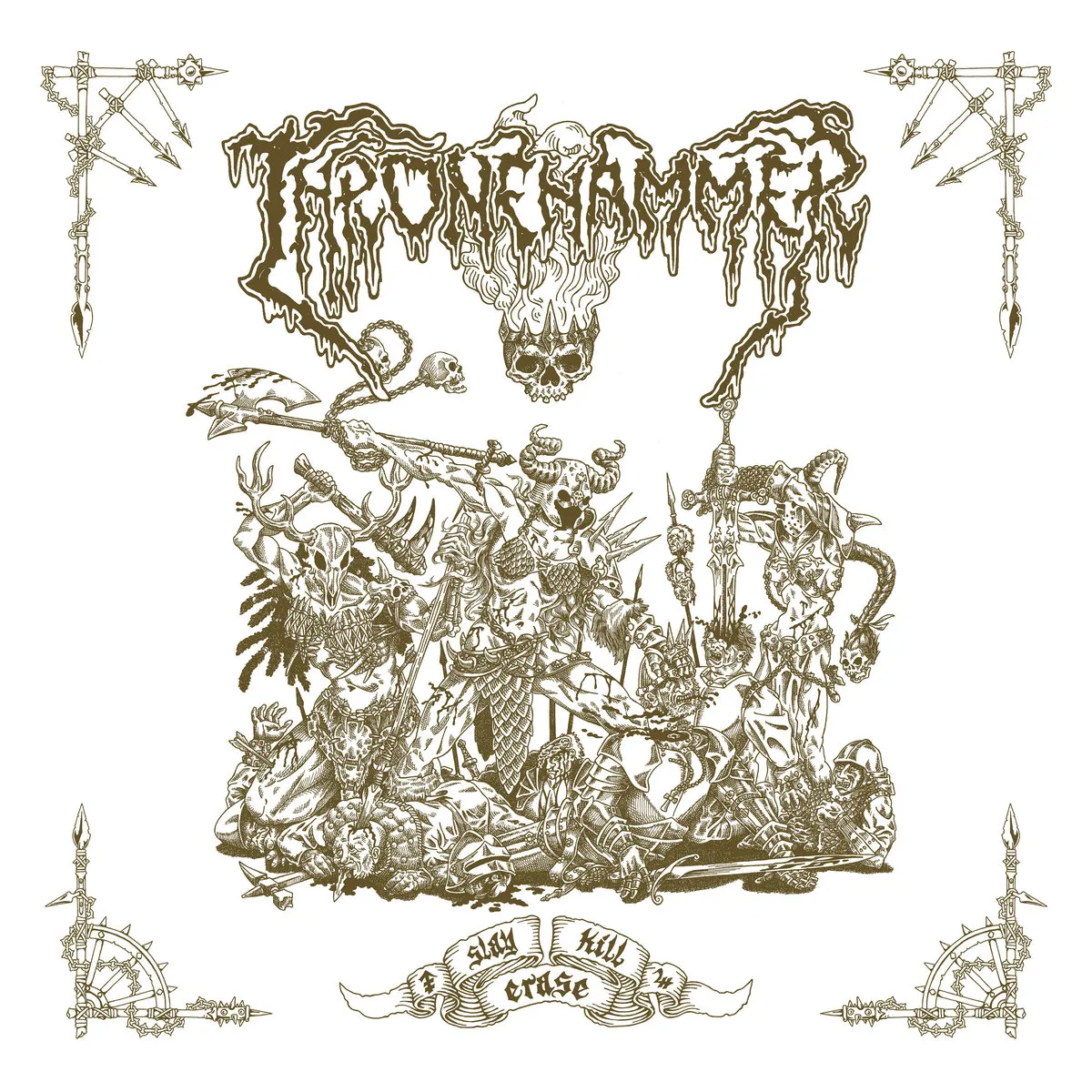
We wrote about Kingslayer in December 2023 and called it the band’s most accomplished record. Almost three years on, Slay | Kill | Erase arrives at the same length to the nearest minute, seventy four against seventy four, with one track fewer to fill it. The interesting question is what moved inside a running time that did not.
Seventy four minutes across eight tracks, two of them past eleven minutes. That is a lot of epic doom to ask anybody to sit through, so I measured where it puts its weight.
It brightens on the way in
The spectral centre of the first three tracks sits between 2421 and 2545 Hz. By “Blade to the Heart”, “Thrown into the Abyss” and “Dethroned” it has climbed to between 2702 and 2789. That is three hundred and sixty eight Hertz between the darkest and the brightest of those first seven, and apart from one small step back at track four the movement runs one way.
What the numbers cannot tell you is why, so I will not pretend otherwise. They say tracks five, six and seven sit higher in the spectrum than the opening three, and they say it on each of them rather than on one loud exception. If you have ever wondered what people mean when they say a doom record opens up without getting lighter, this is what it looks like when somebody counts.
Then the closer goes back
“Onwards to Oblivion” runs twelve and a half minutes and its spectral centre drops to 2400, right back where the opening track started.
It is also the widest piece here by a long way, nearly eighteen decibels between its quietest and loudest passage against a record that otherwise averages around eleven. Max Hemmann of Motorowl sings on it, and the arrangement gives him room that nothing else on the album has.
So the record travels upward for an hour and then spends its last twelve minutes going back down and opening out at the same time. That is the shape, and it is a good one.
The midrange never lets up
Stuart West, Tobias Utz and Daniel Ringl are all credited on guitar. Between 46 and 51 percent of the energy on every single track lives in the 800 Hz to 5 kHz band, and it never leaves that corridor across seventy four minutes. A meter cannot count guitars, so take the three players from the credits and this as a separate fact: wherever the weight of this record sits, it sits there the whole way through.
Kat Shevil Gillham sings over the top of it, and Patrick W. Engel’s mastering leaves her room: peak to average stays between thirteen and a half and fifteen and a half on all eight tracks, so the wall never swallows the voice.
The track that refuses to build
“Thrown into the Abyss” covers four decibels from its quietest passage to its loudest, against nearly eighteen on the closer. That is not a squashed master, and the numbers say so plainly: its peak to average sits at thirteen point nine, the lowest reading on the record, inside a band that is only one and a half decibels wide from end to end. The flatness is in the writing, which is the only place it could be interesting.
Placed sixth, it is the most relentless thing here and the clearest statement of what this band do when they stop building and just push. Eight minutes at one level is either the best or the worst track on the album depending entirely on your tolerance, and I come down on the side of best.
Seventy four minutes is the ask
Four out of five, the same as Kingslayer, for a record that is the same size, shaped more deliberately and less even.
The band describe themselves as a UK and Germany collaboration, and Durham is where they are based.
The reservation is the running time. The four tracks between the opening run and the closer cover ten and a third decibels between them, but that whole span comes from one piece: take “Thrown into the Abyss” out and the other three sit inside three and a half. So the middle is more even than I first wanted it to be. It is that seventy four minutes of epic doom asks for a kind of attention most records do not get twice in a week, and the thing I lost around “Dethroned” was stamina rather than interest.
If you only have twenty minutes, take “Onwards to Oblivion” on its own. If you have the evening, the twelve minutes it spends unwinding only make sense after the hour that winds up.
The midrange barely moves across the whole album. Between 46 and 51 percent of the energy on every single track sits in the 800 Hz to 5 kHz band, and peak to average holds between thirteen point nine and fifteen point five throughout, so the density never costs the vocal its place.
The bottom moves in a band of the same width, four and seven tenths points. Energy below 250 Hz runs from seventeen and a tenth percent on “Rise of Resistance” to twenty one and eight tenths on “To Never Return”, with that second track sitting noticeably heavier than the rest, and it averages under nineteen across the eight. Against the thirty six doom and sludge records we have measured, whose average low end sits near twenty three percent, that is a lighter floor than the genre usually carries, and it is a large part of why the album stays legible at this length.
Dynamic range is where the album does its moving. Seven of the eight tracks average eleven and two tenths decibels between quietest and loudest, and the closer alone covers seventeen and nine tenths.