 Bandcamp
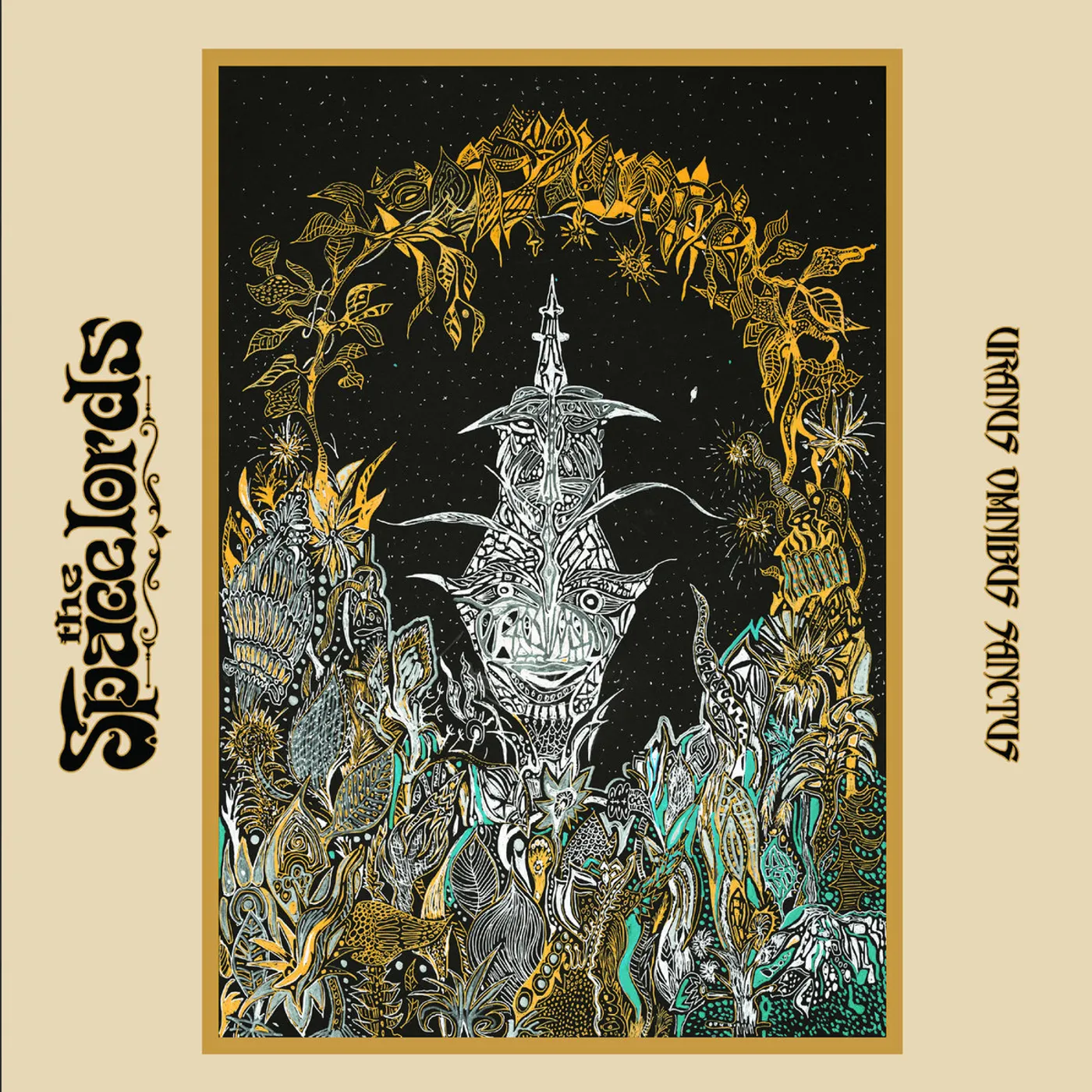
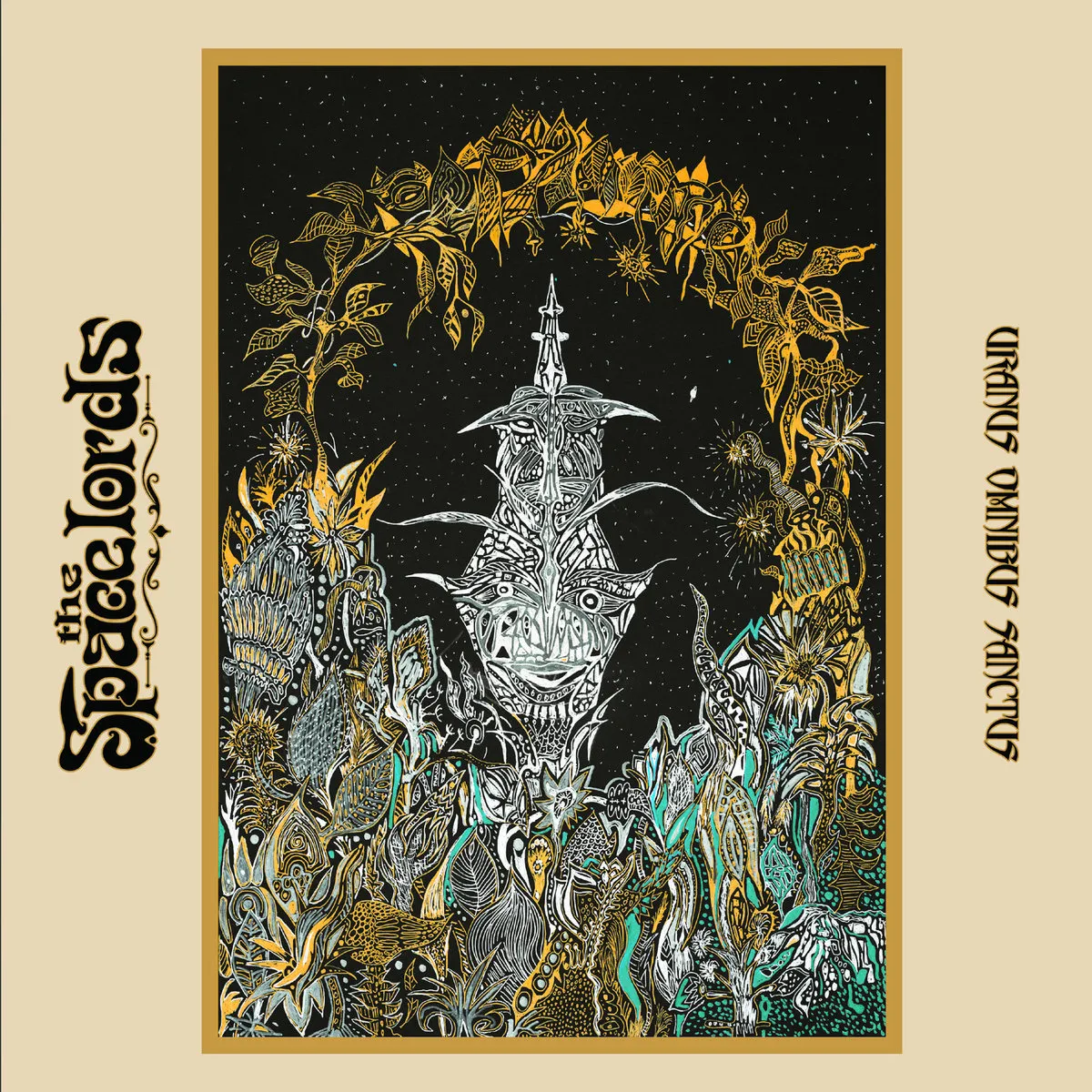
Ninth album, four tracks, forty four minutes, and not a word sung on any of it. The Spacelords formed in Reutlingen in 2008 and have worked as a trio since the end of 2009, which is long enough that the instrumental part is a given rather than a selling point.
The useful thing to say about Uranus Omnibus Sanctus is where it holds still and where it stops holding still, because that turns out to be the whole architecture.
Twenty one minutes at one level
“Uranus Omnibus Sanctus” runs almost ten minutes and moves under seven decibels from its quietest passage to its loudest. “Survive To Win” runs almost twelve and moves eight.
For long-form instrumental rock that is unusually narrow. Most bands at this length build an arc because the length demands one. HAZI, MUDGE and AKEE instead lock a groove and stay inside it, and the recording lets them: peak to average sits between thirteen and fourteen on both, so the flatness is in the playing rather than in the master.
This is the tradition they come from and it is played well. It also means the first half of the record asks you to settle in rather than to follow anything.
Then “Whales”
Fifteen minutes, and every number changes at once. The dynamic range doubles to fifteen decibels. The spectral centre drops to 2034 Hz, the darkest point on the album by more than two hundred and fifty. The low midrange swells to almost twenty two percent and the treble falls to sixteen, the lowest here.
So the longest piece is also the murkiest and the most mobile, and it sits third of four. The band spend twenty one minutes establishing a level and then break it with the one track that has room to go somewhere.
Didi Holzner guests on organ across the record, and the two write-ups that place him most clearly put him on the title track. Eroc, who knows something about this music, mastered it.
The closer goes low
“On The Verge Of Delirium” is the shortest at under eight minutes and carries the most low end on the record, nearly twenty three percent below 250 Hz. It is also the one piece where peak to average dips under thirteen.
After “Whales” that reads as a deliberate landing. The record does not try to top its centrepiece. It puts weight on the floor and stops.
Where it leaves me
Four out of five. The playing is excellent, the production is the kind that lets a trio sound like a room rather than a stack, and “Whales” is the best fifteen minutes this band have recorded.
The reservation is the first half. Two tracks, twenty one minutes, one intensity, and I came away from both remembering texture rather than any particular moment. Anybody who loves this genre will tell me that is the point, and on “Survive To Win” I half agree. On the opener I do not.
Go to “Whales” first. If the way it sinks works on you, the two tracks in front of it become the approach rather than the wait.
Four tracks, forty four minutes, and one of them behaves completely differently from the other three. The opener and “Survive To Win” hold their dynamic range to seven and eight decibels across nearly twenty two minutes of music, which is very narrow for pieces this long.
“Whales” doubles that to fifteen. It is also the darkest thing here, with the spectral centre at 2034 Hz against 2295 to 2724 elsewhere, the most low midrange at almost twenty two percent and the least treble at sixteen.
Peak to average runs between twelve and a half and fourteen across the album, lowest on the closer, which carries the most energy below 250 Hz. Nothing here was squashed to get loud.