 Bandcamp
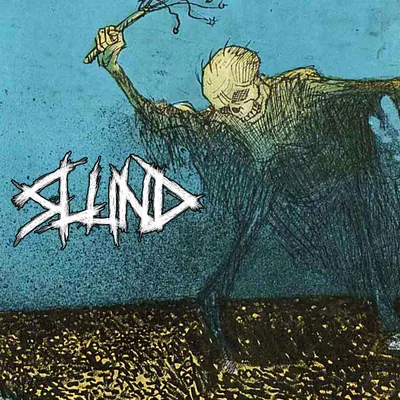
 Nine songs, three people, two of whom sing, and a production that does not try to make any of it sound bigger than it is. Jessica Paton plays guitar and sings, Lucy Eldby plays bass and sings, Carla Tinsley drums. Ciara Bernstein recorded and mixed it, Martin Phillips mastered it. That is the entire apparatus behind this record and you can hear that it is.
Slumbug tag themselves doom, sludge, stoner, grunge and punk, and the useful thing about that list is that the last word is doing real work. This is not a slow record. It is a hard, bright, direct one that happens to use sludge tone, and it sits further up the treble range than most of what we measure, which for the style is a choice rather than an accident.
The first half
“Even The High Priestess Fucks Up Sometimes” is the widest thing here and the brightest, which tells you what the band do when they are enjoying themselves. “May Seventh” opens the record almost as wide. “Earthed Witches” and “Selfish Living” sit in the same territory. Across those five tracks the distance between the quiet and the loud passages holds between eleven and eighteen decibels, which is real range for music played this hard, and it is what makes the heavy parts land instead of simply continuing.
Two voices is the other reason the first half works. On a record where the guitar tone barely changes, having two singers trade off is the main source of variation, and it is used often enough to matter rather than saved up as a trick.
The second half
Then it narrows. From “6th House” onward the four remaining tracks run between six and nine decibels, roughly half the range of what came before, with no corresponding change in tempo or weight. That is the reservation and it is the reason this is a three rather than a four. It is not a mastering problem, because the master is consistent throughout and nothing is crushed. It is a writing and sequencing problem: the band put their most dynamic material at the front and then played out the back end at one setting.
For a punk-leaning record that is a defensible choice, and plenty of people will not notice. But the first five songs establish that this band can do more than hold a level, which makes the last four feel like a decision to stop trying rather than a style.
So
Worth hearing, and genuinely recommended to anyone who wants sludge with the tempo left in. There is a real band here, playing tightly, recorded honestly by people who did not over-reach, and the best three songs are better than the rating suggests. Three out of five is our normal mark for a record that does something well rather than a mark against it, and what holds it there is the shape rather than the playing: nine tracks that spend their second half confirming what the first half already proved. Start with “Even The High Priestess Fucks Up Sometimes” and let it run from there.
The record splits in two at track six. Across the first five, dynamic range runs 11.0 to 17.7 decibels; across the last four it runs 6.1 to 9.3, with the album median at 11.0. Nothing else moves with it: crest values hold between 10.9 and 11.9 decibels above average across all nine tracks and average levels between minus 11.1 and minus 12.0, so the master is consistent and the narrowing is in the material rather than in the processing. Tonal centres run 2203 to 2780 hertz with a median of 2517, which places the record in the brighter third of the forty one albums in our measurement set, and the treble share sits between 16.0 and 20.2 percent. The low band under two hundred and fifty hertz holds 19.7 to 25.3 percent. “Even The High Priestess Fucks Up Sometimes” is the widest at 17.7 and the brightest at 2780, “6th House” the narrowest at 6.1.
Standout tracks: Even The High Priestess Fucks Up Sometimes, May Seventh, Selfish Living