 Bandcamp
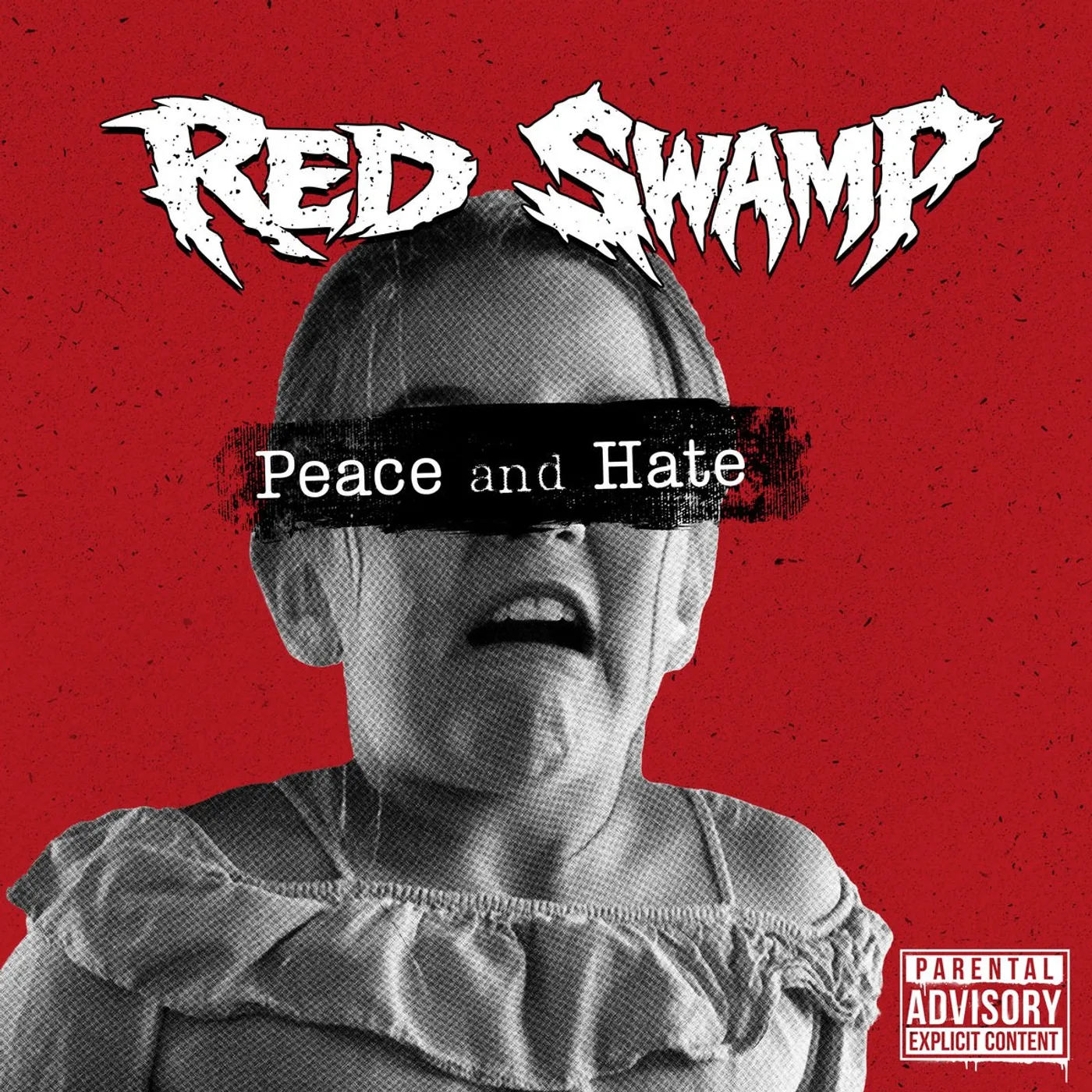
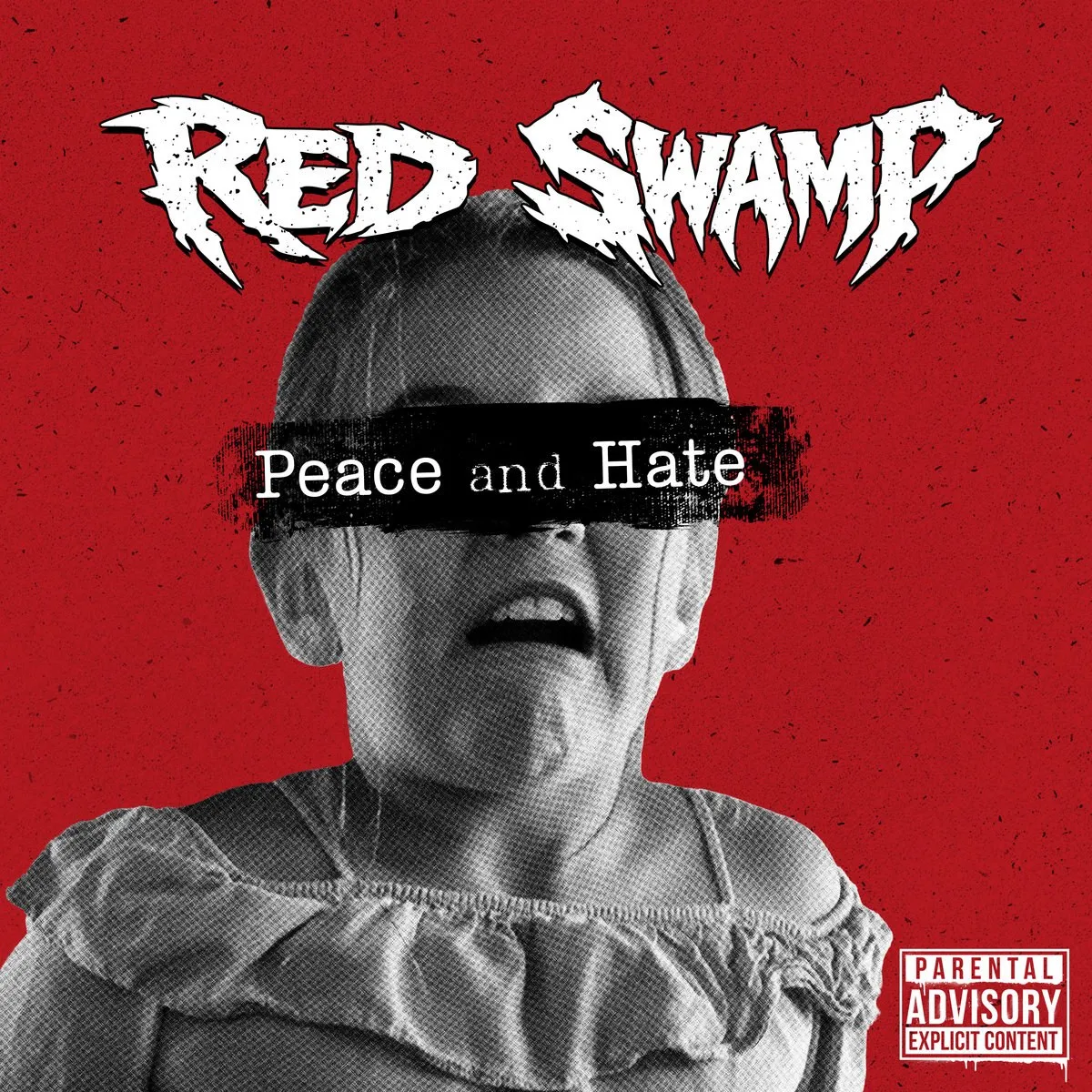
 Red Swamp call themselves Hungary’s only “smoker metal” band, which is a tag they earned by working a stoner / groove-metal cross since their debut twelve years ago. Peace and Hate, released May 11, is the band’s fourth full-length and the record where the stoner side of the equation gets pushed aside in favour of a tighter, more contemporary groove-metal mode. The lineage they cite themselves -- Down, Pantera, Crowbar, Lamb of God, Clutch, Black Sabbath -- names the direction. The four core members (Greg Kovács on vocals, plus the rhythm section and guitars) work eight tracks across thirty-seven minutes, with two songs sung in Hungarian and guest contributions from drummer Zsombor Farkas (who also produced and mixed the record) and from Máté Gazsi (drums on tracks 6 and 7) plus Zsolt Magda’s saxophone and Greg Kovács’s own trumpet on track 7.
Peace and Hate opens with “Gravity” at five minutes -- the album’s setting-of-terms cut, with the band’s modern groove-metal approach immediately clear: tight rhythm-section work, saturated guitars, vocals up front, the kind of contemporary loudness mastering that signals “this isn’t a stoner-rock record anymore.” “Utolér” (Hungarian, “catches up”) at five and three quarters pushes furthest into the album’s atmospheric-into-eruption mode, with whispered clean passages bracketing the heaviest riffs.
The Middle
“Cowards” at three and three quarters and “I Am The Sun” at five and a quarter are the album’s most compact groove-metal cuts, the kind of tight chorus-hook-verse-hook structure that the Down lineage rewards. “Nothingman” is the shortest piece on the record at three and a quarter, a quick punch that doesn’t outstay its welcome. “Takarodó” (Hungarian, “retreat”) shifts into the album’s most modern-metal territory, with the production at its most aggressively brick-walled and the vocal mix at its most upfront.
“Peace and Hate” as title track is the album’s most ambitious cut, the one where the saxophone (Zsolt Magda) and the trumpet (Greg Kovács) appear and pull the band momentarily into a Cult of Luna / Crippled Black Phoenix-adjacent atmospheric mode before the heavy returns. “Born to Bleed” closes the album at six and a half minutes, the longest track on the record and the most fully arranged, with the album’s clearest dynamic argument across the runtime.
The Production Direction
The honest read on Peace and Hate is that Red Swamp have made the production decision the lineage they’re chasing makes. Down and Pantera records from the 2000s and 2010s all leaned brick-walled, sample-heavy on the drum processing, vocal-forward; Peace and Hate does the same. The cost is the dynamic argument the title track and the closer want to make, the cleaner verse passages on “Utolér” and the atmospheric break on “Peace and Hate” register most clearly because the mastering elsewhere doesn’t leave them room. The cost of the more contemporary mastering on the heavier cuts is the standard one: instruments separate cleanly enough at moderate volume, fatigue sets in over the full runtime, the kick clicks more than it thuds, and the cymbals push toward harshness in the dense passages.
What works is the songwriting commitment. Across eight tracks the band hold a single artistic direction (no half-hearted nods to the older stoner phase), and the Hungarian-language tracks (“Utolér,” “Takarodó”) sit alongside the English ones without feeling like statement-pieces -- just different songs in the same record. The saxophone-and-trumpet moment on the title track is the album’s most distinctive single texture and the strongest argument for the band expanding their vocabulary in this direction on the next record.
Eight tracks across thirty-seven minutes, produced by Red Swamp, recorded by the band and Zsombor Farkas (who also mixed and mastered). The production approach is contemporary modern-metal: aggressive brick-walled mastering, sample-leaning drum processing with sharp kick click and tight snare, vocals consistently placed forward in the mix with both harsh shouts and melodic cleans, dense low-mid frequency stacking on the heaviest passages. Guitars carry saturated digital-edge weight; bass functions as low-end foundation rather than as independent articulate voice and frequently blurs with the kick. Vocals (Greg Kovács) move cleanly between aggressive shouting and melodic clean passages, with consistent intelligibility. The atmospheric passages on “Utolér,” “Peace and Hate” and the closer “Born to Bleed” read with proper space; the densest groove-metal passages (the verses of “Gravity,” the choruses of “Takarodó”) accumulate the lineage’s typical brick-walled fatigue. The saxophone-and-trumpet appearance on the title track is the album’s most spatially open production moment.
Standout tracks: Peace and Hate for the title track’s saxophone-and-trumpet moment that pulls the band into atmospheric territory before the heavy returns. Born to Bleed for the six-and-a-half-minute closer with the album’s clearest dynamic argument. Utolér for the Hungarian-language piece that holds the band’s whispered-to-heavy contrast most successfully.
Worth your time if you appreciate Hungarian groove-metal with a clear lineage commitment (Down, Pantera, Crowbar) and a willingness to bring saxophone and trumpet into the heaviest cut on the record. Peace and Hate is the kind of fourth full-length where a band has decided what they are, accepted the production trade-offs of the genre they’re committing to, and moved forward.