 Bandcamp
 Most records that call themselves synth doom put the keyboard on top, where it functions as weather. Lua Mater puts it underneath, in the band of frequencies where a rhythm guitar normally lives, and the whole EP sounds different because of that one decision.
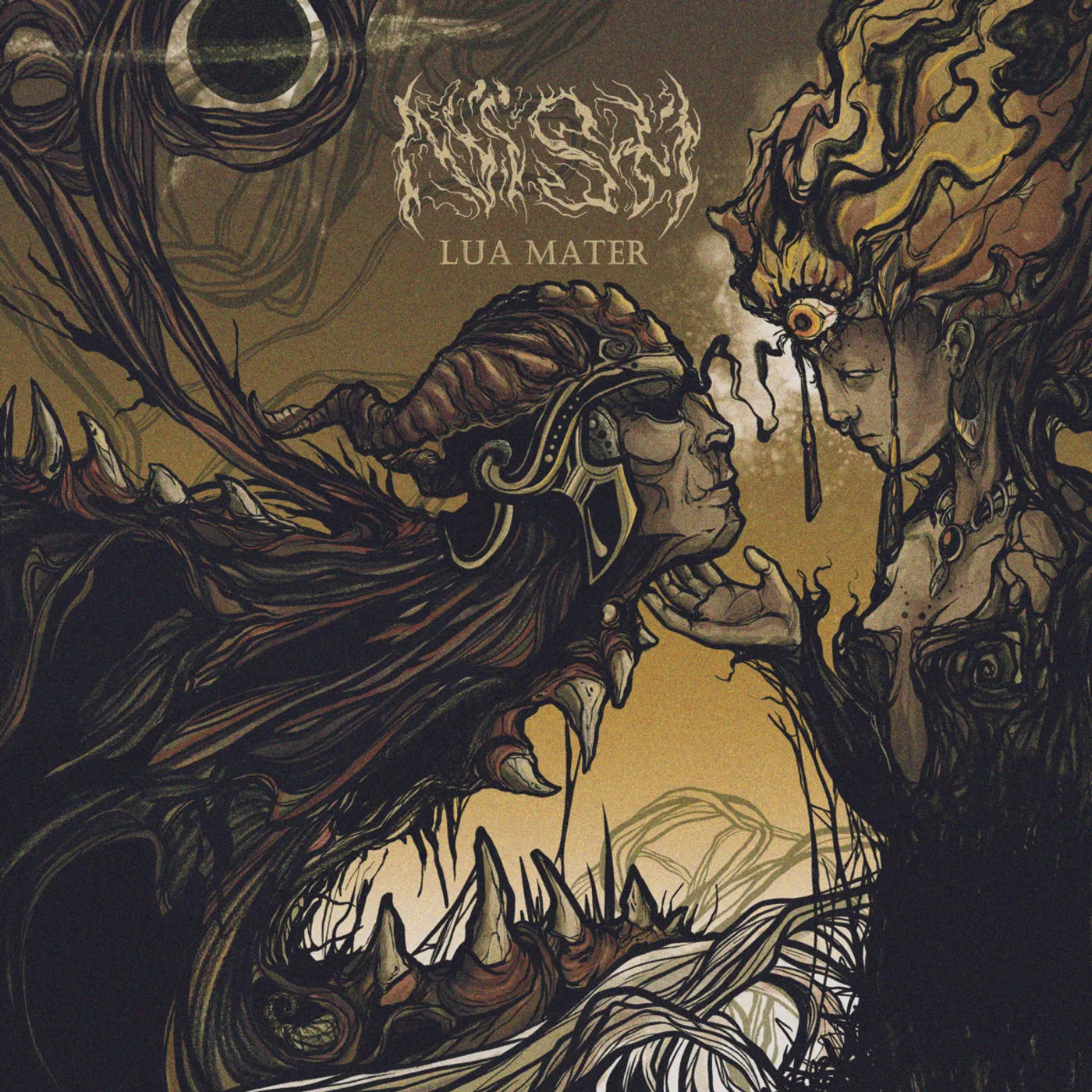
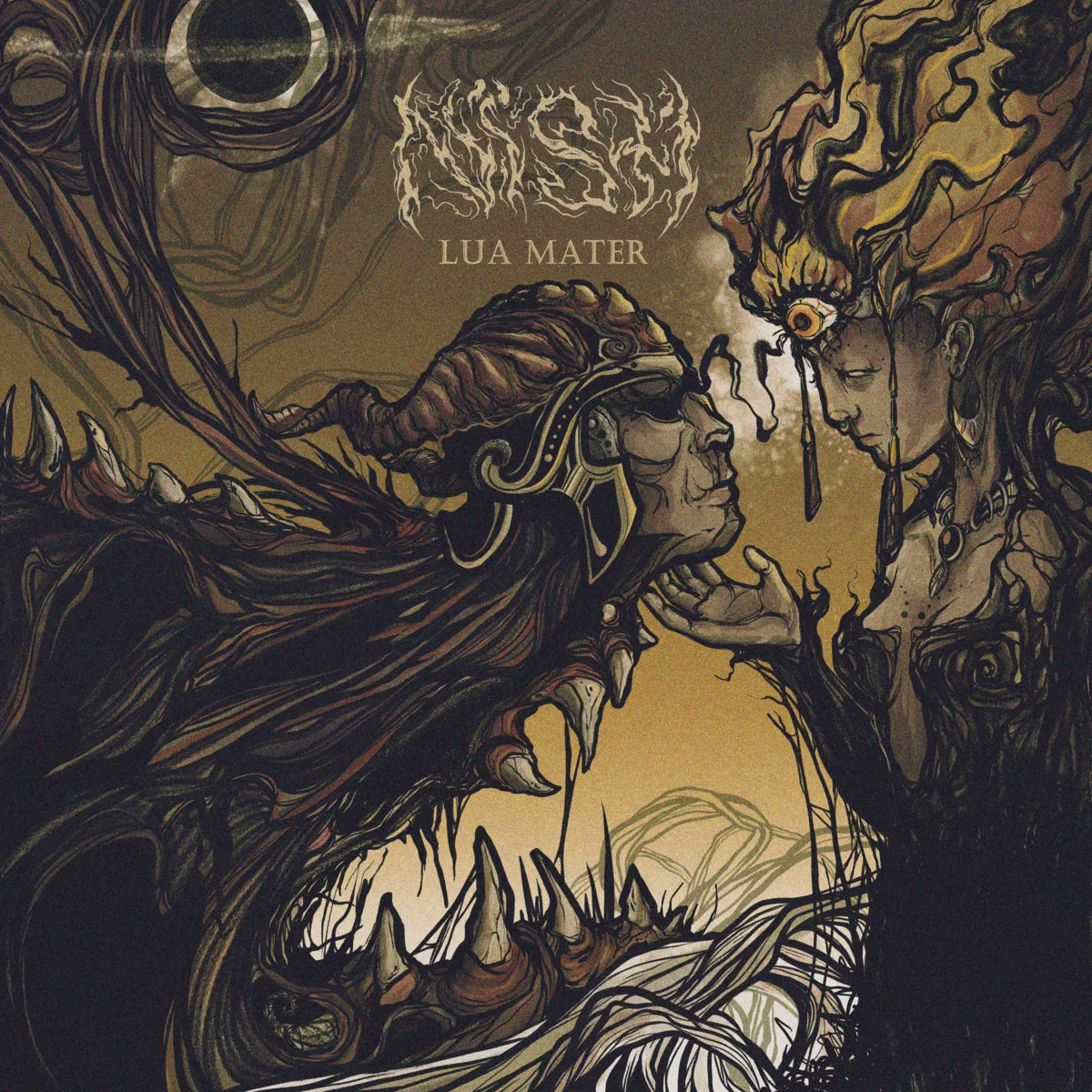
NÏSTI are Arbjana Meta and Sepehr Saberi, out of Aachen. Lukas Meyer mixed and mastered it, Anna Wächtler did the artwork, and the band’s own announcement calls this their debut EP. Four tracks.
What the room does
The thing you notice without a meter is how much air is in this. The thing the meter says is that there is more of it here than on almost anything we have run: across the four tracks the distance between the quiet and the loud passages has a median of eighteen decibels, which is the second widest of forty one albums, and the peaks sit further above the average than all but two records on file. That is the finding and it is a compliment, not a note about the mastering. A duo working mostly with synthesisers could very easily have produced a flat wall, because synthesisers make that easy. This one does the opposite on every track.
Where the energy sits is the other half of it. Between seventeen and twenty seven percent of each track lives in the low midrange, roughly two hundred and fifty to eight hundred hertz, and the median of that is the second highest share of anything we have measured. That is the register a guitar usually owns, and here it is crowded. It gives the record a thick, close, slightly airless quality in the middle that sits oddly against all that dynamic room, and the tension between those two things is more interesting than either would be alone.
“Hëna” closes and goes furthest: the darkest tonal centre by a margin of six hundred hertz, the most low midrange, the most headroom, the quietest average level. Closers that break their own record’s pattern are common enough to be a cliche. This one reads less like an afterthought and more like the place the EP was heading all along.
So
Recommended, with the caveat that four tracks is a sketch rather than a statement. What is here is distinctive enough that I would rather have it than another competent full length: a sound that is genuinely theirs, built on a structural decision most of their peers have not made, and played with enough restraint that the loud parts land. The reservation is simply length. The EP establishes a position and then stops before arguing it, and “Hëna” is the only track that gets the room to finish a thought. Start there.
This is an unusually open record. Dynamic range across the four tracks runs 13.1 to 19.9 decibels with a median of 18.0, second widest of the forty one albums in our measurement set, and crest values run 12.6 to 17.9 above average, third highest on file. Nothing has been compressed. The low midrange between two hundred and fifty and eight hundred hertz carries 17.1 to 26.9 percent with a median of 21.8, which is the second highest share we have measured, while the bottom band under two hundred and fifty holds only 16.0 to 18.8 percent. Tonal centres sit at 2003, 2140 and 2311 hertz across the first three tracks and then drop to 1389 on “Hëna”, which also carries the most low midrange at 26.9 percent, the highest crest at 17.9 and the lowest average level at minus 19.1 decibels. Treble runs 11.6 to 18.7 percent.
Standout tracks: Hëna, Sinner, Saturn Takes Over