 Bandcamp
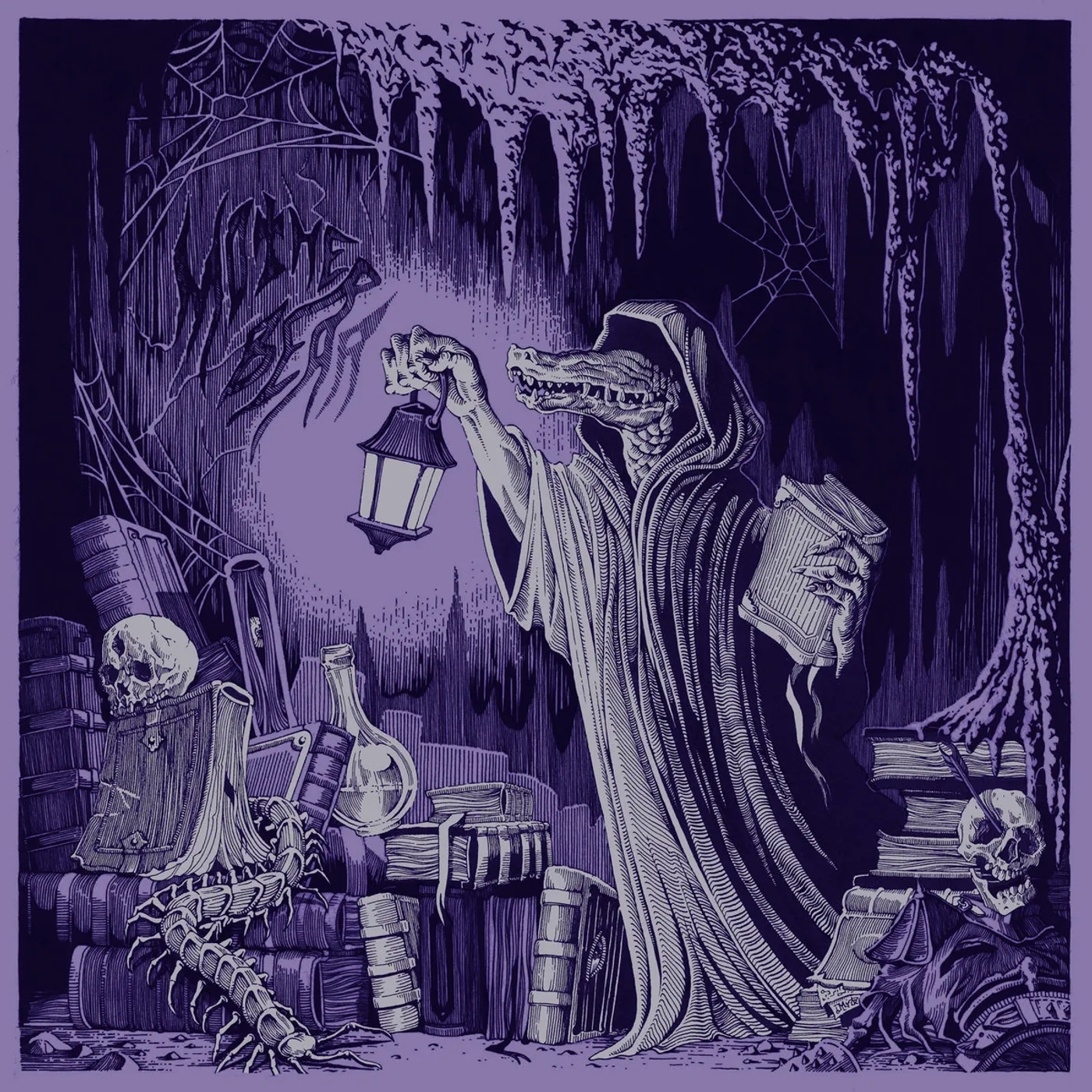
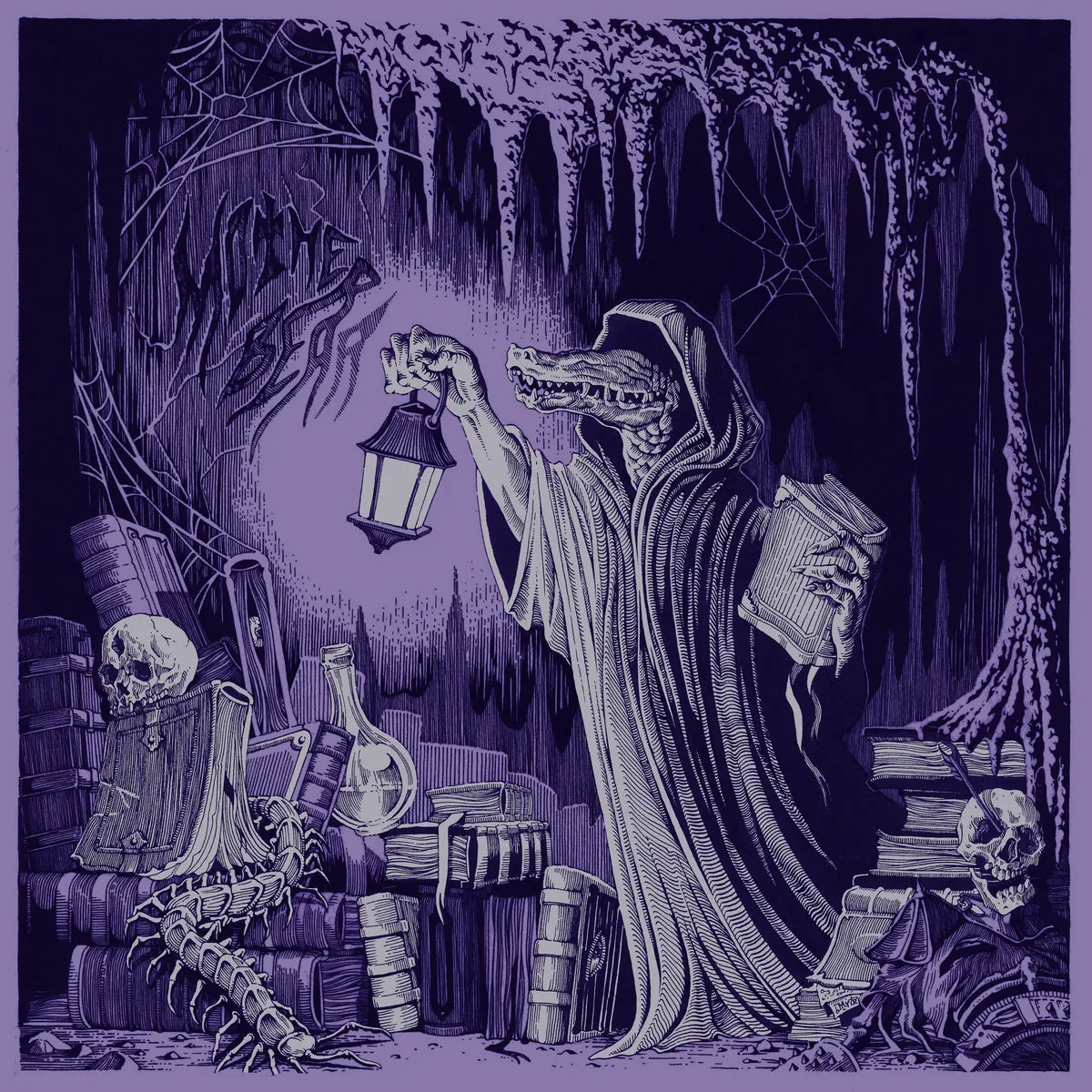
 Walter Moers’ Zamonia novels are an unlikely concept for a stoner-doom album, and Mother Bear are committed enough to that unlikeliness that their second record digs deeper into the dark lore of Moers’ fictional continent than the debut. Orm 2, the sophomore album from the Dortmund trio (Jonas Wenz on guitar and vocals, Kevin Krenczer on bass, Florian Grass on drums), is the sound of a band that has decided to lean fully into “slow music for slow minds” as both a tagline and a production philosophy. Five tracks, forty-three minutes, recorded and mixed by Arno Augustin in Dortmund, with Allysen Callery contributing spoken word on the twelve-and-a-half-minute closer.
“Homunkoloss” opens on the album’s defining sonic posture: a thick low-mid wall where the fuzz-saturated guitars and the bass merge into a single mass, the drums sit far back in a deliberately distant room mix with the kick-in missing the click that would let it cut through, and Wenz’s meditative cleans are buried under heavy reverb and delay. It is a deliberate aesthetic choice that places Mother Bear in the lineage of Windhand and Electric Wizard rather than in the modern, separation-forward end of the stoner spectrum, and it commits to that lineage even in the moments where a small dose of low-end clarity would have made the riffs hit harder.
Where the album opens up
“Muggroom Caravan” is the four-minute outlier and the cut where the band let the production breathe. The mix lifts, the kick suddenly has a defined click, the cymbals stay controlled rather than airless, and a faster, sludgier momentum drives a song that lands closer to Sleep at speed than to the funeral-paced openers. It is genuinely energising in context, and it suggests what Orm 2 would sound like with that production approach applied across the runtime. The album does not take that turn. “Inazea” returns to the slow, muddy, deep-mid-stacked aesthetic, the harsh vocals buried in reverb as another atmospheric layer rather than as a positioned voice.
The closing “Nachtigalloskop” with Allysen Callery is the album’s strongest argument for the slow approach. The Korg MS20 played by Florian Grass adds an electronic-bass-synth fundament that the rhythm guitars fold into; Callery’s near-whispered spoken-word sits dry and forward at the centre of the mix, intelligible for the first time on the record; the structure is more linear than dynamic, riding a single mood for twelve and a half minutes. It is the cut that justifies the album’s commitment to atmosphere over articulation: when the songwriting can carry the weight, the cave-room production becomes an asset rather than a limitation.
The recording leans hard on a single sonic identity across the runtime: a thick low-mid-saturated cave-room aesthetic with the fuzz-loaded guitars merging into the bass as a single mass and the drums distantly mixed in a wet, hall-like reverb. The recurring weakness is the kick: across “Homunkoloss,” “Kometenwein” and “Inazea” it lacks the click in the upper-mids to cut through the dense low end, and reads more as low-frequency rumble than as a defined transient. Snare carries a strong wet room tail throughout; cymbals stay controlled in the highs without sibilance. The two production exceptions on the album are telling: “Muggroom Caravan” opens up the mix with an industrial low-end definition, the kick suddenly clicking through, the dynamic motion of a faster sludge song actually landing. “Nachtigalloskop” works differently, with a Korg MS20 bass synth replacing the rhythm-section foundation and Allysen Callery’s spoken-word vocal placed dry and forward as the only vocal across the record with full intelligibility. The mastering is hot enough to flatten the densest passages but stops short of overt limiter pumping. Vocals on the metal tracks (Wenz cleans and distorted shouts) are deep in the reverb and treated as atmospheric instrument rather than as positioned lead, sacrificing text intelligibility for mood.
Standout tracks: Nachtigalloskop (feat. Allysen Callery) for the twelve-and-a-half-minute closer where the slow approach justifies itself. Muggroom Caravan for the four-minute outlier that opens the production up and shows what the band can do at speed. Kometenwein for the cleanest version of the album’s cave-room aesthetic.
There is a version of Orm 2 where Augustin pushed the kick three dB up and the bass forward by another two, and that version is probably the better record. The version that exists is a committed, idiosyncratic stoner-doom album that asks the listener to take its production aesthetic on its own terms, anchored to a fictional continent from a German illustrator’s novels, and ending on a long sleepwalk through a synth-bass landscape with a guest spoken-word vocalist whispering at the edge of the frame. It is not a record that aims to convert anyone. It is a record for people who already know what slow music for slow minds is supposed to sound like.