 Bandcamp
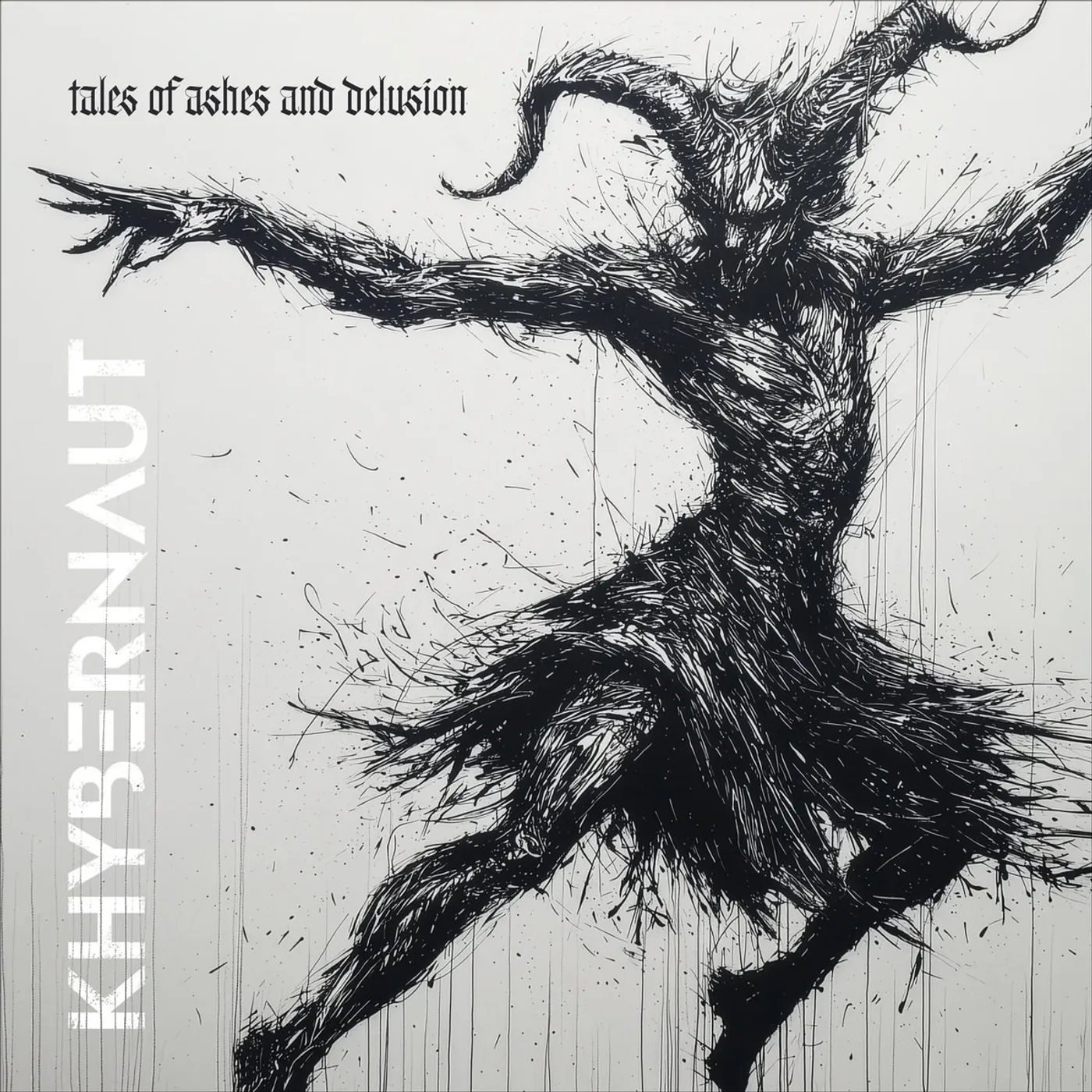
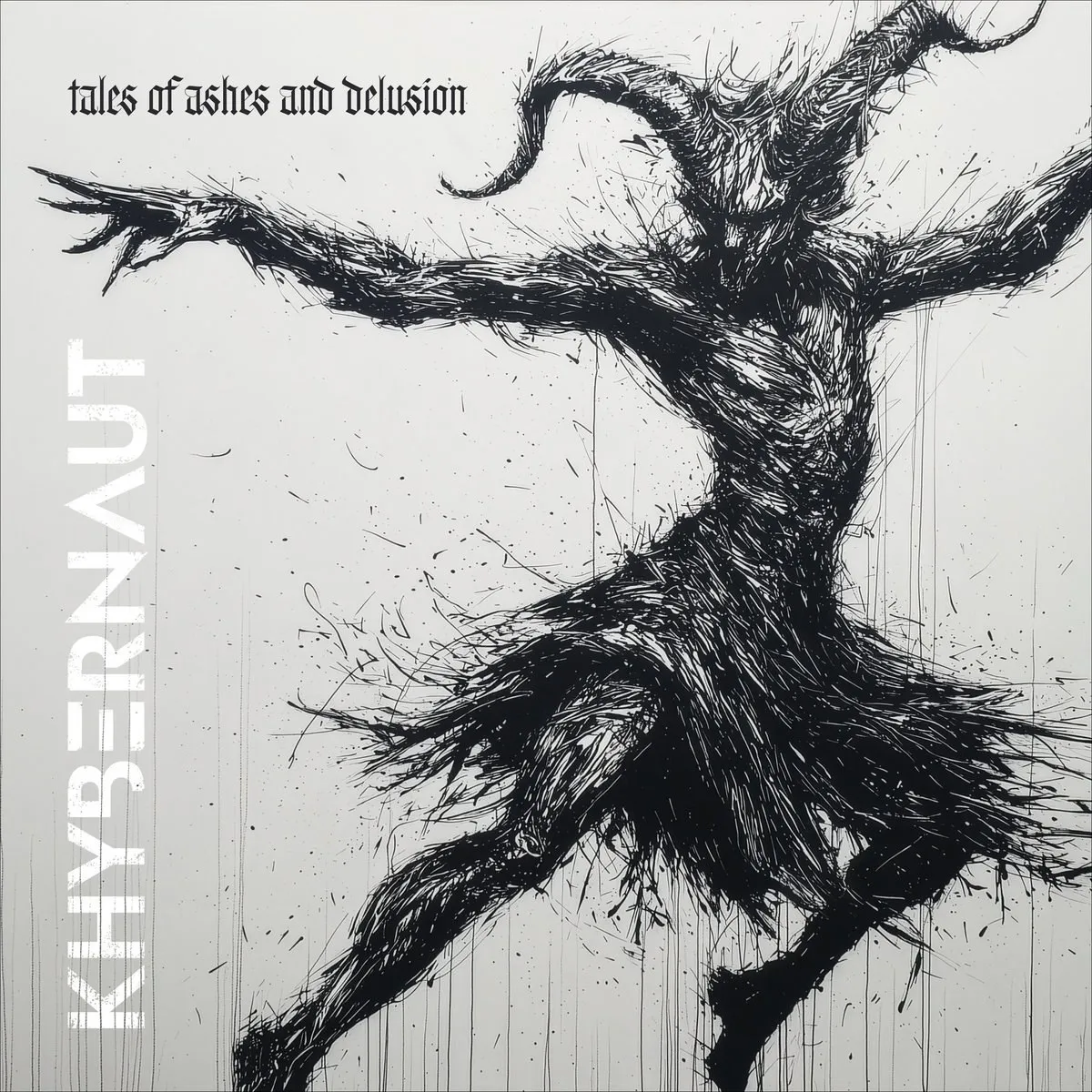
 Khybernaut are a Berlin four-piece working stoner metal with the kind of heavy-groove vocabulary that the German underground has kept moving since the late 2000s. Tales of Ashes and Delusion, released May 8 on the band’s own Bandcamp, is the debut full-length and the first formal statement of where the project sits after a 2024 EP. David Schneeweiss handles vocals, Benjamin Stockhaus guitar, Hendrik Meyer bass, Andreas Nofz drums; the album was recorded, mixed and mastered at Castalian Spring studios in Berlin with Oleg Domanchuk; cover design by Sven Darsow. Six tracks across roughly thirty-two minutes.
The album opens with “Heighest Heights” [sic] at five and forty-nine -- the album’s setting-of-terms cut, with the band’s vocabulary clear from the first riff: atmospheric synth-and-clean-guitar intro giving way to a fuzz-saturated mid-tempo wall, rough clean vocals positioned forward in the mix, drums with present snare and slightly buried kick attack. The structural contrast between the open intro and the heavy main body sets the album’s defining production decision: the band lean atmospheric build-up to wall-of-sound payoff rather than monolithic fuzz-from-the-first-note.
“Ashes to Dust” at four and three is the album’s tightest cut -- punchy, mid-tempo, with the cleanest instrument separation on the record and a chorus built for repetition. “Complaint” at six and eight is the album’s longest piece and the most ambitious dynamic argument: extended quieter passages bracketing the heaviest riffs, with vocal doublings adding width to the chorus walls. “Fear the Morrow” at five and two pulls into stronger atmospheric-into-fuzz mode.
The Back Half
“The Human Way” at six and twenty-six is the album’s most varied composition, working a wider dynamic range than the rest of the runtime. “Road to Ignition” closes the album at four and forty-six, the band’s most up-tempo cut and the cleanest example of where the project lives sonically -- fuzz-driven stoner-metal with the rough-clean-vocal anchor that distinguishes Khybernaut from straighter doom-stoner acts.
The album’s identity is the Berlin-DIY recording aesthetic -- present snare and unprocessed kick, vocal doublings filling the chorus space, fuzz-saturated guitars without sterile digital edges. The cost is the standard stoner-metal trade-off at this scale: frequency stacking around 300 Hz limits string definition on the densest passages, cymbals push toward harshness, and the kick-drum attack stays slightly buried under the bass.
What Holds This at Three
Tales of Ashes and Delusion is a confident debut and the band have a clear identity, but the album doesn’t yet carve out a corner of stoner metal that’s specifically Khybernaut’s. The atmospheric-build-into-wall structural template repeats across the longer tracks; the rough-clean vocal approach is well-executed but stays within the established Berlin/German stoner-metal vocabulary; the Castalian Spring production captures the band’s live energy without expanding their sonic palette. None of that is a project-breaker -- it’s the kind of first full-length where the songwriting commitment is real and the next album’s question is whether the band push outside what’s already a competent debut.
Six tracks across about thirty-two minutes, recorded/mixed/mastered at Castalian Spring studios in Berlin by Oleg Domanchuk. Mix philosophy is dense, mid-focused, fuzz-prioritising with retained dynamic argument: atmospheric intros and quieter verse passages have proper spatial depth, wall-of-sound chorus and bridge sections accumulate the standard frequency stacking around 300 Hz. Guitars carry heavy fuzz saturation with chord articulation that reads through on the cleaner passages but blurs on the densest; bass holds a gravelly low-end pocket that occasionally fuses with the kick. Drums have present snare with natural room ambience, kick attack consistent but slightly buried under the bass on the heaviest passages, cymbals pushing toward harshness in the densest sections. Rough clean vocals (Schneeweiss) sit forward in the mix with vocal doublings filling chorus space; intelligibility is consistent across the runtime. Mastering loudness is contemporary but with enough restraint to let the atmospheric-to-heavy contrast register. The production is honest stoner-metal DIY rather than chasing modern brick-walled aesthetic.
Standout tracks: Complaint for the six-minute centrepiece’s most ambitious dynamic argument. Heighest Heights for the opener’s atmospheric-intro-into-wall vocabulary. Road to Ignition for the closer’s up-tempo cleanest example of the band’s identity.
Worth your time if you appreciate Berlin stoner-metal that commits to the atmospheric-build-into-wall structural approach without trying to dress up the DIY production as something else. Tales of Ashes and Delusion is the kind of debut where the band have the vocabulary in place and the next album decides whether they expand the territory.