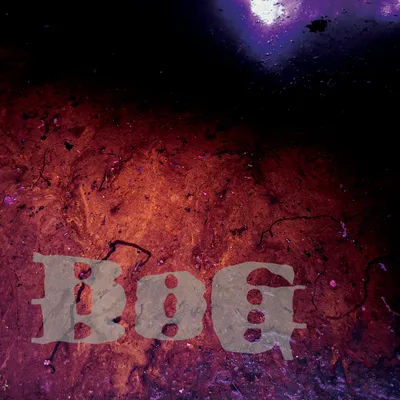
A band from Milan put Wounded Knee on a tracklist. We asked what they thought they owed the people that name belongs to, and Carlo Garof answered: “Everything. First and foremost, silence.”
That answer is the reason this review exists in the shape it does, and it explains the record more precisely than any genre tag. Hollow Bone formed in Milan in 2016 around Garof, a drummer and percussionist, and took their name from the hollow bone described by the Lakota medicine man Frank Fools Crow: the idea of becoming a channel rather than a source. Onar is the second album, titled after the Greek word for dream, and every piece on it started as one.
A record with no words in it
The vocals here are texture. The promo sheet states it plainly, the voice is used as a sonic element instead of a carrier of language, and Garof gives the reason himself: the music stays wordless so that nothing gets mistranslated that is not his to translate. Two sources, one decision, and it holds up across all seven tracks.
What that leaves is 41 minutes of very dark sound. Three of the seven pieces put under four percent of their energy above 5 kHz and not one of them gets past six and a half, and the spectral centre sits between 843 and 1424 Hz across the album, which is low enough that the record reads as weight and room rather than as detail. “Amigdala” opens at the bottom of that range with nearly forty five percent of its energy below 250 Hz.
The album opens up as it goes
The first four tracks run between twelve and a half and seventeen decibels from their quietest to their loudest passages. The last three run twenty one, twenty two and twenty three. That is not a mastering accident, it is a shape: “Presence Of Eagles”, “Shasta” and “Wounded Knee” are given more room to move than anything before them, and the record spends it on getting quieter rather than louder.
“Shasta” is where Garof is least gentle. He describes the mountain as sacred to the Wintu, Karuk, Modoc and Shasta peoples and calls the New Age traffic around it a universal catastrophe. The track is the second widest here and the second brightest, and it is the one moment where the album sounds annoyed.
The track that carries it
“Wounded Knee” closes the album and is the shortest piece on it at four minutes fifty five. It is also the quietest track, the widest, and the one with the most peak above its own average. Garof told us he could not write a song about the 1890 massacre, only dream the silence that came after it.
We did not go looking for that alignment. It fell out of the measurement before he explained anything, which is the rare case of an artist’s account of their own restraint being checkable against the file. Whatever you make of a white Italian musician working with this material, and he addresses that himself without being asked, the quietest four minutes on the record are the ones with that name on them.
Where it leaves me
Recommended, and more warmly than the rating alone suggests. Seven pieces, no filler, dynamics that most post-metal gives away at the mastering stage, and a concept carried by someone who thought about what he was doing before anybody asked. The reservation is practical: a wordless record built as one continuous passage offers you no handholds, and anyone who samples a single track in isolation will almost certainly miss what it is doing. Give it the full forty one minutes or leave it alone. Start at “Presence Of Eagles” if you need a way in, then go back to the beginning.
Garof’s full answer on the Lakota material runs to several hundred words and deserves more room than a review paragraph. It goes up separately as an interview, uncut.
The tightest playing sits early. “Innocence” and “Oceti” are the two narrowest pieces here and they occupy positions two and four, so the album puts its most controlled material in the first half and loosens afterwards.
“Oceti” is also the thickest thing on the record, with close to a third of its energy between 250 and 800 Hz, more low midrange than anything else here. “Shasta” goes the other way and pairs the highest average level on the album with the second widest range, which is an unusual combination and audible as pressure rather than volume.
Average levels run from about minus eleven to minus sixteen decibels across the seven tracks. That near five decibel spread between pieces is itself worth noting: nobody levelled this album into uniformity before it shipped.
Standout tracks: Wounded Knee, Presence Of Eagles, Shasta