 Bandcamp
 Read the tracklist before you play it. Stanco, tired. Apparire Confuso, appearing confused. Più in Basso, further down. Distanze, distances. These are not song titles in the usual sense, they are conditions, and they arrive without a narrative connecting them. The band say much of this was written during the suspended months of the pandemic, and the sequence reads exactly like that: not a journey, a list of states you were in.
Singing it in Italian matters more than it might sound. This is a genre that defaults to English almost without thinking, and bands who switch usually lose something in reach and gain something in specificity. ALLUME gain a lot. The vowels sit differently against a riff, the phrasing lands where an English line would have been stretched to fit, and a title like “Cosa Sembro” carries a self-consciousness that no translation keeps intact.
The record was cut almost entirely live over a summer at Villa Ridente, and the four of them clearly can play. “Stanco” is under three minutes, the shortest and the most alive thing here, and it moves because nobody is waiting for anybody. “Il Panorama” and “Tardis” open out into the widest arrangements on the album, and that is where the post-metal side of the description earns its place rather than just sitting in the genre list.
Then there is what happened afterwards.
A band that records live is buying one specific thing: the difference between a room where four people are pushing each other and a grid where four parts were assembled. ALLUME bought it and then mastered a good deal of it back out. Across all ten tracks the dynamic range sits in a narrow band, and the two longest pieces, “Distanze” and “AB +-”, are among the flattest, which is precisely where a live take should have the most room to swell. The loud sections are loud, the quiet sections are less quiet than they were played, and the distance between them has been shortened by somebody who was not in the room.
None of that makes it a bad record. It makes it a record you have to listen past, and the parts worth reaching are real: the thickness of the guitar sound, the bass that actually growls through the middle instead of sitting under it, and a drummer who is clearly reacting to three other people rather than to a click.
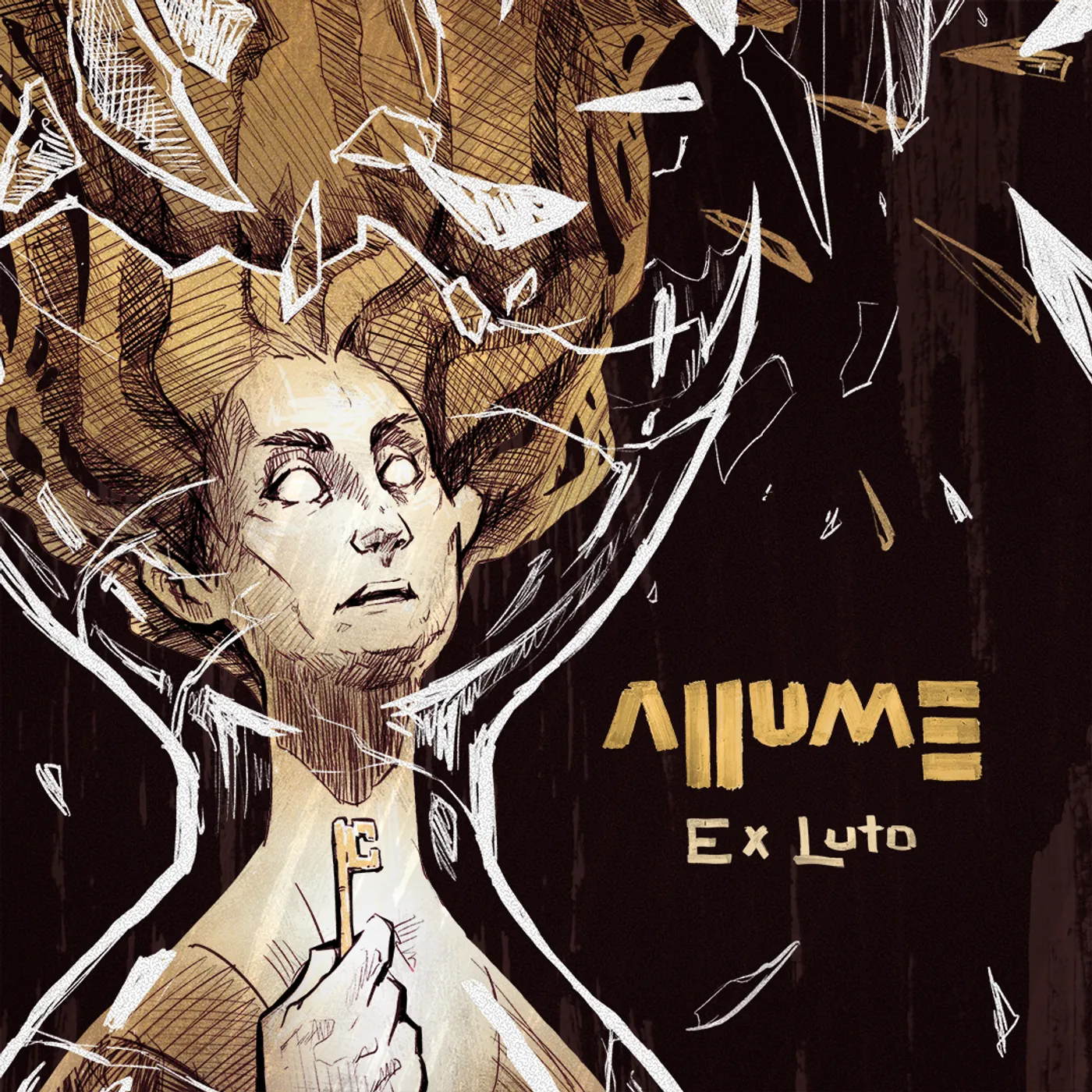
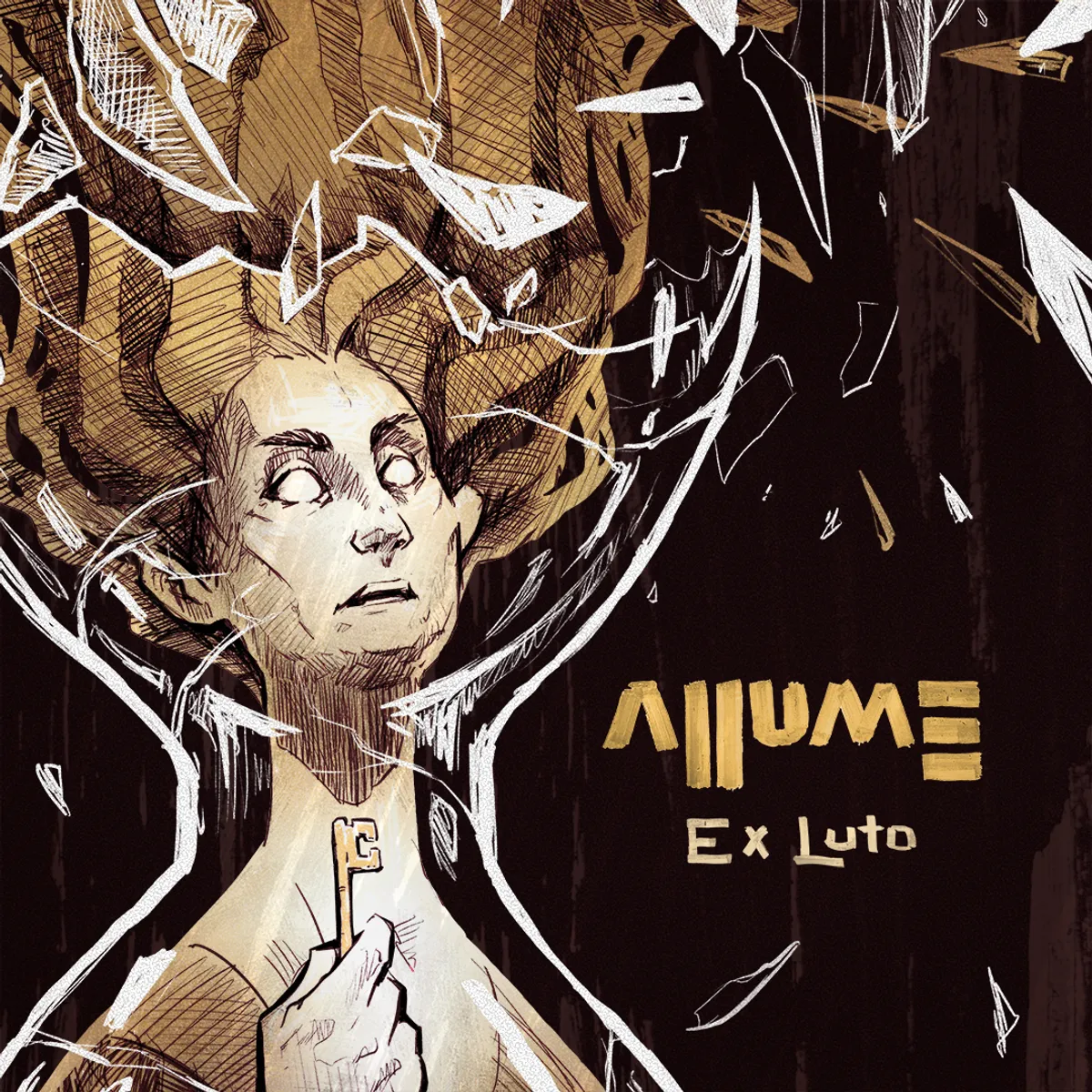
The sleeve gets the album right in a way the mastering does not. A face with its hair coming apart into shards, and at the bottom of the frame, held up almost out of shot, a key. Ex Luto, out of the mud. Something to get out with.
Ten tracks sitting in a consistent middle-weighted range with no brightness spikes anywhere, which suits a band recorded together in one room. The dynamic range, though, is uniformly narrow: the quietest and loudest passages across the album are closer together than the arrangements suggest, and “Distanze” is the most compressed thing here despite being the longest and most patient piece on the record. “Stanco” keeps the most life in it and is also the shortest. Several of the denser tracks stack bass and downtuned guitar into the same lower middle, so the heaviest moments arrive as one flat mass rather than as layers.
Standout tracks: Stanco, il Panorama, Tardis