 Bandcamp
 Play the first track and the last track back to back and you would struggle to believe they came from the same session.
“Tomorrow Dies Today” opens the album the way a single opens an album: polished to a shine, run right up against the dynamic ceiling until the transients start to flatten, the kit clean and modern with a pronounced beater click on the kick, the cymbals sharpening at the peaks and the bass reduced to a shelf under the guitars. It is competent and it is loud and it sounds like a hundred other tracks doing the same job.
“A Little Lie” closes the album seven and a half minutes later with acoustic guitars panned wide, a snare with woody give in it, warm mids, silk on the top end, and no audible limiting whatsoever. Not less limiting. None.
Everything in between is a gradient from one to the other, and that turns out to be the most interesting thing about this record.
By the second track, “Roadkill Babies”, the polish has already gone: this is a warm, earthy mix with the room audible around the kit, a snare with real shell tone, and a kick defined by weight through the low middle rather than by a click on the front of it. Kostia Newt’s voice arrives somewhere between melancholic grunge and a sustained baritone, and it sits in the mix rather than on top of it. “Hole In The Ground” adds dense vocal harmonies sung as a duet and lets the fuzz get thick without losing the riff. “Frozen In July” is where the trade pays off most obviously: the mastering leaves headroom, so when the quiet middle section gives way to the heavy one, the arrival has somewhere to arrive from.
That is the album working as intended, and the name on it is Jan Oberg, who owns Hidden Planet in Berlin and has eighteen years of making German sludge and stoner records sound like rooms rather than like plugins. He plays in Earth Ship and Grin himself, and he produced Daevar, which we covered last year. Five of the six tracks here carry that signature clearly.
Which leaves the question of why the sixth is the one they put first.
The answer, it turns out, is that nobody put it anywhere. The band recorded the whole album live in about four hours and kept the songs in the order they had written them, without giving the sequence much thought. The running order is chronology, not curation, and the opener is not calculated bait for a noisy feed.
That makes the production gradient stranger rather than simpler. If all six came out of one afternoon with three people playing together, the distance between the ceiling-pinned opener and the wide-open closer was not made in the room. It was made afterwards, on the way to the master, and it happens to run in step with the order the songs were written in. The practical consequence stands either way: anyone who bails after track one hears a decent, slightly generic stoner song. Anyone who stays gets a trio who sound like three people in the same room playing loudly at each other, which is considerably rarer and much harder to fake.
The songs themselves are stronger than the debut label suggests. Danny Rutto’s bass is a proper voice from “Frozen In July” onward, growling and dirty at the attack rather than propping things up from underneath, and Michael Johansson plays with the kind of restraint that only reads as confidence. “Son Of A Man” is the heaviest thing here and the only place where the cymbals occasionally get harsh at the top, which is a small price for how close the kit is mic’d.
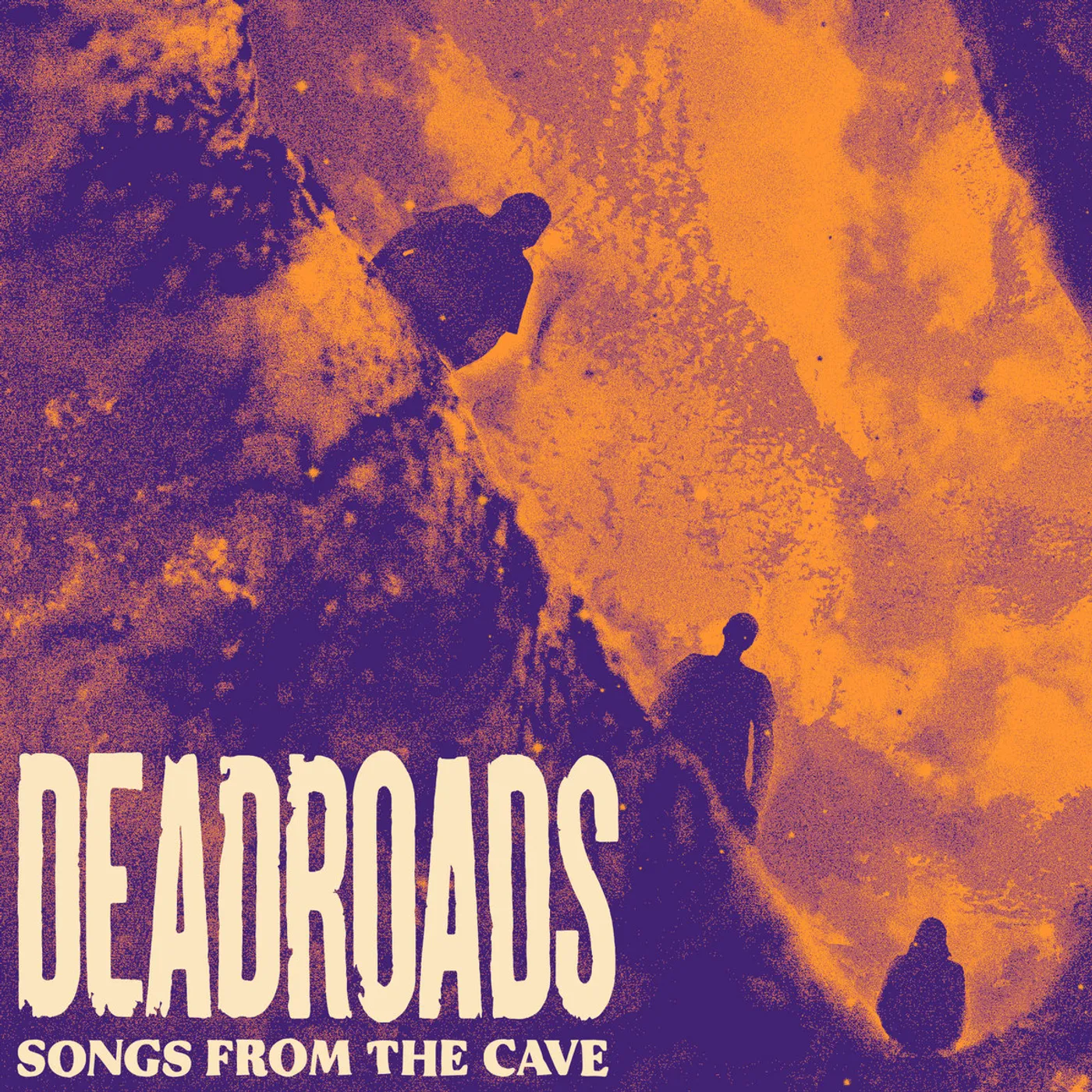
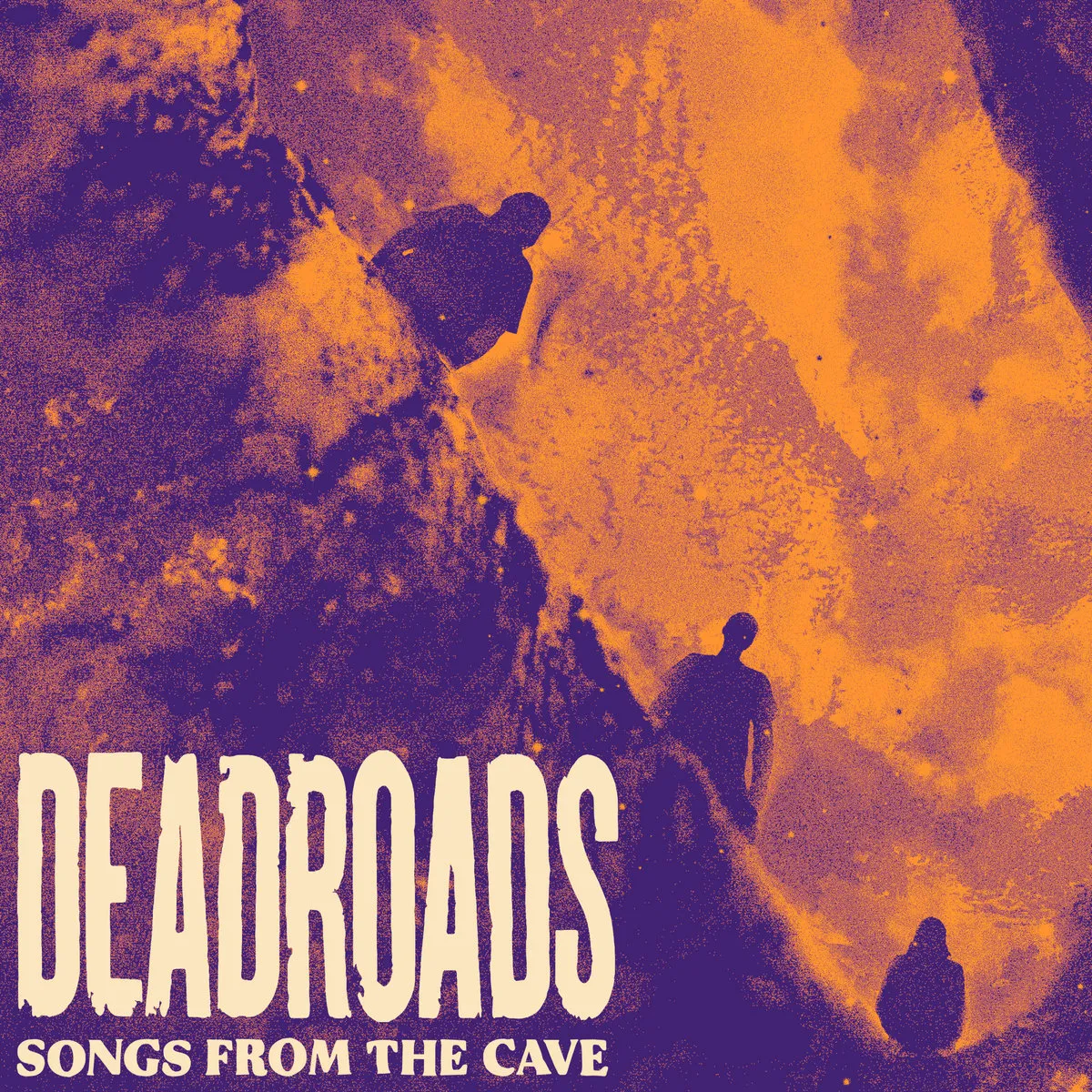
Thirty-nine minutes, six songs, no filler, and an ending that earns its length by doing something the rest of the album does not try. Newt painted the sleeve as well, which fits: this is a record with one person’s fingerprints all over it and two others making sure it never sounds like a solo project.
Start at track two if you are in a hurry. Then go back.
Update, 16 September 2026. The review as first published treated the sequencing as a decision, and offered two readings of it: that the opener was built to survive a noisy feed, or that it misrepresents the band. Neither is right. Asked about it directly, the band told us: “We recorded everything live in 4h or so and pretty much in the same order we wrote the songs. So it just came out like this, we have not spent much thought on the order of the songs.” The passage above has been rewritten around that. What we heard has not changed, only the motive we attached to it, and there was no motive. Our thanks for the answer.
“A Little Lie” is the outlier in the most literal sense: a fully open acoustic mix with no audible limiter compression at all, acoustic guitars precisely panned with woody body and clear attack, and a snare that keeps its dynamic response. “Tomorrow Dies Today” sits at the opposite end, mastered against the ceiling with the transients flattening and a clinical kit whose kick leads with a beater click. “Frozen In July” keeps the most usable headroom of the heavy tracks, so the step from the reduced middle into the riff lands as a change in size rather than just in volume. “Hole In The Ground” carries the thickest saturation on the record and still keeps the riff articulate underneath the duet harmonies, with the bass rumbling as a separate layer rather than fusing into the guitars.
Standout tracks: Frozen In July, A Little Lie, Hole In The Ground