 Bandcamp
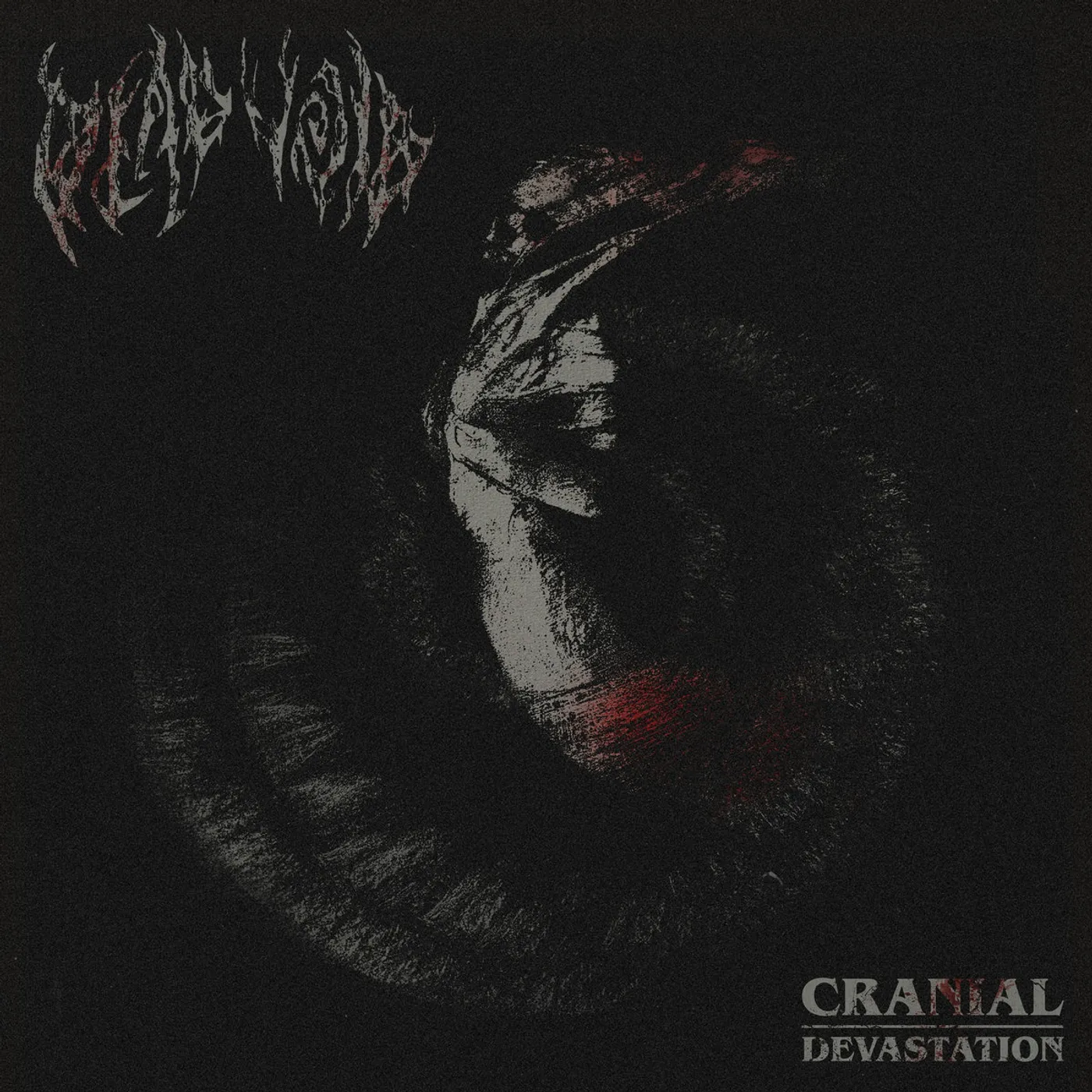
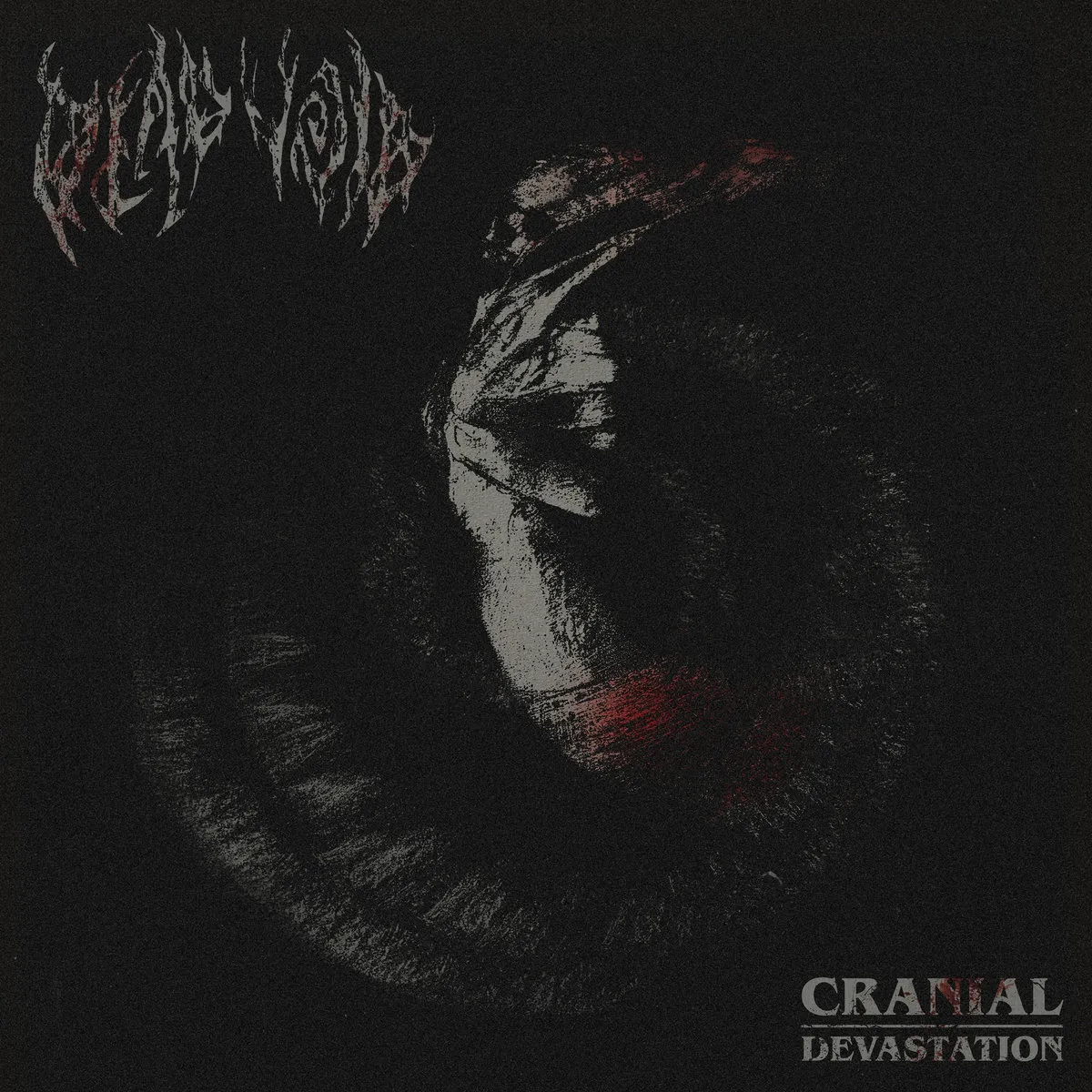
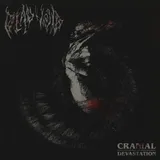
 The strangest and best decision on Cranial Devastation is the closer. After four tracks of cavernous, low-slung Danish death/doom, Dead Void end their second album with “Jeg Kan Ikke Flygte Fra Mig Selv,” a Danish-language translation of a song originally by Adrian Borland and The Sound, the early-80s English post-punk band whose work has aged into a quiet cult reverence. It is an unlikely closing move for a record this filthy, and it works, because Dead Void play it the same way they play everything: through a wall of saturated fuzz, the vocals buried, the room swallowing the detail. The Copenhagen band, out 5 June via Dark Descent and Me Saco Un Ojo, recorded the album live in the studio with Marcus Ferreira Larsen at No Master’s Voice, and the whole thing carries that live-conjured weight.
This is death/doom that chooses murk over clarity on principle, and that choice is genre-tradition rather than a production failing. The rawness here is the same rawness that the dirtiest end of the genre has always traded on: the guitars and the heavily-distorted bass merge into a single massive fuzz texture, the drums sit far back in a large natural room, and the growled vocals are sunk deep in the mix as another layer of the texture rather than positioned out front. “Regurgitation of Ancient Manifestations” opens on that dark, low-mid-shifted balance, the kick forgoing any modern click and pushing through on sheer mass, the snare wet and clattering in the room. It is not trying to be transparent; it is trying to feel like it was dug up.
Where the album earns its weight is the title track and the longest cut. “Cranial Devastation” at nearly ten minutes builds the deepest cave on the record, the guitars and the booming bass fusing into raw force, the snare a dry whip far back in the room, and the slow death/doom crawl given the space to actually loom. “Phantosmial Stench of Decay” is the cut where the rhythmic definition survives best, the kick keeping enough click to hold its place in the dense weave. The honest limit is the consistency of the murk: “Isolation’s Hold” tips fully into lo-fi, the kick reduced to a papery click with almost no low end and the cymbals stripped of any brilliance, and across the runtime the commitment to rawness means the heaviest passages can blur into a single undifferentiated mass. Whether that reads as atmosphere or as a wall of mud is the genre’s eternal dividing line, and Dead Void plant themselves firmly on the atmosphere side of it.
The production is a committed raw, cavernous, low-mid-shifted death/doom aesthetic recorded live in-studio, prioritising dark room atmosphere over clinical clarity throughout. Guitars are massively fuzz-saturated and merge with the heavily distorted, droning bass into a single dense wall, sacrificing single-note and chord definition for sheer mass. Growled vocals are buried deep as a textural layer rather than a positioned lead. The recurring weakness is low-mid frequency stacking that turns the heaviest passages into an undifferentiated mass, most extreme on “Isolation’s Hold” (full lo-fi: papery click kick with almost no low end, cymbals stripped of brilliance). The strongest production moments are the title track “Cranial Devastation” (the deepest cave-atmosphere on the record across its near-ten-minute crawl) and “Phantosmial Stench of Decay” (the best-surviving rhythmic definition).
Standout tracks: Cranial Devastation for the ten-minute title crawl with the deepest cave atmosphere. Phantosmial Stench of Decay for the cut where the rhythmic definition survives the murk. Jeg Kan Ikke Flygte Fra Mig Selv for the unlikely Adrian Borland cover that closes the record.
Filthy, raw, cave-conjured death/doom is a tradition with its own rules, and Cranial Devastation plays by them with conviction rather than by accident. Three stars: the all-in commitment to murk costs the record some definition and the lo-fi tips too far on one cut, but the atmosphere is real, the Dark Descent pedigree is earned, and that closing Borland cover is the kind of move that tells you a band knows exactly what it is doing down in the dark.