Interview · 26 August 2026
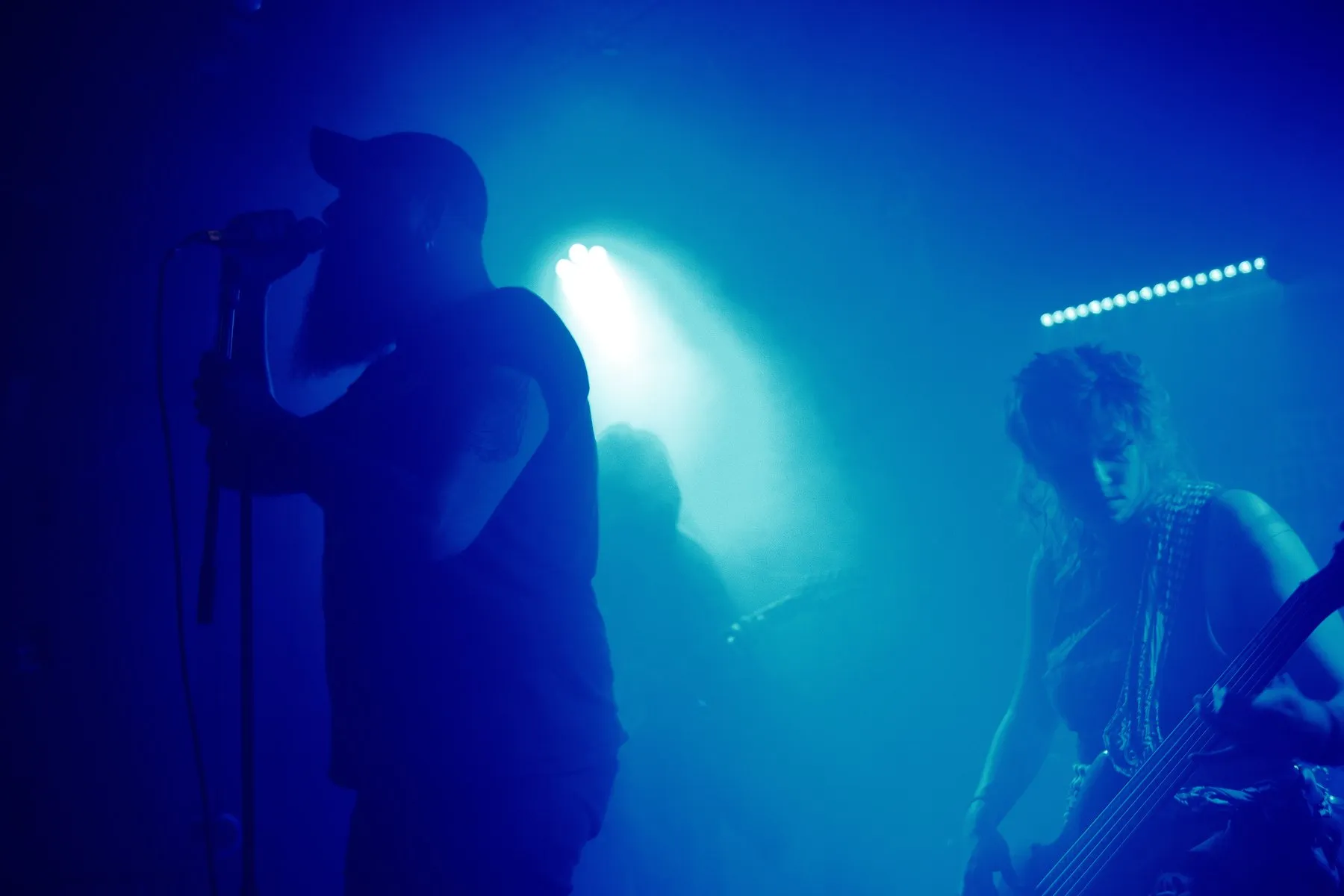
Tungsind sent us the masters two days before release and told us they would be honored to earn a three out of five. They got a four. We asked the Copenhagen five-piece seven questions about how a record this monolithic gets built, and got answers from three of them: about riffs written on an acoustic guitar in a kitchen, about recording almost the whole thing live in a venue they volunteer at, and about what the unlearning in the title actually refers to.
Almost every track opens fragile and clean before it collapses into the wall. Do you write toward that architecture on purpose, or does it emerge from jamming a song into shape?
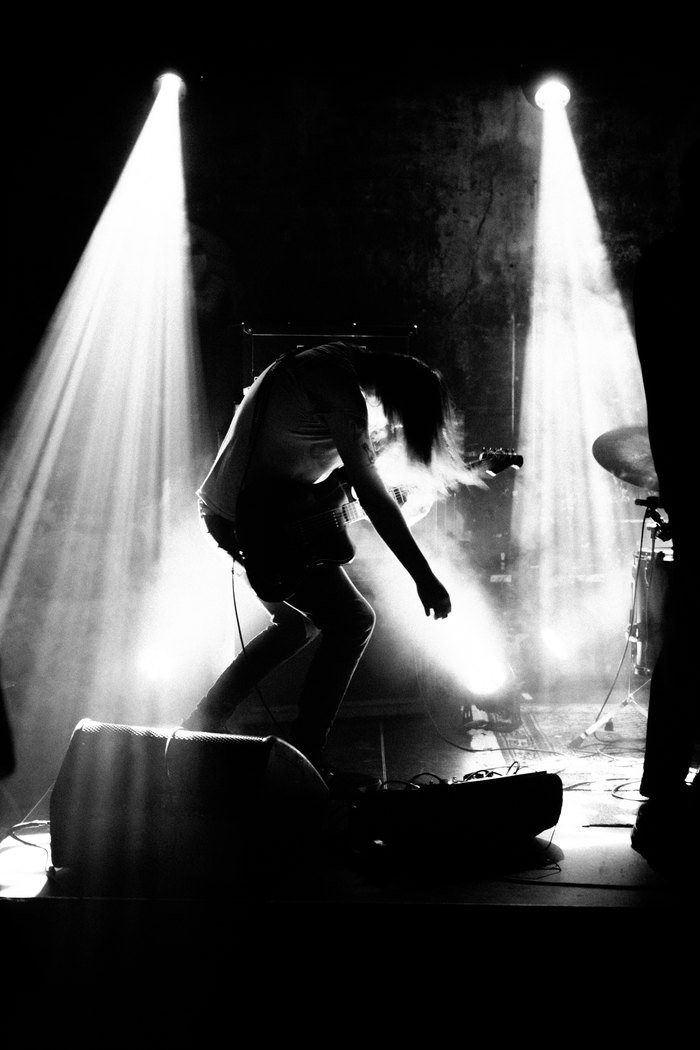
Mads: In a way it sort of came incidentally and a little bit out of necessity. A lot of the riffs are stuff that I worked on, on my acoustic guitar in my kitchen, so I would show the others the riff playing it clean, and then we go “alright, now let’s turn on our distortion pedals and see what happens!” So the quiet-to-wall-of-sound move was very obvious.
Another factor is that we had only played together for a couple of months before we went and recorded, so we kinda just needed to put a whole set together to record, as quickly as possible! We don’t really jam our way to a riff much, and we never played covers to “get to learn each other musically.” It was straight to the drawing board! So we had to put something together just so we could play music. You can kinda tell because the tracks are very, very simple in form structure. But hey, whatever works! It really helped cement the style we were going for very quickly, but now we’re trying to be conscious of not being too formulaic with our new material we’re working on. We made a structure, and now we wanna break it!
The masters keep a lot of dynamic range, which is rare for something this heavy. Was preserving that space a conscious choice, and did you have to resist making it simply louder?
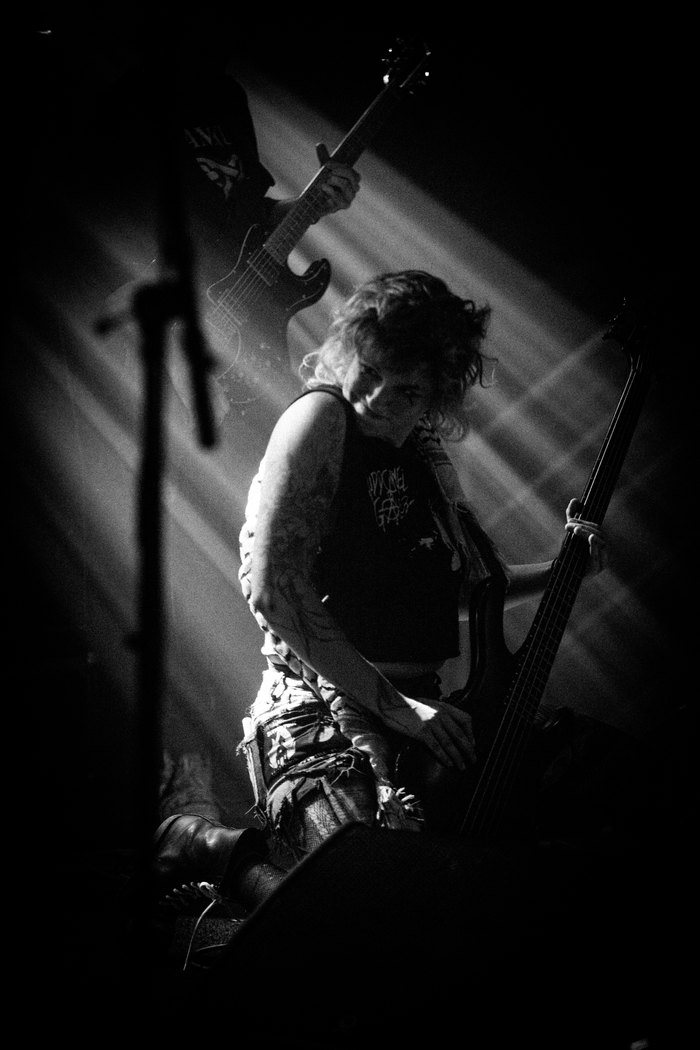
Ali: We really have to thank our mix/master engineer Marcus Ferreira at No Masters Voice for preserving that, I’m not even sure we asked him specifically to aim for intense dynamics, he just gets us, and knew exactly what we were going for. Louder doesn’t make things sound louder, quiet and suspense makes things sound louder and I think together we really nailed that concept. We recorded everything ourselves at a local venue called Underwerket many of us have volunteered at. Both Mads and I are professional sound engineers, Lewy has a billion years of experience with gear and guitar tones, and Pelle has been a session musician for years, so we were really well prepared. The record is mostly a lightly edited live performance itself, we played the whole thing all the way through several times, picked our favorite takes, didn’t comp much, and added a bit of crossfading. Lewy’s guitar is overdubbed to glue all the parts together, and Kasper’s vocals were also done later in isolation so that it would be clearer. Mads and I sat together to edit but then honestly decided to just leave most things as they were for the sake of it feeling more real.
Mads: We decided on a running thread through the whole process, which is that the music has to be organic and dynamic. When you play music that slow, there’s a point where you kinda HAVE to look each other in the eyes and react to each others’ playing. We like the interplay between amp and guitar, Pelle sometimes throws in some jazzy stuff to throw us off in the middle of the song, if we’re not paying enough attention! This is also why we decided to mostly live record, to capture our performance together, and also so that we didn’t add things that can’t be played live. Tempo is mostly a gut feeling and we rarely play the music the exact same way twice.
The choice of Marcus for mix/master is also partly because we know his mixing style tends to a more “being in the room with the band” and dynamic style, which fits the idea. And I think it came together quite nicely!
The vocals sit deep as a low, cavernous texture rather than a lead you can follow word-for-word. What made you want the voice to work as another instrument, and do the lyrics still matter if listeners can’t parse them?
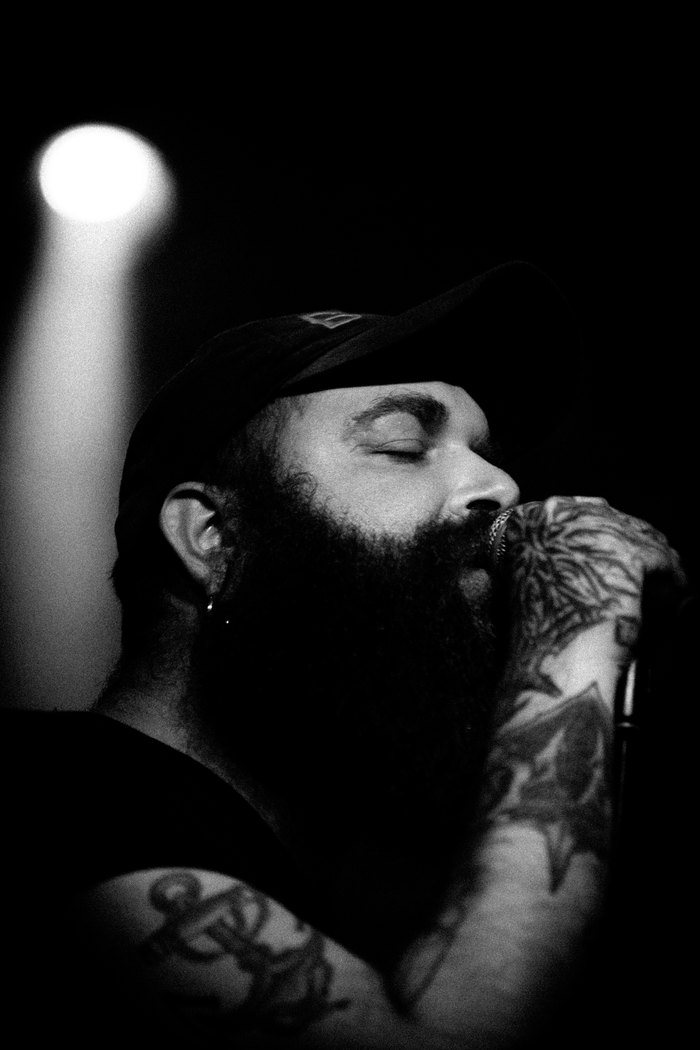
Kasper: Personally I like being in a place vocally where parts of it are decipherable but other parts are just a larger part of the musical landscape. I think even if they can’t be understood initially, lyrics matter a great deal. For example, in At The Gates of the Land of Magi, the lyrics are deeply personal to me as they are about my struggles with mental illness and substance abuse, but kind of seen through the eyes of a wizard/sorcerer/etc., falling to corruption and losing their mind. I hope people can interpret the lyrics in their own way though.
”The Creature Knocks” is the short, suffocating one between the long pieces, almost pure dread. What role does it play in the arc of the record?
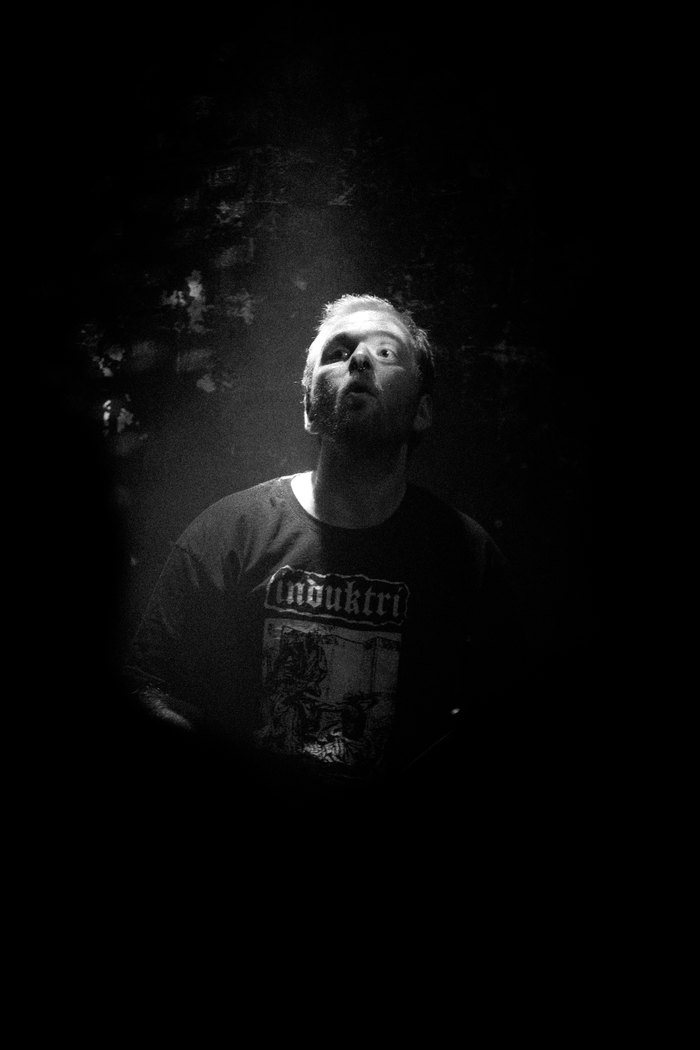
Ali: Happy and Without a Name was the first song we wrote, and then when we finished At the Gates of the Land of Magi it felt wrong to drop into silence between songs. The tracks end and begin in different keys but they aren’t particularly far away from each other and we all agreed that we really like continuous albums. A lot of us are really inspired by harsh noise and improvisational playing so the concept started with a little repeating melody where we could cue each other and build these huge waves of chaos before ending at a drone note to start the next song. It’s a lil cheeky to turn a transition into a whole song but it’s one of my favorite parts to play live because we all really tune into each other and have the freedom to do whatever we come up with in the moment.
The title, and something like “Who Speak in Gestures Alone”, point at shedding or dissolving identity. What is the unlearning this album is about, and is there a throughline across the four songs?
Kasper: As for the title we just thought that it sounded cool and it was nice to kind of reference one of the lyrics. Or that’s my interpretation at least. Haha. For my part the “Unlearning of the Self” is about totally dissolving yourself into the most important parts of your being, reconstruction and betterment. I myself have been through quite the unlearning recently, throughout the process of grappling with my schizophrenia diagnosis. But yes, thematically there is a throughline across the songs, as well as all the song names being pulled directly from a sentence in a book by Giorgio Agamben.
Three of the four tracks run near or past ten minutes. What does the long form let you do that a tighter song wouldn’t?
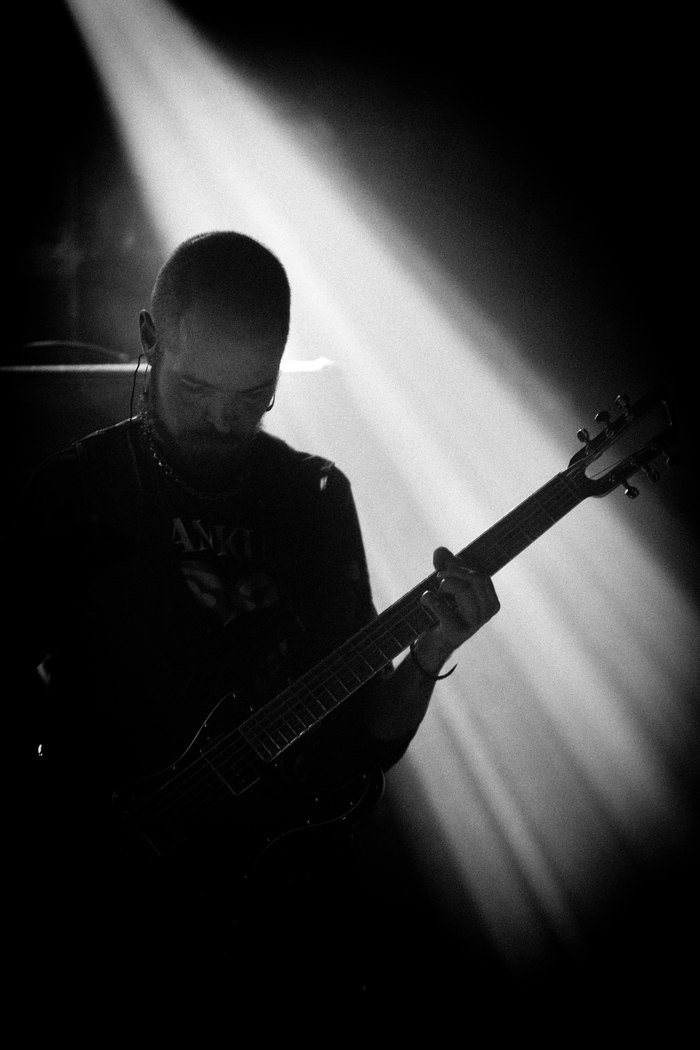
Mads: The genre just kinda lends itself to long form. I think one of the riffs takes about a minute and a half to play through once, so I suppose we could have just played that twice and called it a track in itself. But seriously, we really like music that twists and blends and goes on forever. The first three tracks are one long performance, which is how we recorded it. Why? Because it’s just fun to write and play, and it’s fun to be in that trance-like state.
You’re taking this on the road. How do these slow, enveloping pieces land in a room, do you chase the same dynamics live?
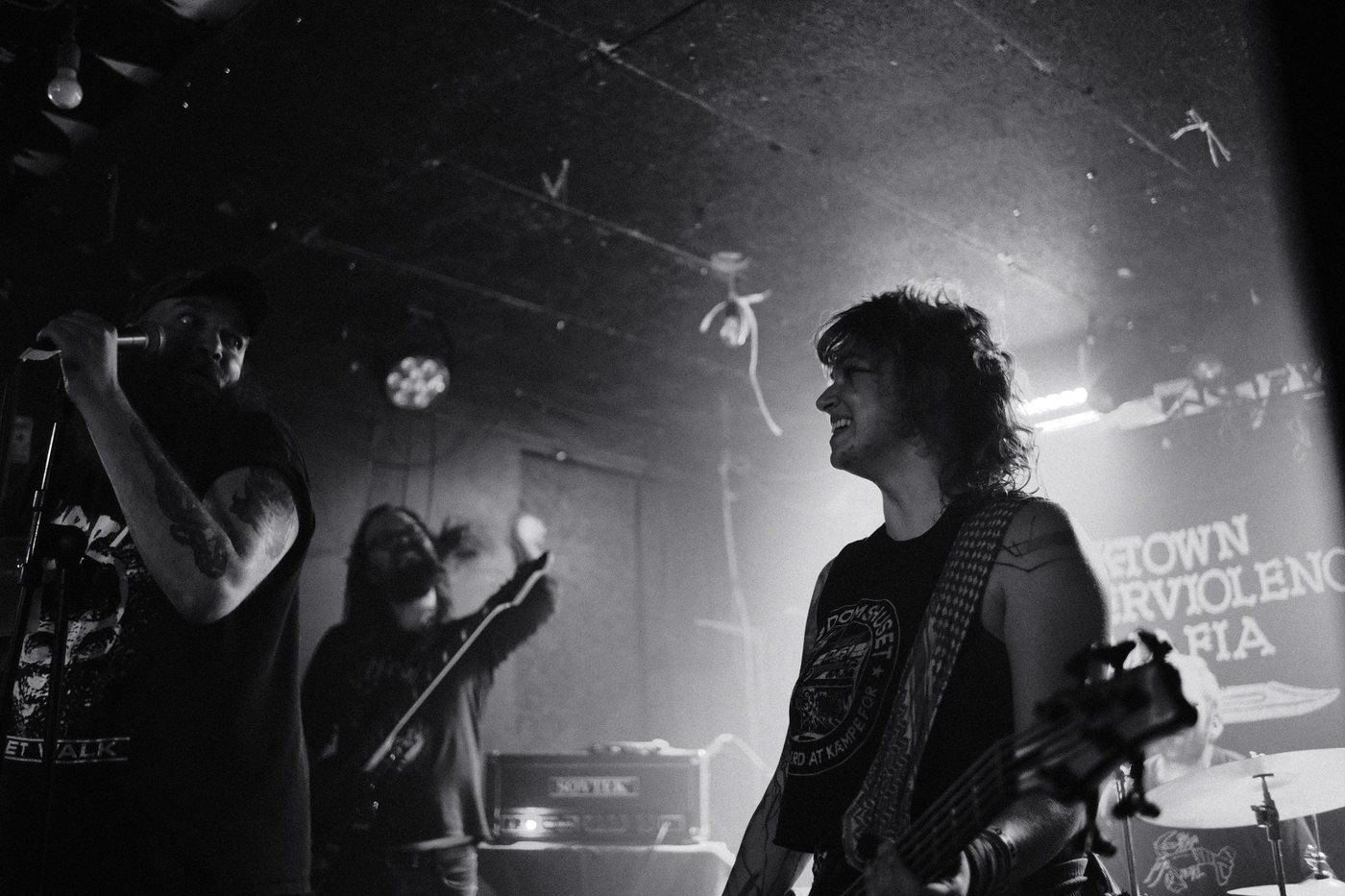
Ali: Our second show ever was in Germany at a little doom festival in the middle of nowhere, north of Hamburg. We had just done our debut show and packed the room full of friends which was cute and cozy, but very safe. Out there in Germany I remember looking up at the crowd and everyone was absolutely silent, not a single person was moving at all, and I decided in that moment “fuck it, I’m playing this for me now and I’m gonna have fun even if no-one else does”. We get to the final song and there’s just this super heavy stillness for a minute, and then people finally dared to break the silence and we had an amazing response, but it was terrifying to just stand there at the end without any idea of what people were feeling. We’ve gotten used to it now, but it really seems like people are fully in it when we play live. The room goes silent, people are cautious to cheer, most people have their eyes closed, we’ve seen grown men cry, I think that’s a particular goal of ours in general. Make more cis men cry in public. Feelings are okay.
Photos: Mikael Jæger Jensen (portraits), William Brøchner (live)
Read our review of The Unlearning of the Self →