 Bandcamp
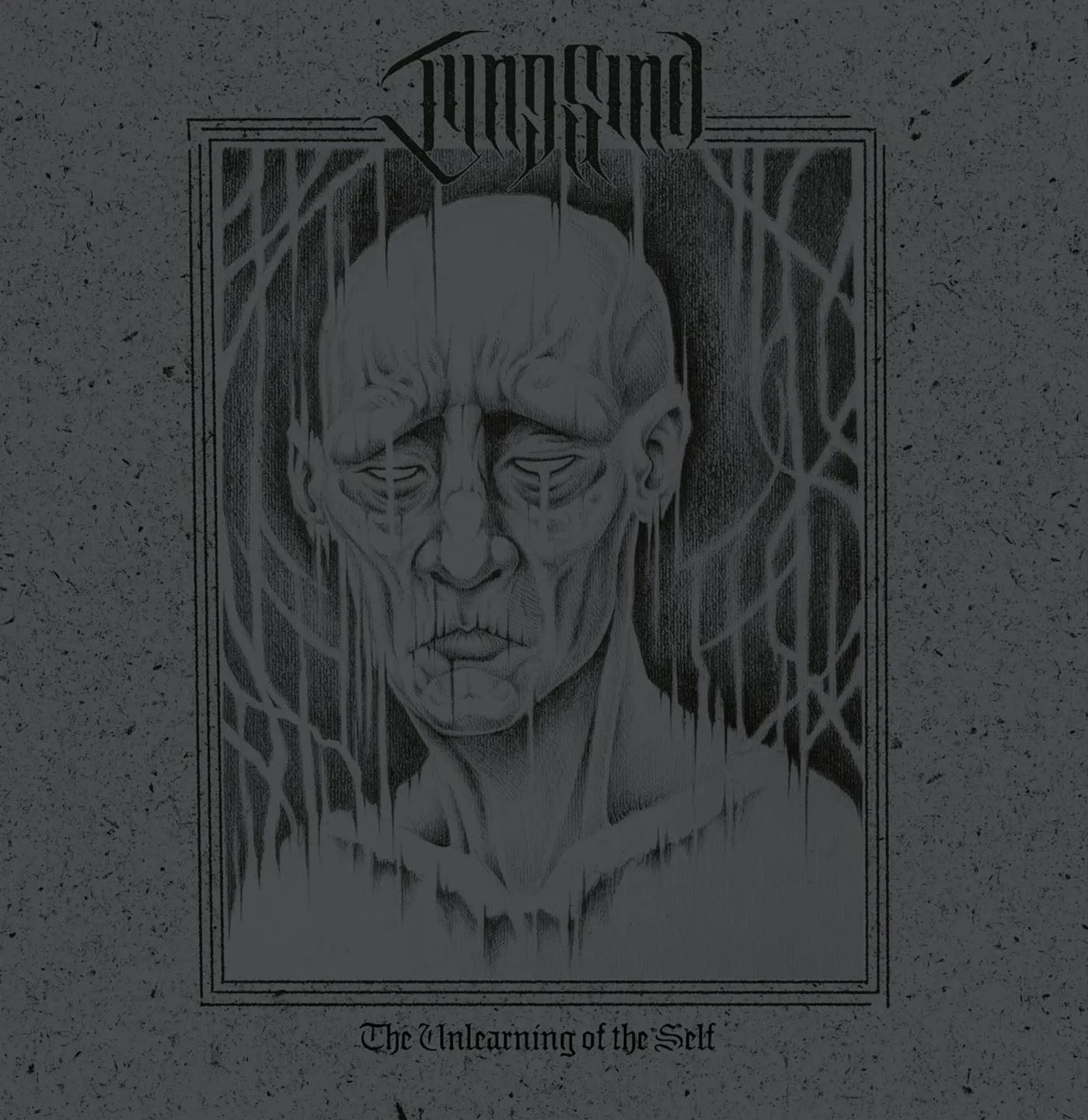
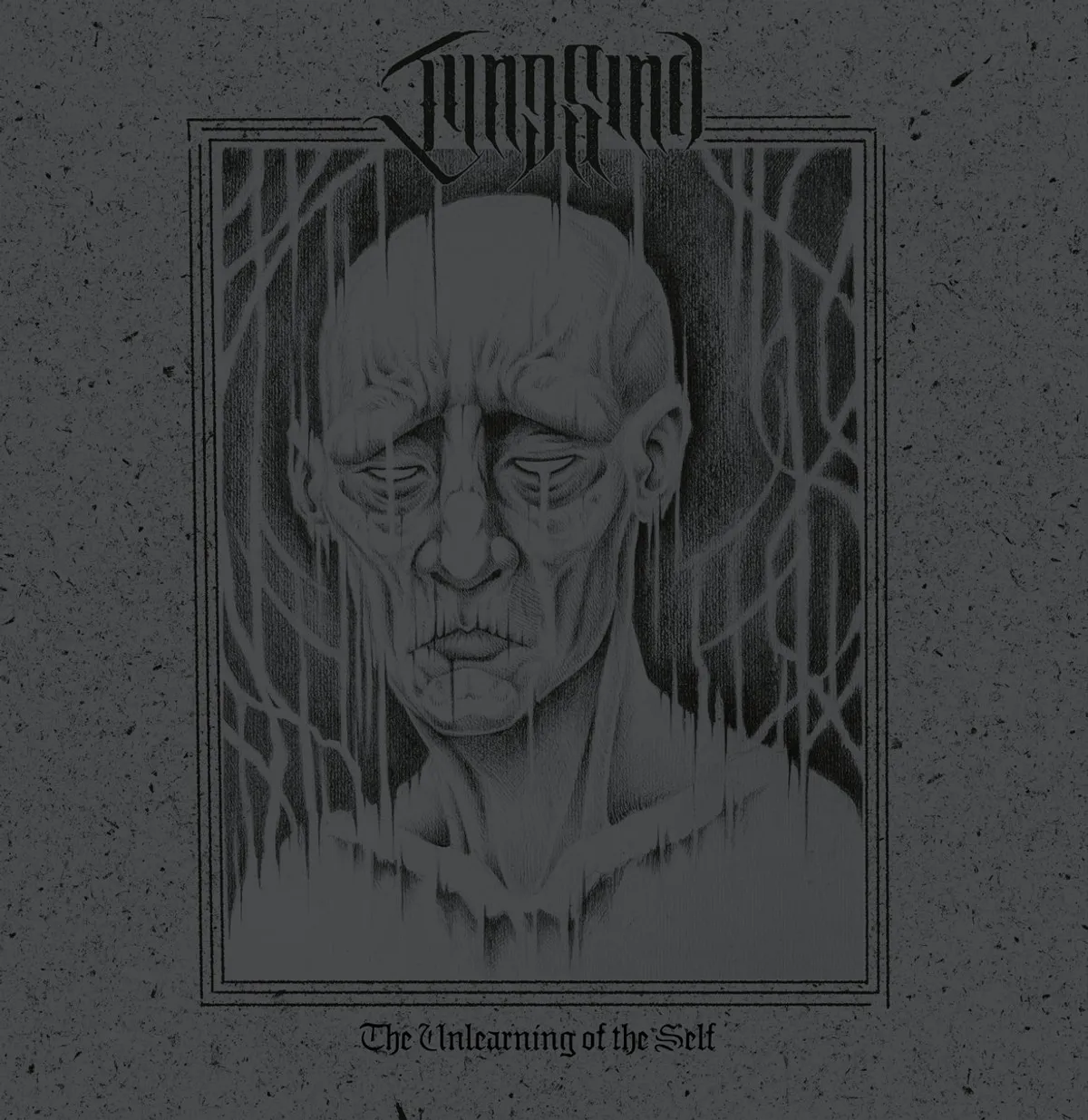
 Read the four song titles in order and you get a sentence: happy and without a name, the creature knocks, at the gates of the land of magi, who speak in gestures alone. Tungsind lifted it from a Giorgio Agamben book and then spent just under thirty-four minutes taking it apart. The Copenhagen five-piece describe themselves in three lines on their own Bandcamp page, sometimes black metal, sometimes doom metal, always antifascist, and that economy carries into the record. Four tracks, one of them barely three minutes, no press-cycle padding, pressed largely on their own money with a small assist from Leipzig’s Minor Obscur on under a sixth of the run.
“Happy and Without a Name” spends its first ninety seconds on clean guitar, fully exposed, before the wall arrives. Every piece here runs that move, and it turns out to be an accident of how the band write. “A lot of the riffs are stuff that I worked on, on my acoustic guitar in my kitchen,” guitarist Mads Grue told us, “so I would show the others the riff playing it clean, and then we go ‘alright, now let’s turn on our distortion pedals and see what happens!’” They had played together for only a couple of months before recording and needed a set fast. “You can kinda tell because the tracks are very, very simple in form structure. But hey, whatever works!” He adds that they are now deliberately trying to escape it: “We made a structure, and now we wanna break it!”
What makes the collapse land is not its size but what surrounds it: the master leaves the quiet genuinely quiet. Nothing has been dragged up to meet the loud part. Bassist Ali Cedroni credits Marcus Ferreira at No Masters Voice and puts the principle plainly: “Louder doesn’t make things sound louder, quiet and suspense makes things sound louder.” It helps that most of what you are hearing is a performance rather than a construction. The band recorded themselves at Underwerket, a venue several of them volunteer at, playing the whole record through several times and keeping their favourite takes with almost no comping. The first three tracks are a single continuous take. The drums stay in a real room as a result, kick without the plastic click that gets bolted onto records like this, cymbals decaying instead of hissing.
“The Creature Knocks” is the short one and the strangest, three minutes of cave acoustics where the low end does almost all the work. Its lyric sheet holds a single ellipsis and nothing else. It began as the join between the two songs either side of it, because dropping into silence between them felt wrong, and grew into a piece of its own built on harsh noise and improvisation: “It’s a lil cheeky to turn a transition into a whole song,” Cedroni says, “but it’s one of my favorite parts to play live because we all really tune into each other and have the freedom to do whatever we come up with in the moment.”
“At the Gates of the Land of Magi” holds its clean figure for over three minutes before dropping, and the drop is the best moment here, partly because the guitars stay tonally readable under all that saturation. Its words are printed as a quotation credited to Quidam, Latin for a certain someone, an anonymous party, which on an album about namelessness reads less like a citation than a joke with a straight face. The text is pure ruin, sands red with ire, sockets empty and forlorn, where greatness was now nothing endure. Vocalist Kasper Sandal Povlsen says the song is the most personal thing on the record, that its lyrics are about his own struggles with mental illness and substance abuse, “but kind of seen through the eyes of a wizard/sorcerer/etc., falling to corruption and losing their mind.”
Which answers the question the closer raises. “Who Speak in Gestures Alone” pushes the voice furthest back, a dark textural layer rather than a lead, and in the densest stretches the fine detail in the mids gets covered over, exactly where the best lines on the album sit: an infinite longing, a continuum of dead images, an impression of life. A band whose whole conceit is a philosopher’s sentence has made that sentence almost impossible to hear. Povlsen is unbothered and specific about why: “Personally I like being in a place vocally where parts of it are decipherable but other parts are just a larger part of the musical landscape. I think even if they can’t be understood initially, lyrics matter a great deal.” The title, he says, is about “totally dissolving yourself into the most important parts of your being, reconstruction and betterment,” and he has been doing exactly that while working through a schizophrenia diagnosis. The record is not withholding its meaning. It is asking you to sit with it before you get it.
That patience is apparently how it plays live too. Cedroni describes their second ever show, at a small doom festival north of Hamburg, looking up at a room that was completely silent and motionless: “I decided in that moment ‘fuck it, I’m playing this for me now and I’m gonna have fun even if no-one else does’.” The silence held for a minute after the last song before anyone dared break it. “The room goes silent, people are cautious to cheer, most people have their eyes closed, we’ve seen grown men cry, I think that’s a particular goal of ours in general. Make more cis men cry in public. Feelings are okay.”
This is a record that knows what it wants and gets there without a label pushing it. It is heavy in the way that only works if you leave room around it, and Tungsind left the room. Go in with the lyrics open on your phone.
The whole record is built on the same move, and it earns it every time: a long stretch of exposed clean guitar, then a wall of downtuned fuzz that swallows the room. What makes it land is restraint in the master, because the quiet parts are left properly quiet instead of being pushed up toward the loud ones, so the heavy passages hit as events rather than as a constant state. The drums sound like they were played in an actual space, with a kick that thuds instead of clicking and cymbals that fade out rather than hiss, and the guitars keep enough overtone to stay readable as chords under all that saturation. The vocals are extremely low and sit deep inside the mix, working as another layer of texture instead of something you follow word by word. The one cost is in the thickest passages, where the low mids pile up and the finer detail in the middle of the picture gets covered over.
Standout tracks: At the Gates of the Land of Magi, Happy and Without a Name