Interview · 6 October 2026
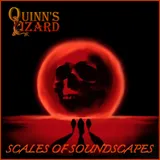
Our review asked why a record that celebrates its own range still left the bluesier, funkier material off. The answer turns out not to be about genre at all. Delirium Tremens explains that the cut-off was a timeline rather than a style: only songs the band had already worn on stage made it, because the album is meant to document an era rather than collect what happened to be finished. Mattia answered several questions alongside him, and rather than merge the two we have printed both, which is how they sent it. Along the way there is a bass intro that opens every gig, an explanation of why two tracks were fused into one so streaming could not separate them, a reading of the chiastic wordplay in "Stoned Flames" that goes further than most bands would go in public, and an unusually blunt account of what a decade in the London grassroots scene actually costs.
You mentioned you left out the tracks where the rock edge leans further into blues, funk and jazz. That is the decision I keep coming back to, because Scales Of Soundscapes is otherwise an album that celebrates its own range. Where was the line for you? What made a song too far out rather than just another scale?
DT: As independent artists, we think the “era” matters: a band is the music it writes and plays, but also the intersection with the lives of its members. So with this work we wanted to put on the record the songs worn by the lizard on stage, and it’s been a variegated set, covering influences from three decades and tested on the London grassroots scene.
Hence, to us at least, Scales Of Soundscapes is a defined era of the project, not random songs of ours thrown together for a compilation. This was the main cut-off criterion: the material had to be something the lizard had already worn on stage, a scale that belonged to this album. Songs that were still at the studio or jam stage, or not played often enough live, were taken out because they were not part of the “era” documented here.
The line wasn’t a genre line at all; it was a timeline. Up to now, we’ve mostly been a band that writes for the grassroots stage first and the studio second, so the songs that made the cut were the ones that had already done their apprenticeship, played live, bent out of shape by a few sweaty rooms, and come out the other side with a shape that had stopped changing.
The blues-, funk- and jazz-leaning material was still “the road less travelled”, ideas that hadn’t clocked enough gig mileage to know what they wanted to be yet. Putting them on the record now would’ve been like publishing someone’s rough draft and calling it their memoir. They get to keep touring themselves live until they’re ready, then they get the crystallisation treatment too.
M: To be honest, this album is like a photo album of the band from its beginning through to the recording sessions. There’s an evolution in our songwriting. Initially, we brought in some songs and unfinished works from our previous project, adapting and rearranging them for the newly formed band while working to forge our three different styles into one identity.
We think that process culminates in “Crimson Disc.” What we wrote after that reflects the next stage of the band, and I think “Crimson Disc” is a preview of what is coming next.
Eleven songs across ten tracks. What happens at that seam, and was it a decision about how the record should flow rather than a technical one?
DT: “Harley’s March” was written as an intro, a way to present the variegated “scales” we play live, and you can hear it move from stoner riffing into something almost surf-like. It happens to finish on exactly the same bass sound that opens “Adamant,” and that’s not a coincidence anymore, it’s how we open every gig. Those first nine notes on the bass, and then “Hello, we’re Quinn’s Lizard.” That’s the statement, and we wanted to crystallise it on the record too, so the intro and “Adamant” became cemented together in the live set, and then on the album.
Back in the ’90s, these would’ve been two tracks with zero space between them on the CD. In the streaming era, we fused them into one track instead, no gap, exactly as it’s played live, so the streaming engines wouldn’t separate them and cut the statement in half.
We wanted to show the different rooms of the house, kitchen and toilet included, as they are important parts if you want to be a proper host for your guests.
You mastered it yourself and said you wanted to keep the dynamics and find consistency across very different soundscapes. What does a record sound like to you after you have mastered it, compared to hearing someone else’s master of your own band? And was there a point where you had to stop yourself from fixing something?
DT: Mastering, and mixing, ourselves was a bit like being our own dentist. The old studio adage goes, “Record like there’s no mixing, mix like there’s no mastering.” We ended up mastering like there had been no recording, just to close the cycle.
Jokes apart, mastering is very much like the grooming and the very last look you give yourself in the mirror before a night out. You shape a curve of frequencies that highlights the clothes you already chose to wear, add a few drops of perfume, and that’s it, a mastered record is ready to go out and hold its character on different speakers, like someone holding themselves together on a pub crawl.
On the technical side, it’s important to leave headroom where the dynamics actually need it. If something just needs to be loud, so be it.
Hearing someone else’s mix or master of your own band can be slightly unsettling, because you’re hearing another person’s interpretation of the music. Mastering it ourselves meant that the final version still felt unmistakably like us.
We stopped fixing when we realised we were no longer improving the songs. Some leaks and unwanted distortions had happened during the process, and they gave us a few hard nights, but we were ready to go once each track was close enough to what we had imagined for the finished songs.
A masterpiece of mastering, for me, is Porcupine Tree’s In Absentia. But to stay closer to the heavy scene: Welcome to Sky Valley, the way that slow intro to “Gardenia” comes in is unbeatable. Blues for the Red Sun? Maybe pushed a bit too far towards saturation, but so be it, that’s the character, and it’s all about what the song calls for. Which is where “Evil Truck Inferno” comes in: loud, but a singable anthem, the kind where the audience knows what to sing so we’re allowed to forget the words ourselves.
The lyrics deal with control, darkness, hell and morality, and there is a lyrics booklet, which not every band bothers with. Is there a figure or a situation that comes back across more than one song? And “Crimson Disc (Desert Song)” went out as the first single. Why that one first?
DT: Glad you asked about the lyrics and “Crimson Disc”!
Each song carries its own story, and as the one singing them I’ve given each my own reading and interpretation. So if there’s a thread, it’s less a character and more a challenge expressed through the images in the lyrics: think for yourself, be a rebel, stay hard to influence (“Adamant”), fight your own battles (“The Mountain Of A Thousand Battles”), even though at times you’ll succumb to the enchanters (“LIES”). A red burning sun will rise (“Crimson Disc”). “Kiss Your Prometheus” (“See You There”). Be the human you’re meant to be.
“Crimson Disc” went out first because a lot of us recognised ourselves in it, and also because it had the longest incubation of anything on the record. I built the structure in 2019, listening back to phone recordings of jams from 2017, in Camden, properly going, “Hey… did we actually do this? Let’s develop it a bit more.”
Then linear drumming got added, and our drummer liked it so much she wanted to write lyrics for it. I wanted the “Stoned Flames” section to be tied into the calm part; the guitar went looking for the widest palette it could find, from clean to fuzzy, and I did the same thing with the vocals. It’s not your average single, the song doesn’t really start until a minute and a half in, but out of everything on the record, it’s the one we all felt was most representative of how we explore sound and songwriting in Quinn’s Lizard.
From a singer’s point of view, the lyrics of “Stoned Flames,” interwoven with the bass riff, are probably the part I like best. Flames are not easily set in stone: they are an ever-changing reality. Simona’s lyrics play with that contrast: “Stoned Flames, Trembling Pace, Limping.” I changed “pace” into “stains” the second time, giving us “Stoned Flames, Trembling Stains … pouring blood.”
The two phrases create an X-shaped, chiastic movement between fixedness and motion. “Stoned Flames” is itself an oxymoronic image: “stoned” suggests something fixed, sculpted or immobile, while “flames” suggest constant movement and transformation. Then the second phrase creates a chiastic turn in that relationship. “Trembling Pace” brings movement into something rhythmic and measured; “Trembling Stains” brings movement into something that should be fixed residue. The stains are normally stationary traces, but here they seem to tremble with the violence implied by the pouring blood.
So the image moves from motion becoming impaired to stillness retaining the memory of motion. Singing vocal lines over these words became a kind of poetic research for me, testing how a small change in sound and meaning could transform the whole image while keeping the vocal and bass structures connected.
We were pleased with the result, and Riff Vault seemed to recognise that the song was worth some attention too, so something must have worked. We know some of the ingredients now, hopefully we can mix them up again into a new song soon!
Two voices run through the record. How does the band decide which song goes to which voice? The more baritone lead on “Orange” and “Evil Truck Inferno” sits in a different mix entirely, and I would like to know whether the voice came first or the mix did.
DT: Honestly, it came down to spontaneity, whoever landed a convincing vocal line on a given structure got to keep it. “Orange” and “Evil Truck Inferno” were more seasoned than most, since Mattia had actually started them years earlier in one of his older projects, God’s Mistake and Nameless Dwell, so the mixing followed his personal taste too, since the songs had already lived a life before Quinn’s Lizard got hold of them.
So if you have any complaints, you can talk to Mattia, but beware that I am the one who follows an “encouraged critics” approach: Mattia is much taller and much stronger than me. One night in the studio, while we were listening back to a mix, he heard a noise, went out with a hammer. Hero! No more noises came to bother our mixing sessions after that night.
Across the record, the real effort was finding the right balance of vocal colours for each song, not assigning voices by rule. “Postcard From Hell” and “See You There” are probably the clearest examples of that, we used whatever vocal palette we had to reinforce what the song was already doing, not the other way around.
Nearly a decade in the London grassroots scene. What has actually changed in that time for a band playing at that level, in terms of rooms, costs and the people who show up? We write about a lot of bands who never get asked this.
DT: London has always been fast, and it always will be, venues are born, evolve and die at the same relentless pace. So a lot has changed, and a lot has stayed exactly the same. What’s genuinely shifted in the past decade is that the stoner/fuzz scene has carved out more room for itself: DesertFest, local promoters like Civil War, labels like Heavy Psych Sounds, and Stoomfest have all helped open up space in London for music that isn’t quite classic British heavy metal but isn’t pop-rock either.
What hasn’t changed is who carries the risk. Stoner rock and independent bills are still a game where basically 100% of it sits on the promoters and the bands, a bit like where Guns N’ Roses and Mötley Crüe were for the Sunset Strip in ’80s L.A. Just darker and harder here, in “Londinium,” as the Romans used to call it. And within that independent scene, you can still easily stumble across venues, stages and chairs, as well as musicians, who have clearly seen better days.
M: Well, a lot has changed. Loads of historical venues have been closed down, while others have experienced changes of management. I think a lot has changed for venues in terms of profit margins and live-gig budgets too. London has always been a tough place for bands when it comes to costs versus income.
The post-Covid situation was surprisingly better than expected. There may be fewer people going to gigs compared with ten years ago, but in our case we have seen our own audiences grow, perhaps because the band has gained a bit more popularity as we’ve been around for a while. Many bands don’t last ten years. I think Brexit contributed to the change as well: many of our friends left the country and didn’t come back.
You said the bluesier material is being kept for future work. Is the next record a narrower one, or does it go wider again?
DT: We’ve made our first album of scales; perhaps now we’re aiming for a thicker skin. Nothing’s set in stone, though, a few tracks were left out because we felt they needed more room to evolve, some leaning StonerFunk, others more “Sabbathical.” You can catch samples of them on our Instagram Stories and Reels.
“Psychederrick” might be the next gem, it may evolve with or without lyrics, or change title entirely… and we may evolve with or without a second EP and jump straight onto a second full-length.
M: Hard to say at this point. We have about half of it done, and what we have so far has come out of improvisations. Between the three of us, we have a pretty wide bucket of musical genres: blues, funk, metal, ’70s hard rock, jazz, grunge and prog.
That makes it hard to play a single genre. We chose stoner rock as our main direction, but we often break through its boundaries while keeping that stoner direction as our compass.
DT: Personally, I’ll also be digging through the three- and four-circle ratings on Riff Vault, catching some inspiration from fellow bands in our niche. Five circles seem to be a rare beast, don’t they? So keep following us to find out what’s next, and rock on!