Interview · 5 October 2026
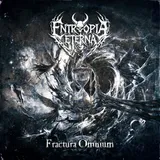
Our review read Fractura Omnium as a concept record that survives being taken literally: six stages running from the noise of life to the silence of thermal death, a middle section that stops moving, and a closer that leaves the band behind entirely. Hirpus confirms most of it, including the part about nothing being left to chance. Where he pushes back is the interesting bit. He hears that middle stretch as the furious chapter rather than the still one, and he refuses cold as the last word on the record. He is also blunt about the cost of doing everything alone, and it is not the music that grinds him down. One more thing sits in his covering note rather than in any answer: he says the next album will carry more substantial instrumental writing because of what we wrote about this one.
You describe the album as six stages, decay, collapse, questioning, stasis, farewell and surrender, running from the noise of life to the silence of thermal death. Is that one stage per track in running order? And which came first, the structure or the music? Plenty of concept records get their concept fitted afterwards, and this one does not sound like it.
The concept was born alongside the project itself. It was explicitly designed to create something different, to forge a path I hadn’t walked before. That line of thought is also what gave birth to the name of the project, Entropia Eterna.
”The Heart Of The Void” leaves the album completely. No vocals, no distorted guitars, no kit, and it sits far below everything else on the record in every direction. Ending a black metal debut on acoustic guitar and drones is a decision most people would have talked themselves out of. Was there ever a version that ended heavy? And why is the destination of the whole record also the shortest thing on it?
I’ve often heard negative feedback regarding overly long instrumental tracks, and that’s probably the only external opinion that influenced me during the writing process.
Generally speaking, I don’t pay much attention to what other bands are doing, even if choosing my own path means taking a risk with how the music is received.
I feel that “The Heart Of The Void” serves as the perfect closure for this first record. Its brevity is also intentional, as it immediately follows “Cosmic Funeral”, where the concept of the end has already been foreshadowed.
The three tracks in the middle hold an almost identical tonal picture and very little distance between their quiet and loud passages, while the opener and “Cosmic Funeral” move much more freely. That reads as the stasis section doing exactly what stasis should do. Was that written in deliberately, or did you notice afterwards that those three had converged?
Nothing is left to chance, so your observation is spot on. Fractura Omnium can be divided into three distinct sections, with the middle chapter being the most furious and explosive, built on rapid tempo shifts, choric elements, and relentless speed.
You handled all of it yourself. What did working alone let you do that a band would have argued you out of? And the other side of that question, what did you miss by not having anyone to argue with?
I tend to write very fast, and working alone with a single vision allows you to move at a much higher pace. Since music isn’t my full time job, aligning everyone’s schedules in a full band is increasingly difficult, leading to long delays that often erode the spontaneity of the songwriting.
The dark side of going solo, however, is having to manage every single operational detail, from promotion to social media and spreading the music, things I genuinely despise.
Over the years, this has only gotten more soul crushing. You’re almost forced to feed the content machine constantly and project a specific image just to get a fraction of exposure. It’s a bleak era for music.
”Cosmic Funeral” is the longest piece here and the one that swings widest between quiet and loud. It is also the farewell rather than the end, since surrender comes after it. What is the difference between those two for you, and why does the farewell get more room than the surrender?
I love “Cosmic Funeral”. It’s a deeply personal track for me, and I will definitely explore its sonic direction further on the next record. Its length was necessary, given that it’s the slowest piece on the album, housing the overarching melancholy of the entire work.
It condenses the despair extracted from every preceding track, driving towards the final conclusion of “The Heart Of The Void”: a prolonged agony leading to the inevitable end.
For atmospheric black metal this is an unusually bright record, a large share of the energy sits high up the register and there is almost no warmth anywhere on it. That suits an album about heat death very well. Was it a writing decision or a mixing one, and do you hear the record as cold?
Indeed, we are dealing with thermal death, abandonment, and collapse. It had to feel cold and glacial. As I mentioned, everything revolves around the core concept, and I never cared about fitting neatly into a specific genre or adhering to its rules. Fractura Omnium was crafted solely to reflect its own vision, regardless of anything else.
Personally, I perceive it as a very varied record, one that captures a wide spectrum of states of mind and emotions, laced with subtle cross-genre influences.
So to me, it isn’t merely glacial. It is pitch-black, desperate, and at times deeply melancholic, a search for a glimmer of hope despite the absolute certainty of approaching oblivion.