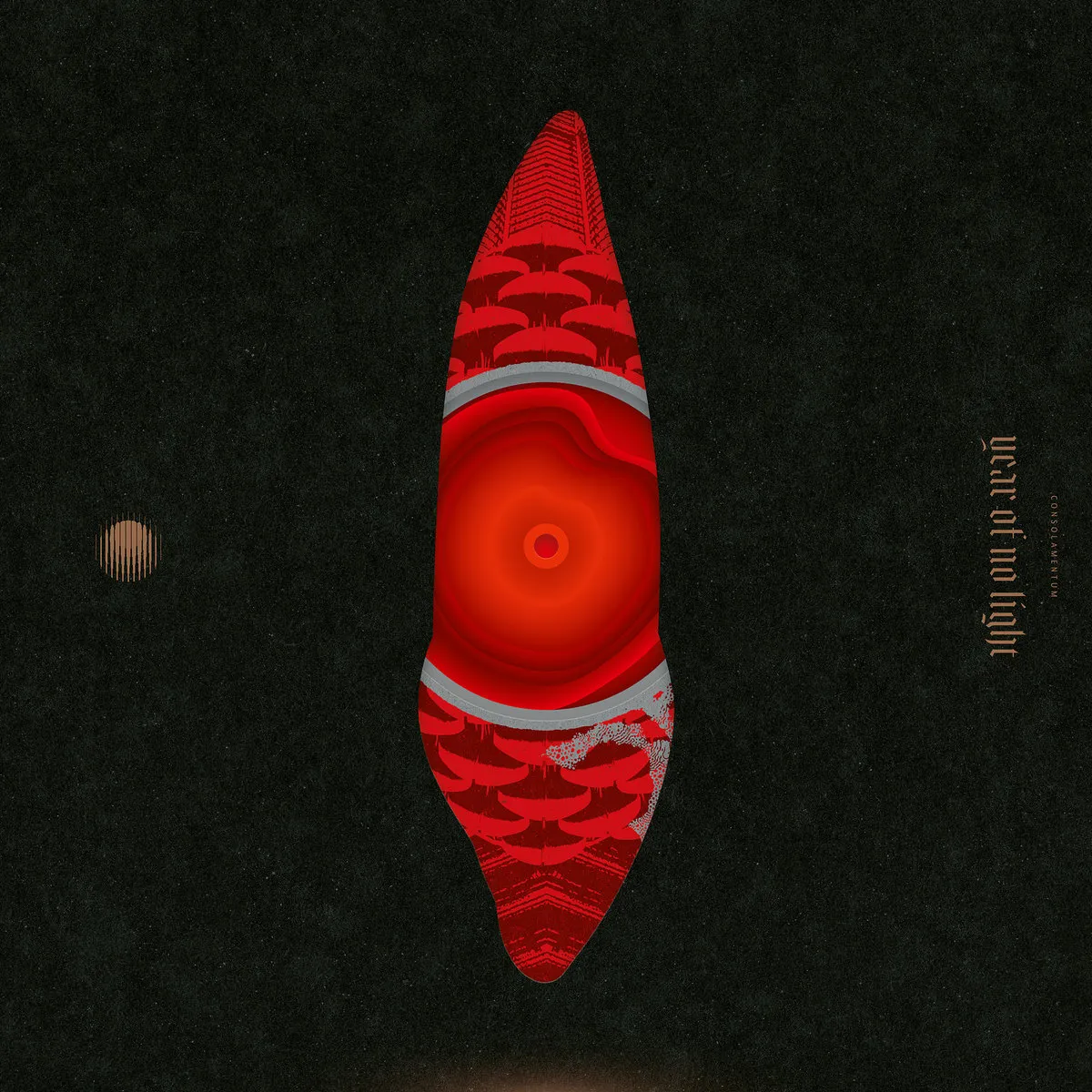
Eight years is long enough for a band to lose the thread. Year of No Light did not lose it. The Bordeaux six-piece returned in 2021, their twentieth year as a band, with Consolamentum, their fourth studio album and the clearest argument yet that they are doing something almost no one else can do.
The band plays as an instrumental sextet: three guitars, one bass, two drum kits, some vintage synthesizers woven through the low end. The lineup has been stable for over a decade, and it shows. There is no wasted motion on this record, no moment where the architecture feels accidental. Everything here is load-bearing.
“Objuration” opens at nearly thirteen minutes and takes its time arriving. The first few minutes establish a slow pulse, two drum kits moving in lockstep, guitars building in overlapping layers, before the full weight drops. When it does, it doesn’t crush so much as settle, the way a massive stone settles into soft earth. There’s no dramatic announcement. The heaviness is just suddenly there, fully formed, and the track carries it without strain.
“Alétheia” is the album’s most dynamic piece at just under eight minutes, short by these standards, and it contains one of the great moments on any heavy record in recent memory. For most of its run, it holds a tension that seems unsustainable. Then, near the end, the whole structure shears away into a single galloping power chord, and the release is physical. You feel it in your chest before you understand what happened. The track earns that moment through patience and precision, and it pays off completely.
“Interdit aux Vivants, aux Morts et aux Chiens”, the title translates roughly as “Forbidden to the Living, the Dead, and the Dogs”, runs eleven minutes and occupies the album’s centre with a kind of grim ceremony. The synths here are at their most present, pressing against the guitars rather than supporting them, giving the track a suffocating interior quality. It’s the record’s most claustrophobic moment, and the most deliberately so.
“Réalgar” returns to the slow accumulation of the opening track. The title is a mineral, a deep red arsenic compound found in volcanic contexts, and the piece lives up to the geology. It shifts slowly, almost imperceptibly, until the last third, where the tempo doubles and the two drum kits operate with a precision that feels impossible for music this heavy. This was the album’s featured track for a reason.
“Came” closes the record at nearly eleven minutes. The first seven are measured and patient, closer in mood to meditation than to the violence of the earlier tracks. Then the band detonates. The closing minutes carry everything that came before them, and the weight of it, when it finally arrives, is hard to describe without sounding like you’re reaching for metaphors you haven’t earned. The record just earns them for you.
The whole thing was recorded live in the studio, all five tracks in the room together, at Cryogene in Béglès, mixed by Cyrille Gachet, mastered by Alan Douches. The production is warm and analog and exactly suited to the material. Nothing is polished into abstraction. You can hear the room, the physical reality of the instruments, the two drum kits breathing together. It sounds like a band playing, not like a document of one.
Standout tracks: Alétheia, Réalgar, Came


