 Bandcamp
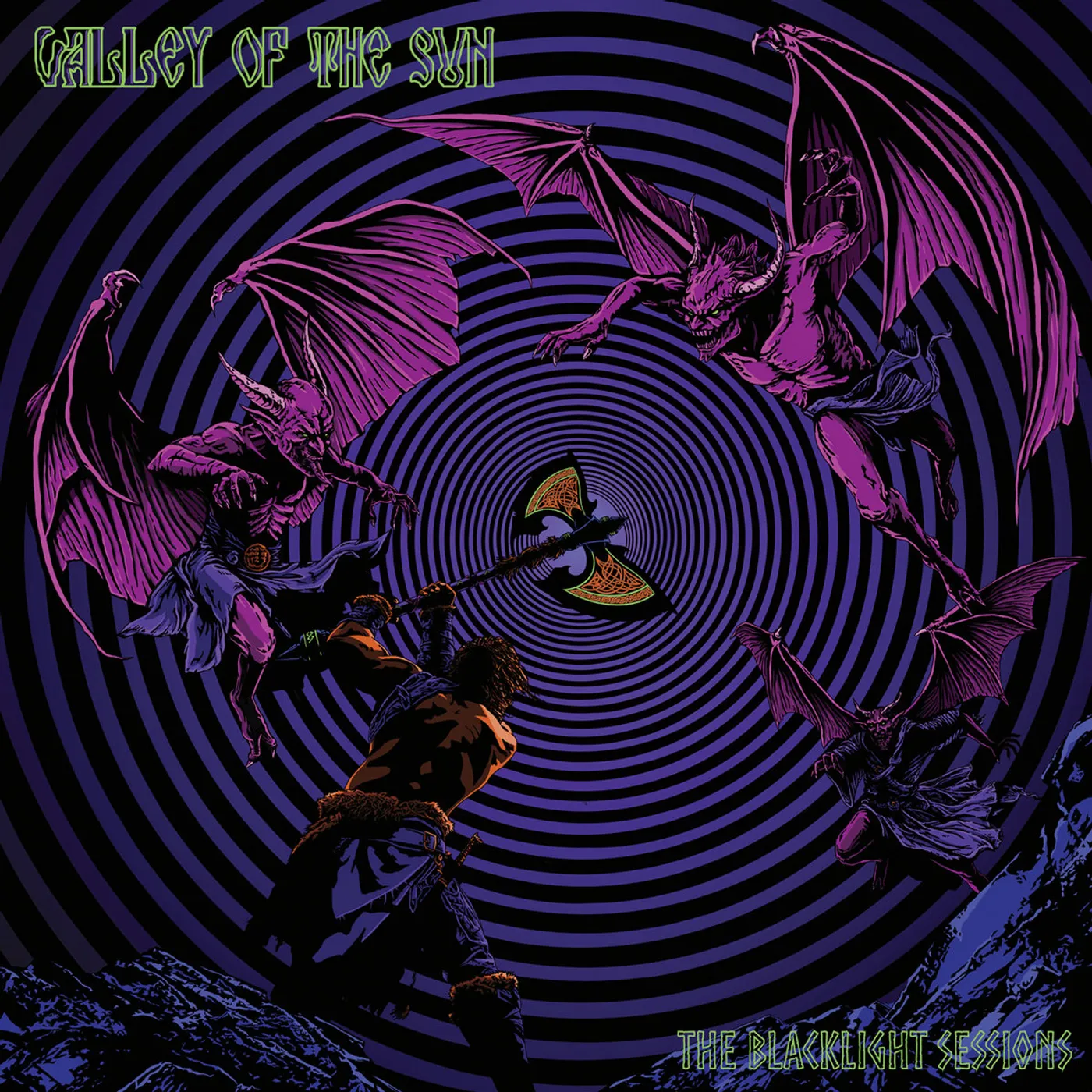
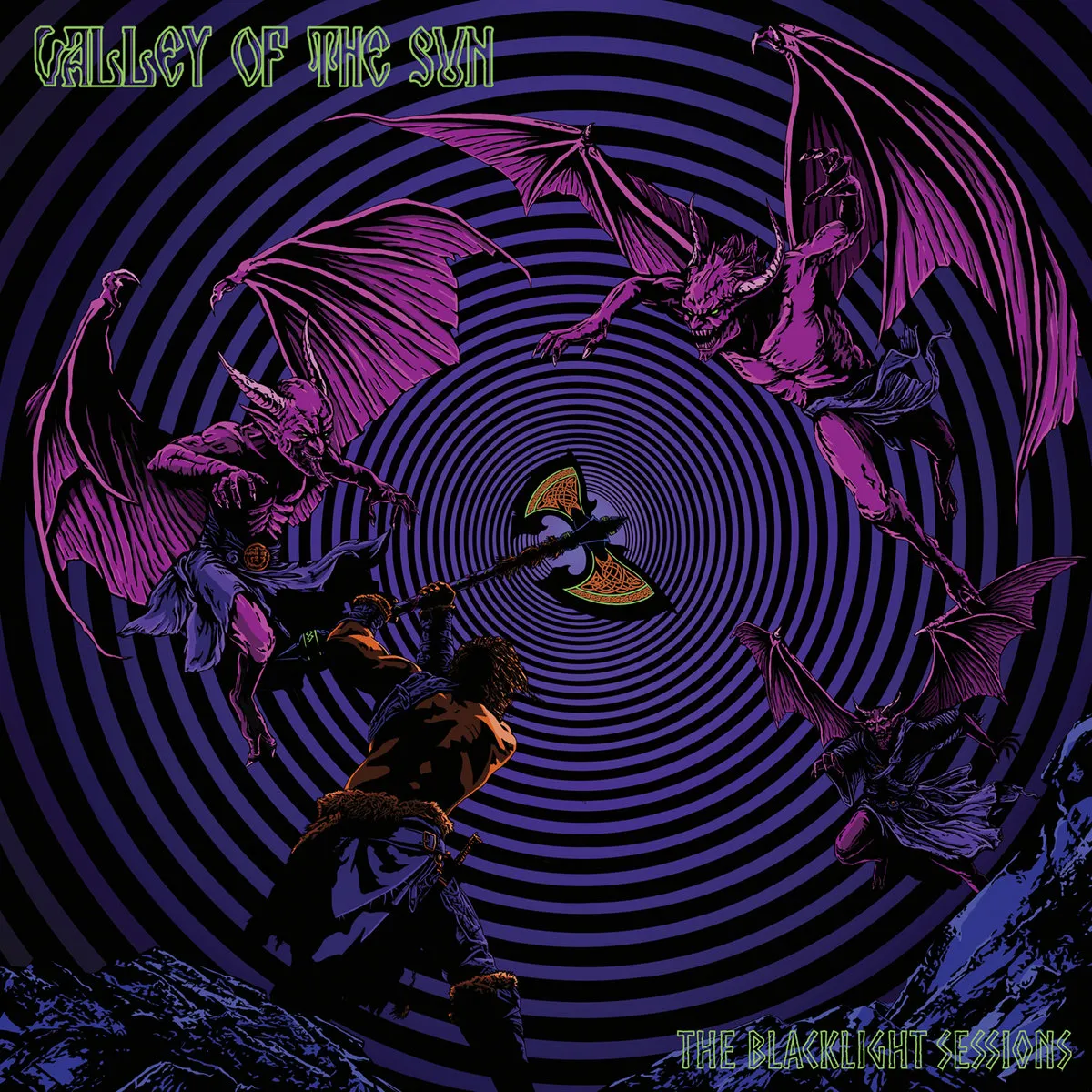
 Heavy Psych Sounds describe this as a record ranging from blues jam to psychedelic desert trip to driving stoner riffage, from a band that “continues to defy genre norms”. That is the sort of sentence labels write, and the interesting thing is that the record quietly disagrees with it.
The Blacklight Sessions is the sixth Valley of the Sun album and it is remarkably consistent. Across all six tracks the tonal picture barely shifts, the bottom end stays heavy in the same way, and every song is recognisably the same band in the same room with the same amps. John Naclerio mixed, mastered and produced it at Nada Studio in Montgomery, New York, and whatever else that room does, it does not let anybody wander off.
What does change is length. And length, here, turns out to be the whole story.
The short ones and the long ones
Three of these run under five and a quarter minutes. Three run between eight and ten and a half. The split is almost arithmetic, and it maps directly onto how much the songs are allowed to breathe: the short tracks are the tightest and most compressed things on the record, the long ones open up progressively, and the longest and widest is the closer.
“A Greater Meaning” is the clearest case. It is the single, it is the shortest piece at three and a half minutes, and it is both the loudest on the album and the one with the least distance between its peaks and its average. It is built to work in a playlist and it does. It is also the track that tells you least about this band.
“The Long Song” lives up to its name at ten and a half minutes and is where the record starts being worth your time properly, and “Mountain” at nearly ten does the slow build that stoner rock has been doing for thirty years without sounding like homework.
The closer goes somewhere else
“No Hope” is the one that justifies the album. It is the darkest thing here by a clear margin, sitting several hundred hertz below everything around it, and it carries more than a third of its energy down in the bottom octaves against roughly a quarter for the rest. It is also the widest. Eight minutes that start low, get lower, and are given enough room to actually land.
After five tracks of a band playing well within itself, this is the one where the ceiling comes off. If the whole record had been pitched here it would be a different review.
So
Worth your time, with a caveat that comes down to sequencing and self-knowledge. This is a band six albums deep who know exactly what they do, and the three long tracks are genuinely good: patient, heavy, unhurried, confident. The three short ones are competent radio-shaped versions of the same ideas, and they are the ones that got pushed as singles. If you come to this expecting the genre-defying record the press text promises, you will find something narrower and better made than that. Start at “No Hope” and work backwards.
German readers get a shortcut: they headline the Friday of the Heavy Psych Sounds Fest in Dresden later this month, and on this evidence the long songs are what you go for.
The album is tonally uniform and structurally split. Tonal centres run 1961 to 2369 hertz across all six tracks and treble above five kilohertz stays between 14.5 and 17.0 percent, so the frequency picture barely moves. Average levels sit between -9.4 and -12.0 decibels, which is loud, and peak-to-average distances between 10.0 and 12.1, which is tight. What separates the tracks is the distance between their quiet and loud passages, and it correlates almost exactly with running time: the three tracks under five and a quarter minutes hold 7.3, 10.5 and 12.8 decibels, while the three over eight minutes hold 12.3, 14.1 and 16.7. “A Greater Meaning”, the shortest at 3:22, is the loudest on the record at -9.4 and has the lowest peak-to-average figure at 10.0. “No Hope”, the closer, is the outlier in every direction: 1961 hertz tonal centre, 35.6 percent of its energy below 250 hertz against 22.4 to 27.1 for everything else, and the widest dynamic spread on the album.
Standout tracks: No Hope, The Long Song, Mountain