 Bandcamp
 Procession formed in Cēsis in 1993 and broke up in 1999. In those six years they released nothing. No album, no demo that survived into any database, nothing you can go back and listen to now. The band reformed in 2022, and the discography that exists today begins twenty-four years after the band did.
This is their second record since coming back, after This Side of the River in 2023. Four of the five people playing on it, bassist Uldis Voitkevičš, guitarists Jānis Aizkalns and Aigars Kalniņš and vocalist Sandis Korps, were in the nineties lineup. Kristiāns Voitkevičs has been on drums since the return.
Nine songs that move more than they look
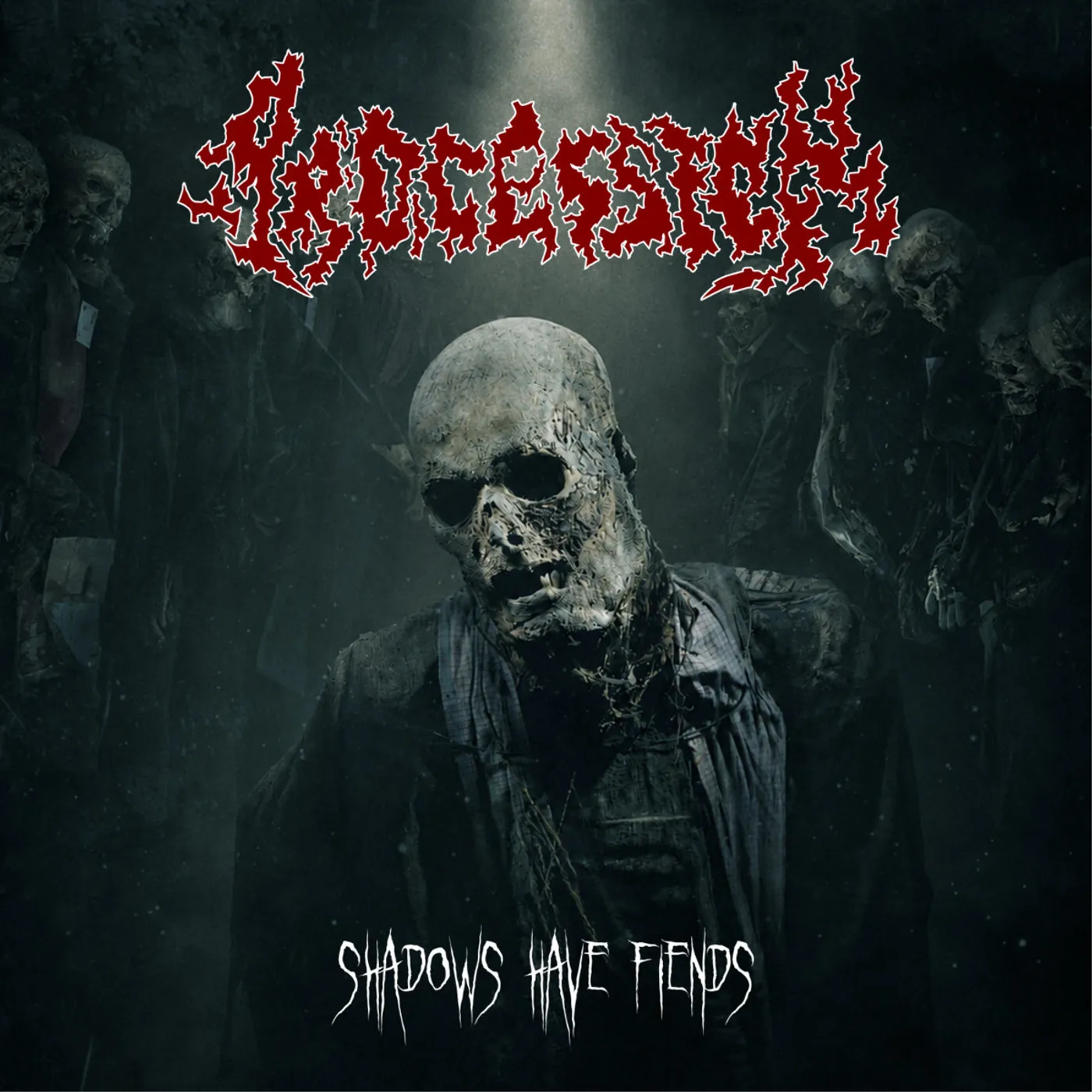
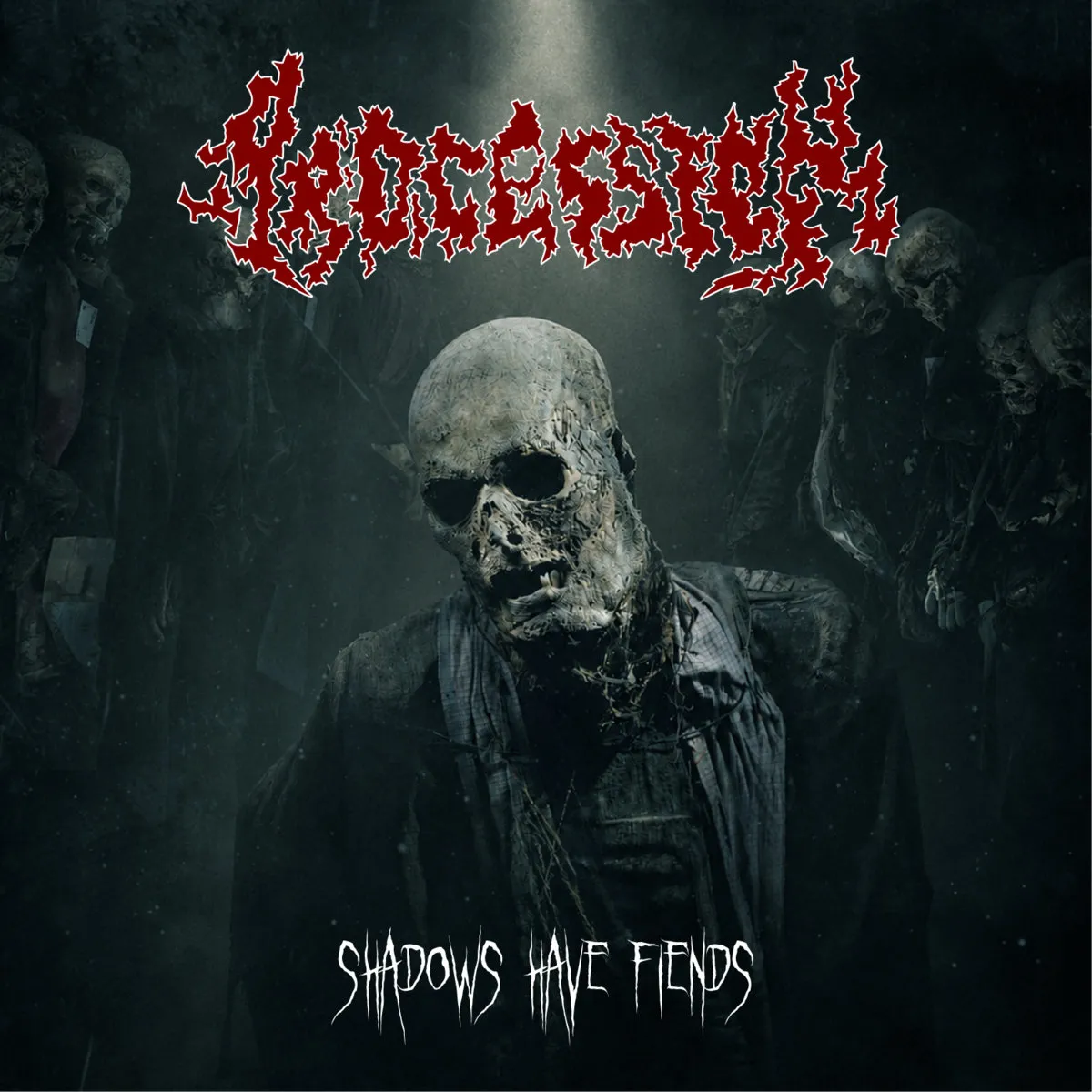
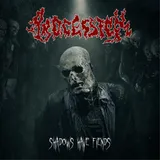
Thirty-nine minutes, nothing over six, which already tells you this is death doom from the melodic side rather than the funeral side. The sleeve is a crowd of corpses standing in a dim room, the logo is red and spiked, and nobody involved is pretending it is 2026.
What makes the record work is that it refuses to sit at one level. “In A Dream” closes the album and opens the widest distance between its quiet and its loud passages of anything here. “The Banner Of The Brittle” is the shortest song on the album at three and a quarter minutes and is the second widest, which is not how that usually goes. Between those two the album moves through a genuine range rather than cycling the same intensity nine times.
The voice is a deep, almost spoken guttural that stays low throughout and never reaches for a second register. On a record this melodic in the guitars that is a sound structural choice: the riffs carry the tunes, the voice carries the weight, and neither has to do both.
Where it gives ground
In texture. The nine tracks sit in a narrow band of tone colour, the guitars and bass occupy the same low middle almost everywhere, and in the denser passages the bass stops being a separate line. “The Fall (Of The Fallen)” is the clearest case and also the darkest thing here, earthy and thick in a way that suits it, but across a full album that sameness of colour is the thing you notice before you notice the songwriting.
There is also a conservatism to it. This is old-school death doom played by people who were doing it when it was new, and it neither updates the form nor argues with it.
So
Recommended. The songs are strong, the dynamics are real rather than decorative, and a band that waited this long to make records is not wasting anybody’s time with filler. The reservation is tonal monotony: nine tracks that move a lot in level and barely at all in colour, so the second half asks more patience than the first. Start with “In A Dream” and “The Banner Of The Brittle”, and if the voice works for you the rest will.
What I would still like to know is what happened between 1993 and 1999 that produced nothing, and what made 2022 the year to go back. That is a question for the band, not for a review.
The dynamic range is wide and genuinely uneven, which puts the record in the top handful of everything in our measurement set: from 12.7 decibels between the quietest and loudest passages on “Dirty Is Our Way” up to 23.0 on the closer “In A Dream”, with “The Banner Of The Brittle” at 21.9 and “The Fall (Of The Fallen)” at 20.6. The master itself is untouched by any flattening, peaks run between 11.9 and 12.7 decibels above average on every single track, a spread of eight tenths of a decibel across nine songs. Tonally the album is far more uniform than it is dynamically. Tonal centres span only 408 hertz across the nine tracks, from 2089 on “The Fall (Of The Fallen)” to 2497 on “The Banner Of The Brittle”, and the share of energy above five kilohertz stays between 15.2 and 18.3 percent throughout. The low midrange holds between 13.7 and 16.1 percent, where guitars and bass share the same space, and “The Fall (Of The Fallen)” carries both the lowest tonal centre and the highest low-mid share, which is why it reads as the heaviest piece on the record.
Standout tracks: In A Dream, The Banner Of The Brittle, The Fall (Of The Fallen)