 Bandcamp
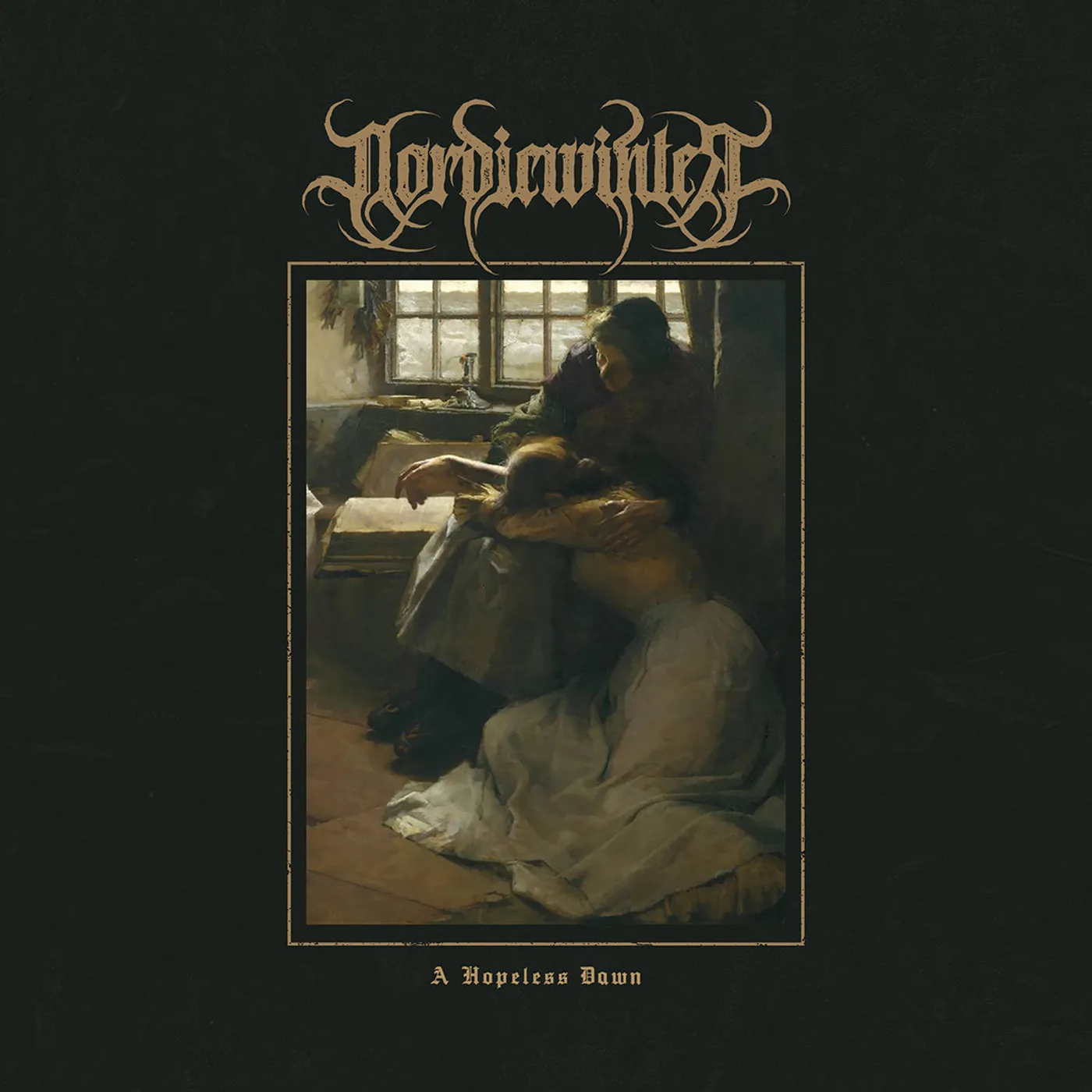
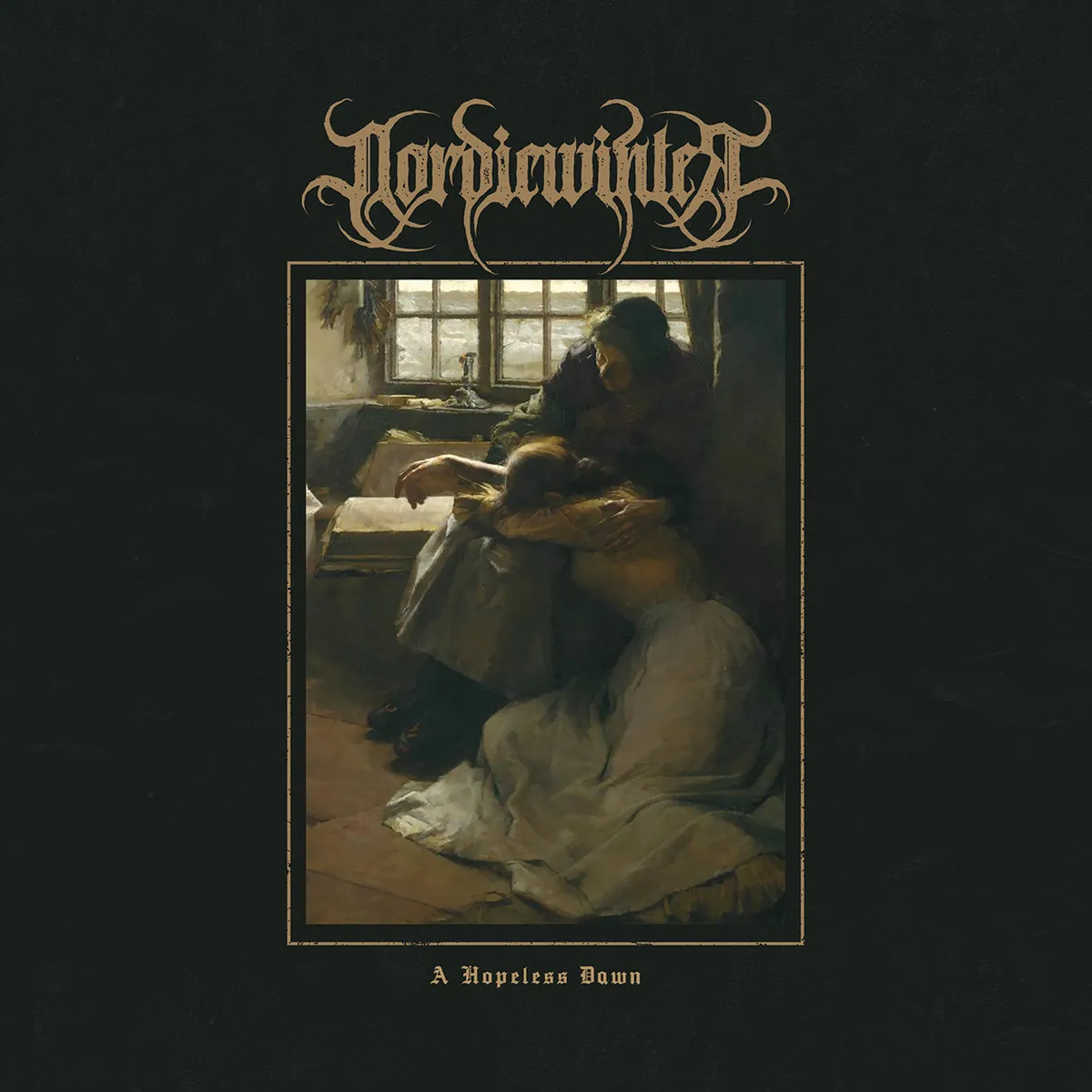
 The sleeve is not an illustration, it is a painting from 1888. Frank Bramley’s A Hopeless Dawn hangs in the Tate: a young woman on her knees with her face buried in an older woman’s lap, a cottage interior, the grey sea through the window, a meal on the table that nobody is going to eat. It is a picture of the moment the waiting stops being waiting. A one man depressive black metal project from Québec has reproduced it whole, put a logo above it and a line of script below, and otherwise left it alone.
That is a lot of confidence for a genre whose default sleeve is a photograph of trees.
What justifies it is that the record is built the same way the painting is: everything points at an absence in the middle. “Umbral Nocturne Part I” opens on piano, alone, and “Umbral Nocturne Part II” closes on piano and strings. Two halves of the same piece, one at each end, and six songs held between them. The bracket is the structure.
Both bookends sit far below the songs in level and carry almost nothing above the midrange, which is what a piano recorded in a room measures like next to a full band. What makes it more than a device is that the second half closes lower than the first one opened: darker, quieter, with more of its weight pushed down into the low middle. The frame does not return you to where you started. It shuts tighter.
Between them, evillair plays everything. Six songs that sit within half a decibel of each other in level and hold a near identical tonal picture, which on another record would be the complaint. Here it is the point, and more importantly it is level matching rather than compression: the distance between the quiet and loud passages inside those songs runs from twelve decibels to twenty. They are pinned to the same height and still allowed to move underneath. That is a harder thing to do than either loud or dynamic on its own, and almost nobody in this corner bothers.
“When Silence Speaks” is the one that uses the room best, the widest of the six and the one where the tremolo lines stop being a wash and start being separate parts. “Beneath Frozen Skies” is the densest through the low middle and the closest the album comes to sounding tired, which is presumably intentional given where it sits, second to last, just before the piano returns.
Where it gives ground is in the naming. “Elegy for the Sun”, “Requiem for the Forgotten”, “Nocturne in Gray”, “The Void’s Lament”. Four titles that could be shuffled between four different records in this genre without anybody noticing, on an album whose visual and structural decisions are anything but generic. The music is more specific than the words on the back.
So, to be plain about it: this is worth your time and I would put it in front of somebody who thinks depressive black metal has nothing left to say. The caveat is the middle stretch, where the songwriting does not always earn the attention the frame is asking for. But the frame itself, and the nerve to hang a Victorian narrative painting on a record like this, put it well above the run of the genre.
The album divides into two bookends and six songs, and the measurements separate them cleanly. “Umbral Nocturne” parts one and two both sit several decibels below everything else, with their energy concentrated heavily in the low midrange and almost nothing above five kilohertz, which is the signature of a sparse piano recording rather than a band. Part two goes further than part one on every one of those axes: lower, darker, thicker at the bottom. The six songs in between land within half a decibel of each other and hold their tonal centre inside a hundred and fifty hertz, but that uniformity is a matter of level rather than of squeezing, because internally they run anywhere from twelve to twenty decibels between their softest and loudest passages. “When Silence Speaks” opens the widest of the six. “Beneath Frozen Skies” carries the most weight in the low middle and the least air on top.
Standout tracks: Umbral Nocturne Part II, When Silence Speaks, Nocturne in Gray