 Bandcamp
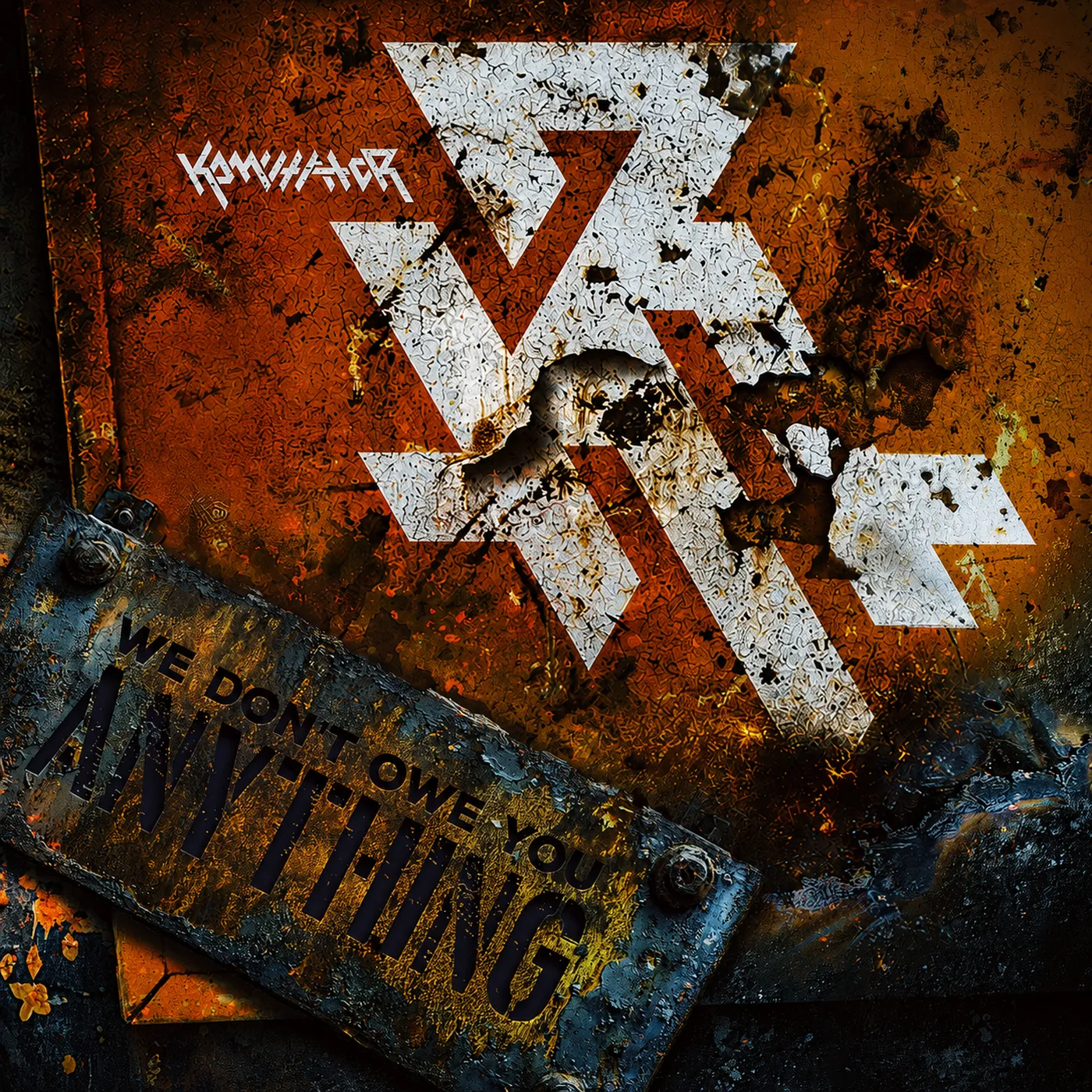
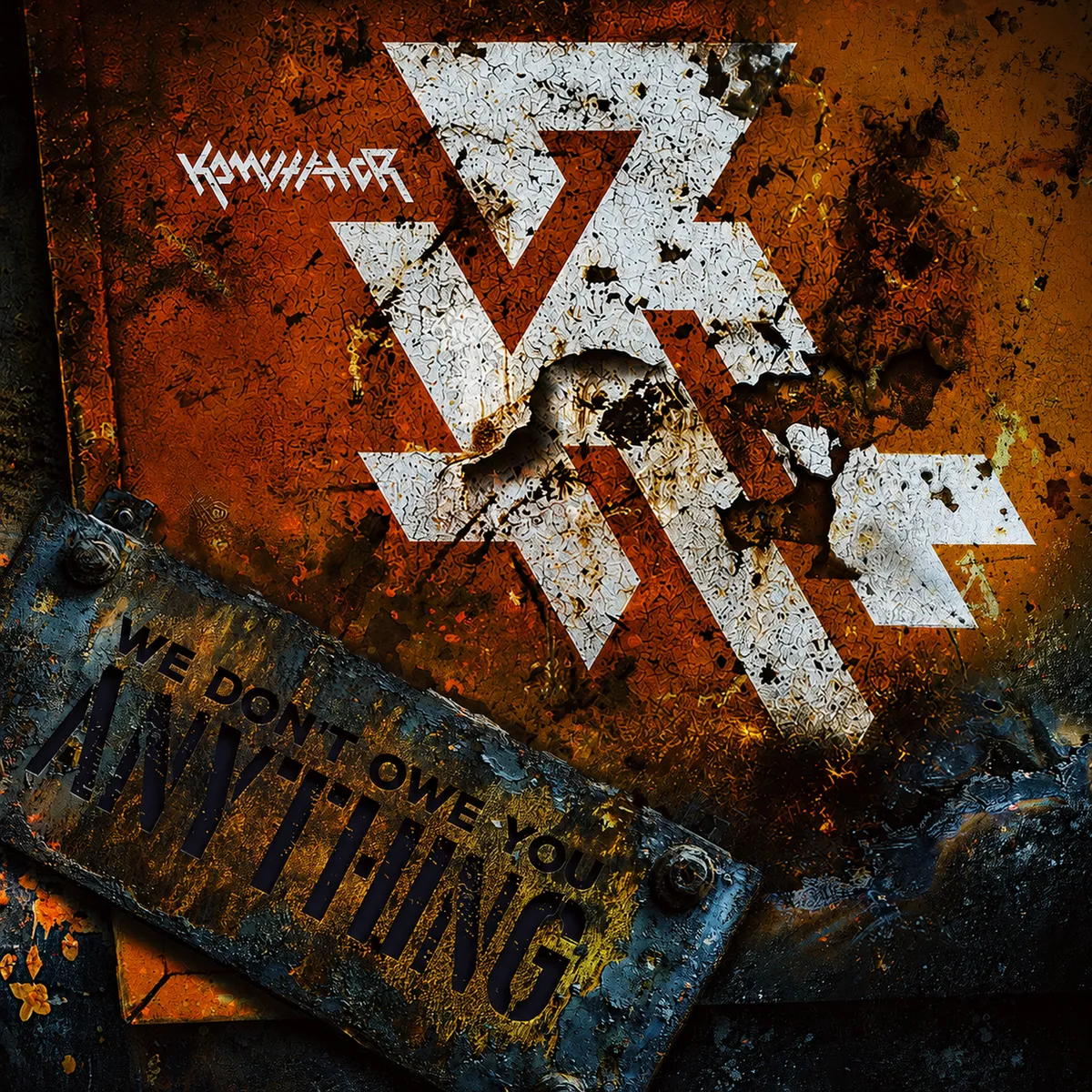
The best five and a half minutes on this record are the last five and a half. “We Don’t Owe You Anything” closes the album with the thing the eight tracks before it mostly do not have, which is somewhere to go. It drops out into a synth passage, grinds back in on a staccato figure, slows into a breakdown and pushes out again, and it has more than six times the dynamic range of the album’s tightest track. That is not an accident of mastering. That is a band arranging a song so that the loud parts land, and then doing it on exactly one song.
KomutatoR come from Ozimek in southern Poland and this is their second album, arriving thirteen years after their first. Jacek Zema sings, Michał “Kinder” Kowalski and Maciek Zalsiński play guitars, Andrzej Halupczok drums. It was tracked between 2024 and 2026 across Heinrich House Studio and Turnia Studio and mixed and mastered by Filip Hałucha, with guest appearances from Wojciech Kostrzewa of Asgaard, Szczepan Inglot of Wolfpack Heading Nowhere and Jacek Hiro of Sceptic. Thirteen years is long enough that the band had to decide what they still wanted to be, and the answer on most of this record is a thrash band that hits one speed very convincingly.
Four tracks with nowhere left to go
Here is the problem, stated with the number attached. Four of the nine tracks here sit under 4 dB of dynamic range: “The Doom We Crave”, “Let It Bomb”, “Inhuman Resources” and “Watch Beauty Die”. The quietest of those readings is 3.3 dB, and across the seventy other albums in our measured catalogue with at least five tracks apiece, only five contain a track squeezed tighter than that. This is the reservation on the record and it is a real one, because four tracks with almost no dynamic range in the space of five is the point at which a listener stops hearing impact and starts hearing volume.
Thrash has always run hot, and a loud master in this lane is tradition rather than a mistake. The problem is not that the record is loud. The problem is that four of tracks two through six are held at the same unvarying level, with only the instrumental at track five breaking the run, and a genre built on the contrast between a chugging verse and a chorus that opens up needs that contrast to survive the final stage.
The two that were allowed to breathe
The interesting part is that the band clearly knows this, and the evidence is in which tracks escaped. “Harbinger” opens the album, runs ninety three seconds, has no vocals at all, and sits apart from everything else on the record tonally: darker, weighted lower, with noticeably less treble than the eight tracks that follow. “Metathesiophobia” is the album’s instrumental, listed as such in the label’s track listing, and it runs at more than four times the dynamic range of “Let It Bomb”.
Both of those are easy to over-praise, and worth being careful about. A short intro and an instrumental built around samples will both measure as dynamic for reasons that have nothing to do with being better songs. The honest version of the observation is narrower: the flattening is a stretch, not a policy. It covers four of tracks two through six, and once that run is over the record starts to open again. “Monster” and “Season Of Storms” both get noticeably more room than anything in the middle, and the title track gets the most of all.
Which is why the title track matters so much. It has vocals, harsh ones trading against layered clean lines, and it still has room. The ceiling was never technical.
Take away “Harbinger” and the remaining eight tracks move across a span of brightness less than half as wide as the album’s full range, which tells you how uniform the body of this record is once the intro is out of the way. That uniformity is fine in itself. Thrash albums are allowed to sound like one band in one room. It is the combination of that uniformity with four flattened tracks that makes the middle of the record harder work than it should be.
So: worth it for the closer, for “Metathesiophobia”, and for anyone who wants Polish thrash played by people who very obviously still mean it after thirteen years off. Not worth it if you listen to albums front to back and expect the fourth song to feel different from the third. The playing is not the issue anywhere here, and neither is the writing. What holds it at three stars is a decision taken at the very last stage, after the songs were already finished.
Four of the nine tracks are pushed so hard that there is almost no distance between their quietest and loudest moments. In a thrash record that is a stylistic decision rather than a mistake, but four of them in the space of five tracks is a lot, and the midsection of the album flattens out because of it. The exceptions are revealing: the ninety second intro and the instrumental both have real room, and so does the closing title track, which swings between a synth passage, a breakdown and full tempo and ends up the most dynamic thing here. The intro is also the only track that sounds tonally different from the rest, darker and heavier at the bottom; once it is over, the remaining eight hold a very consistent brightness, and the last two before the closer already start to loosen up.