 Bandcamp
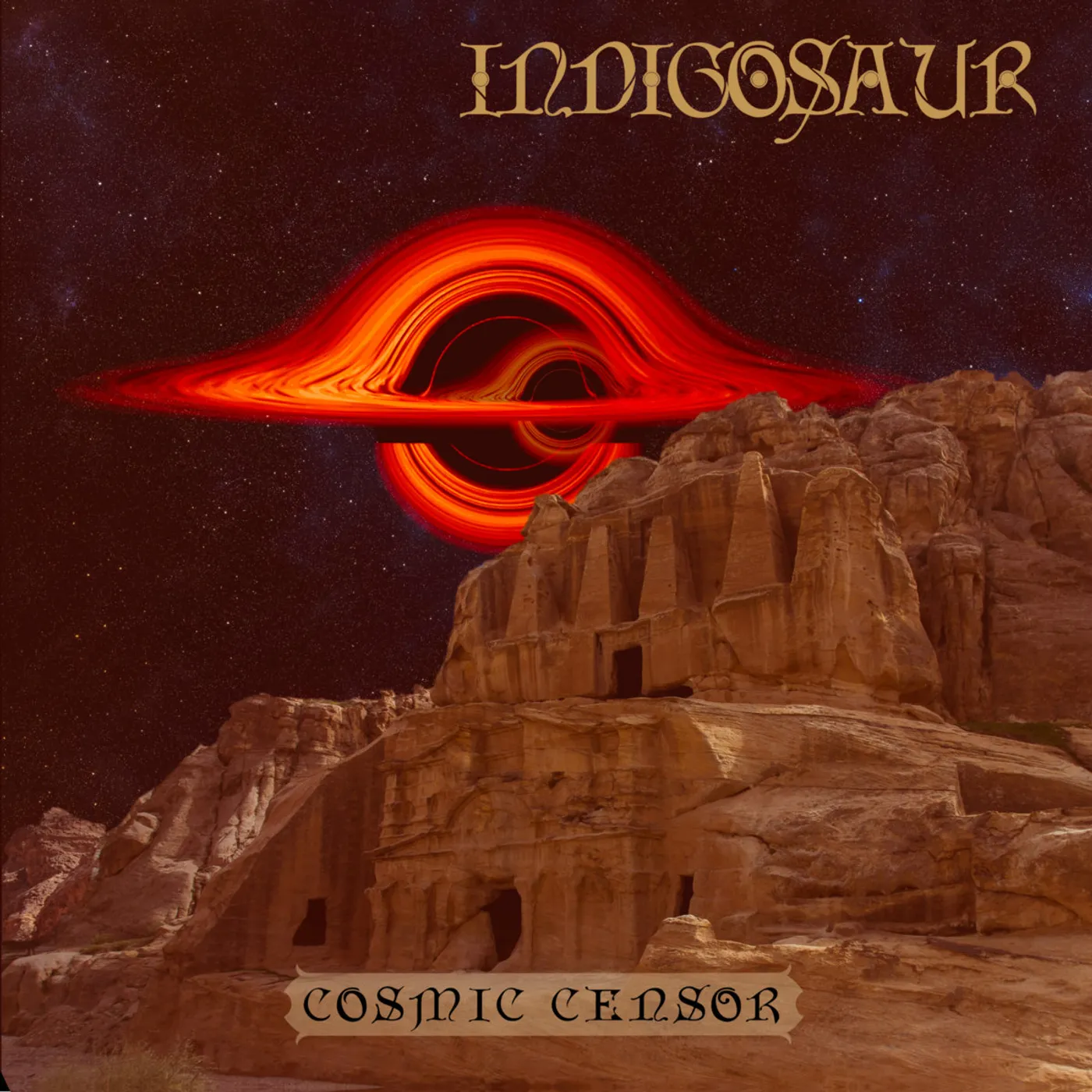
 The word that keeps coming back with Cosmic Censor is warm. Indigosaur, a quartet out of Cagliari on the Sardinian coast, made their debut record sound the way heavy rock sounded before the loudness war flattened everything, and it is the first thing you notice. The mastering leaves the dynamics alone. The drums breathe, the cymbals sit back instead of biting, and the whole thing has an in-the-room air that a brickwalled modern master would have wrung the life out of. On a valve-driven record built from ’70s hard rock, the steely edge of the new wave of British heavy metal and the narcotic pull of late-nineties stoner, that restraint is not an accident, it is the point.
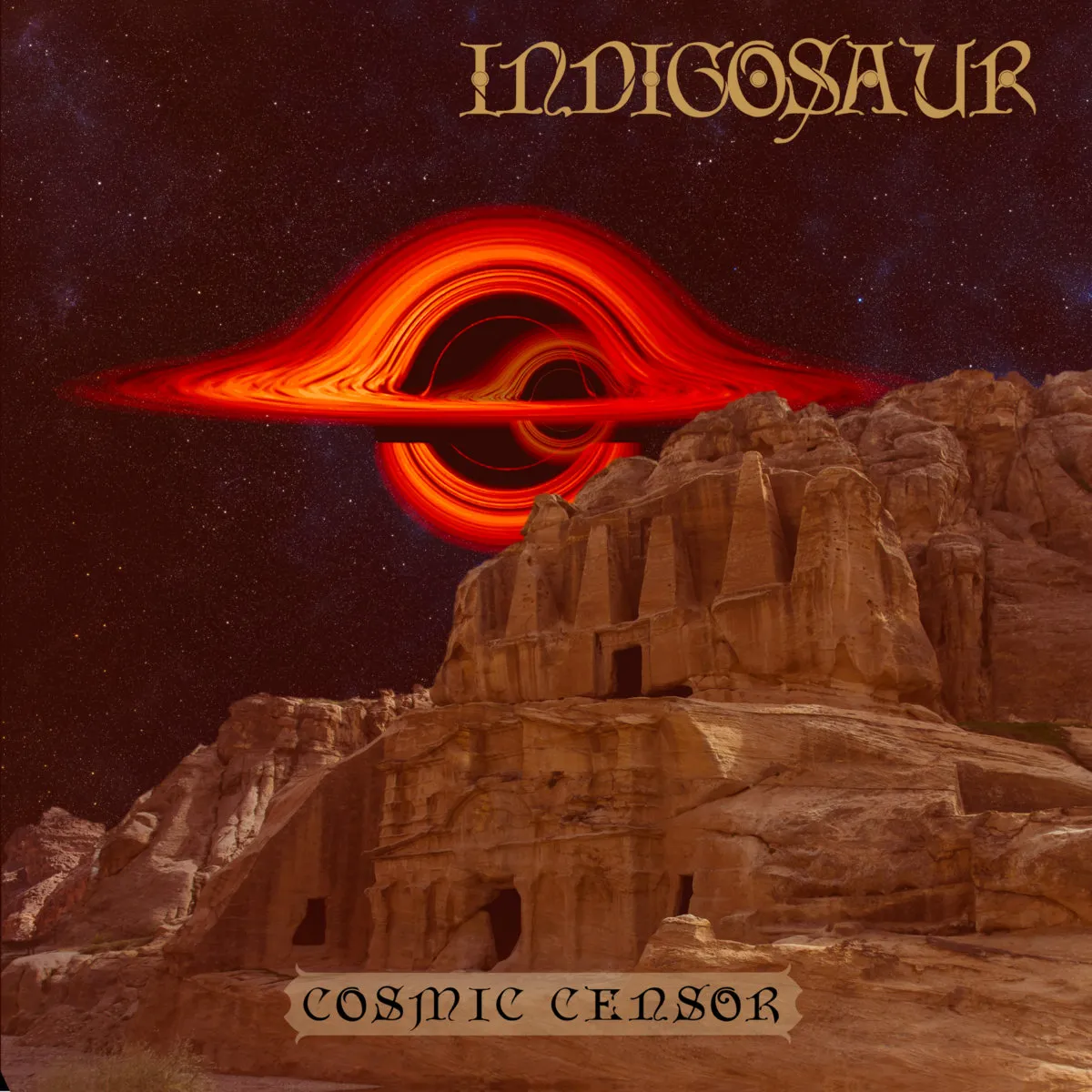
The concept overhead is a black hole. A “cosmic censor” is the gravitational abomination from which nothing escapes, and Nicholas Crozier’s lyrics orbit it with bleak reflections on the human condition dressed up in astronomical metaphor. It is a heavier idea than the music always lets on, because for long stretches this is just a very good time. “Titania” is the clearest case, and the best-sounding track on the record: the riffing is articulate and full of grip, the bass growls along locked to the kick, the snare has a woody natural punch, and the band sound completely at ease in their own skin. “Garden Blast” opens the album with that same easy swing, broad fuzzy guitars over an organic thud of a kick, and “Fellow Astronaut” rides a spacious, mid-heavy groove that earns its narcotic drift.
Where the record wobbles is in the low end, and it is a recurring thing rather than a fatal one. The guitars chase texture over surgical definition, all grainy fuzz saturation, and on “Fangs” and “Fiery Engine” the bass wanders into a woolly, undefined rumble that overloads the low mids and takes some of the riff separation with it. “The Wage” is the one genuine misstep, its first half caught between shrill, sibilant cymbals and a muddy middle while the bottom end runs loose, a seven-minute stretch that wants more of a firm hand than it got. On a debut this can be forgiven, and most of the time the rawness reads as vintage character rather than carelessness, but the ceiling on the record is set by how often the bass smears rather than growls.
Cosmic Censor is a confident, likeable first record from a band who clearly love the source material and know how to sound like it without cosplaying it. The best of it, “Titania,” “Garden Blast,” “Fellow Astronaut,” has real charm and a genuinely good touch at the desk, dynamic where almost everyone else is loud. It is not quite reservation-free, the low-end mud and one uneven track keep it honest, but for anyone who lives in the warm, fuzzed, valve-lit corner where Sabbath meets Kyuss, this is a debut worth your time. Play it on something with a bit of low-end control and let it drift.
Vintage, valve-driven heavy rock kept deliberately warm and un-crushed, the mastering leaving the dynamics room to breathe rather than brickwalling them. “Titania” is the best-sounding track, balanced and articulate, the riffing full of grip, a growling bass locked to the kick and a woody natural snare. “Garden Blast” and “Fellow Astronaut” share that airy, organic live-in-the-room feel, broad fuzzy guitars over retro, unaggressive drums. Elsewhere the rawness reads as intended vintage character, not carelessness. Charming and dynamic where most modern rock is merely loud.
Standout tracks: Titania, Garden Blast, Fellow Astronaut