 Bandcamp
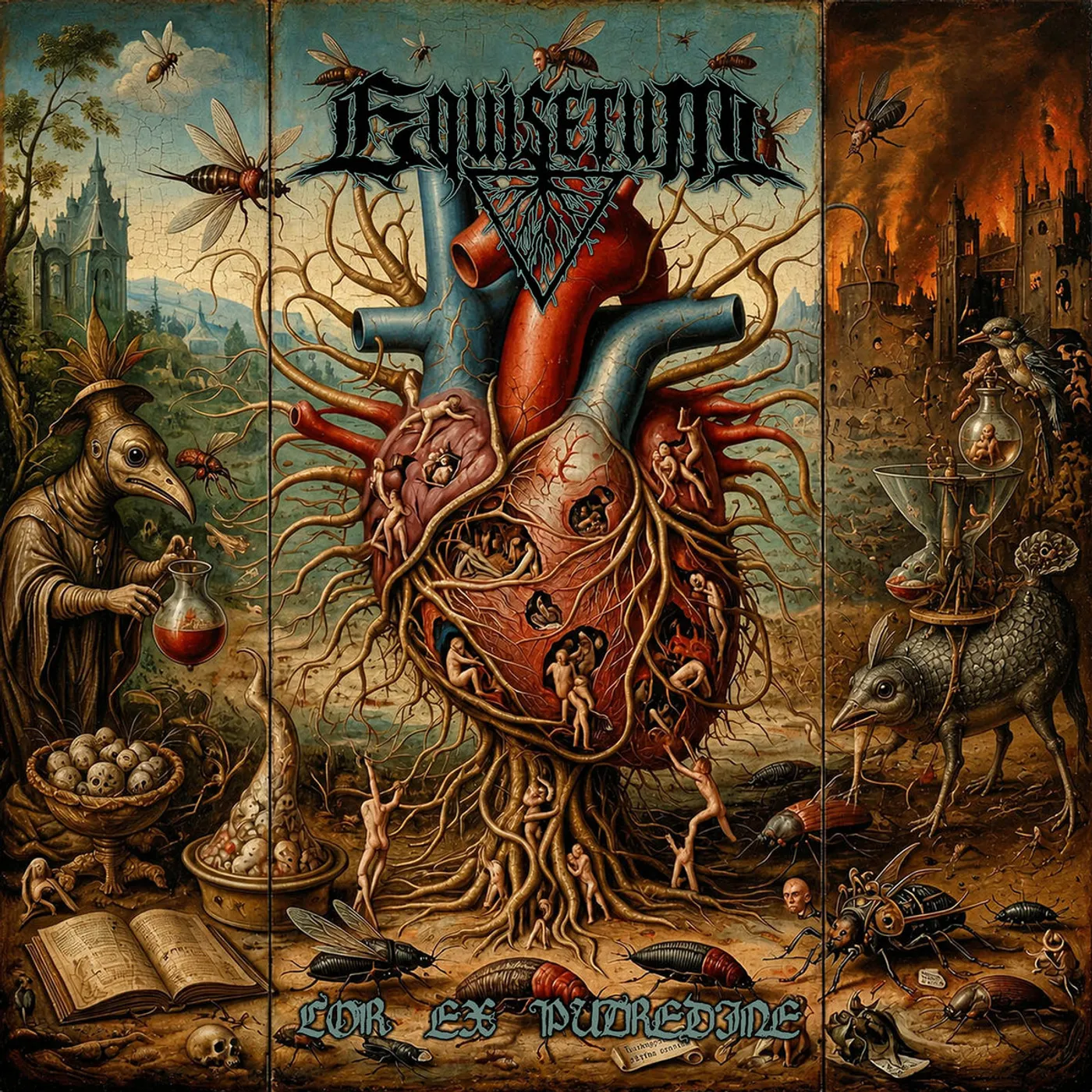
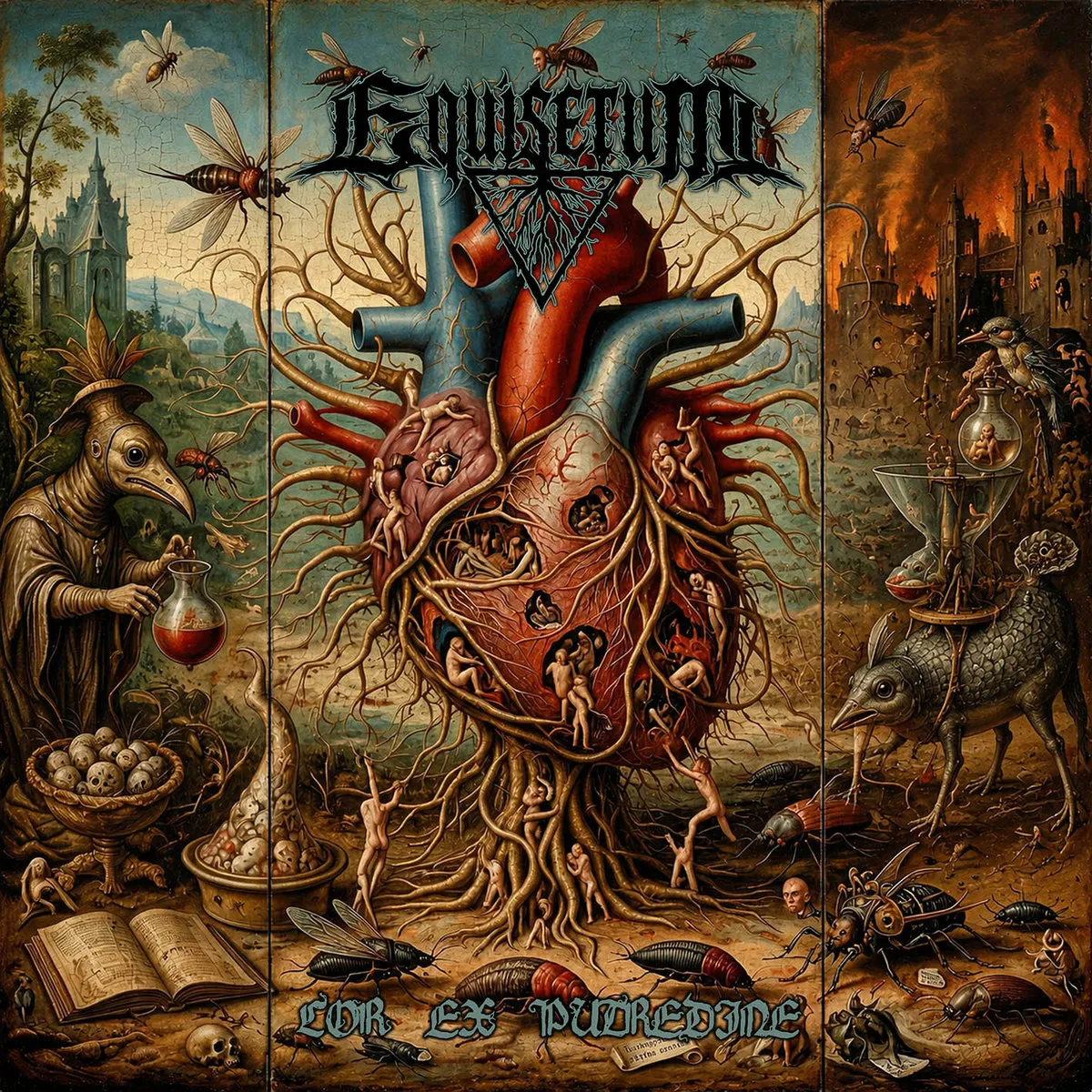
 The sleeve takes the title at its word. A triptych in the manner of a four hundred year old panel painting, cracked varnish and all: an anatomical heart in the centre, arteries thickening into roots, tiny naked figures climbing in and out of its chambers while flies work the air around it. On the left a plague doctor holds a flask of something red above a basket of skulls. On the right a city burns behind an alchemist’s glassware with a homunculus suspended in it. Heart from rot, and the painting has already made the argument before a note arrives.
The band state the thesis plainly on the release page: death is not an event, it is a process. Seven tracks then follow that instruction with more discipline than most records could survive.
Across six of the seven pieces the gap between the quietest and loudest passages stays between six and nine decibels. The brightness does not move. The balance between low end, midrange and top does not move, within a percentage point or two, from the first track to the last. The level does not move. Play the album straight through and you are not listening to seven songs, you are listening to one sustained condition that occasionally changes its mind about tempo. For a record about decay as a process rather than a moment, that is either the most committed formal decision of the year or a failure of nerve, and the album itself never fully settles which.
There is exactly one rupture. “Il Canto Degli Impiccati”, the song of the hanged, carries close to double the dynamic range of anything else here, and it is the second track. That placement is the problem. The record shows you, three minutes in, that it can pull back far enough for weight to arrive as an event, and then spends five more tracks declining to do it again. Had that song closed the album it would read as release. Sitting at position two, it reads as a door being shown and then shut.
What holds the thing together is the vocal. Noctuaria delivers in Italian, and the mode shifts between a low recited baritone and a growl that sits well back in the room rather than on top of it. Italian is a language most metal bands reach for in fragments, for atmosphere. Used continuously, for a whole record, in a register closer to recitation than to singing, it stops being decoration and starts being a liturgy. That is the Paul Chain lineage the band name on the release page, and the claim survives contact with the music, which is more than most reference lists manage.
Mortifero plays everything else and produced it, and the consistency I have been describing is presumably his ear rather than a compromise. The mix keeps the midrange as the dominant region and leaves roughly a fifth of the energy above five kilohertz throughout, which is brighter than the funeral doom reflex and keeps the record from turning into sludge. That is a real decision, and it works.
A debut that knows exactly what it wants to be is rarer than a debut with good songs. This one is the former. The next question is whether a band whose subject is a slow process can build a second record that moves.
This is a remarkably uniform record by measurement. Six of the seven tracks sit within a few decibels of each other in level, hold the same balance between low end, midrange and treble to within a percentage point or two, and keep the distance between their quiet and loud passages inside a narrow six to nine decibel band. The midrange carries just under half the energy on every single piece, with roughly a fifth sitting above five kilohertz, which is brighter than the genre reflex and keeps the density from collapsing into mud. The one departure is “Il Canto Degli Impiccati”, which opens up to nearly twice the dynamic range of anything else here and is the only point where the album lets weight arrive rather than simply persist. That it happens in the second track rather than the last is the most consequential decision on the record.
Standout tracks: Il Canto Degli Impiccati, Prevenar, Mortuaria