 Bandcamp
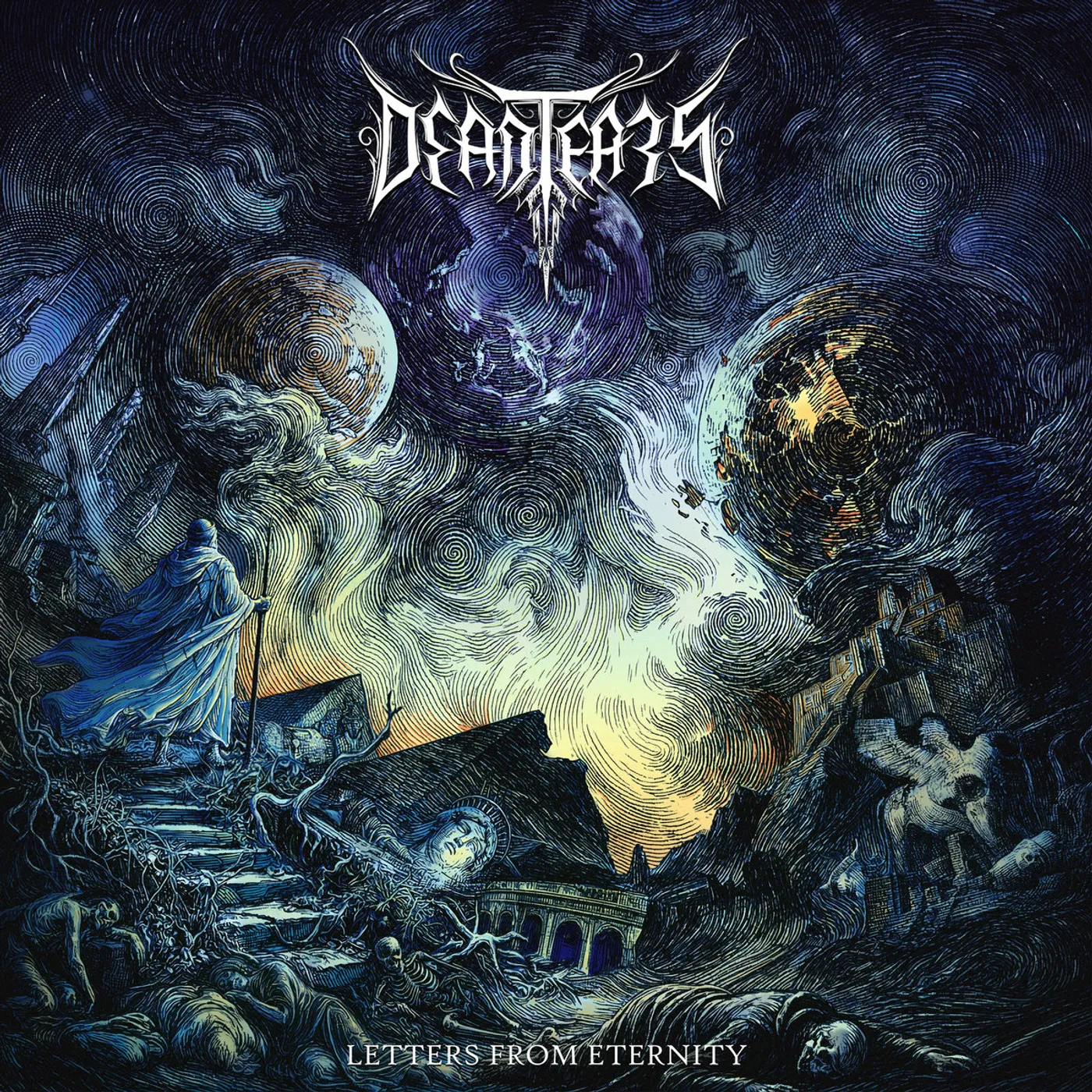
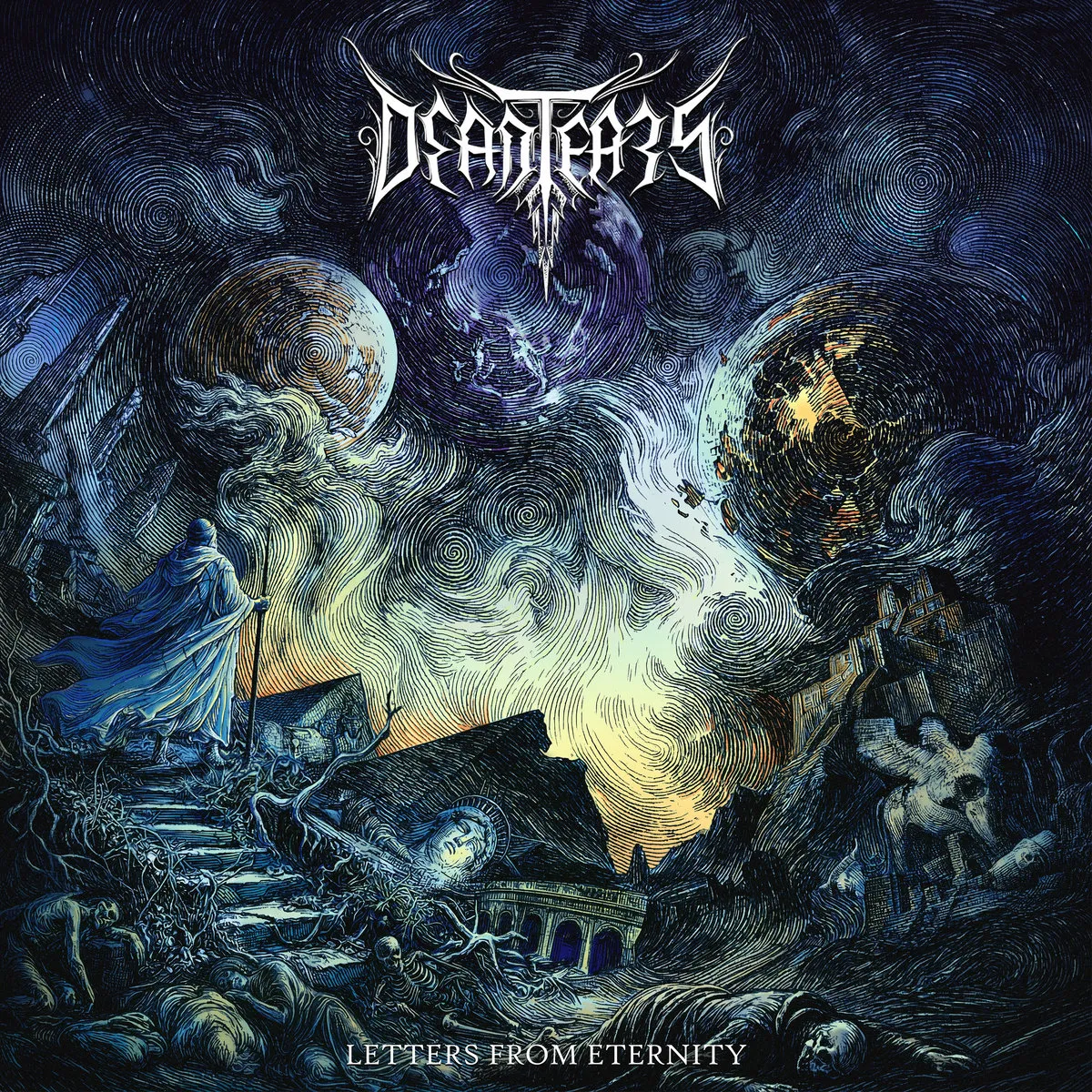
Dead Tears formed in Baghdad in 2019 and put out Wretched Earth in December 2020. Letters From Eternity arrives five years and nine months later, fourteen tracks and an hour and twelve minutes of it. I went through every review we have published and every country we have ever filed one under, and Iraq is not among them. That says something about where we have been looking rather than anything about Baghdad, and it is the last time it comes up here, because the record has its own argument to make.
The argument is consistency, and on most of what we can measure it holds. Take the twelve tracks between the opener and the closer. Their spectral centres sit between 2451 and 2633 Hz, a corridor of 182 Hz. Treble above 5 kHz varies by one and six tenths percentage points across the whole run. Energy in the low midrange varies by one and a fifth. Average level moves by nine tenths of a decibel.
Exactly one thing moves, and it is worth being precise about what it is. Below 250 Hz the same twelve tracks run from seventeen and three tenths percent on “Voiceless” to twenty one and four tenths on “Belated Dawn”. As a change in that band’s share that is about nine tenths of a decibel, roughly three times what anything else on the record manages. The 800 Hz to 5 kHz band appears to swing further, four and three tenths points, but that band is nearly half the spectrum: in decibels its movement is four tenths, the same as the treble two sentences ago that I called locked. It is the counterweight, not a second finding. The four bands add up to a hundred percent by construction, and across these twelve tracks the low band and the midrange move against each other almost perfectly while the other two sit the whole thing out.
So it is a see-saw rather than a second dimension. A track with more weight underneath has less midrange and the other way round, and the total stays where it was. That is still a decision, and it is the only one these twelve tracks make differently from each other on the frequency side.
The dynamic range tells a simpler story than I expected. The two widest tracks are the first and the last: “Scavengers” covers sixteen and seven tenths decibels between its quietest passage and its loudest, and the closer covers fifteen and nine tenths. Between them, “Center of the Universe” at track nine reaches twelve and four tenths and “From Forgotten Ages” at thirteen reaches nine and four tenths. The remaining ten tracks all sit under seven and a half, with “Voiceless” the tightest at three and six tenths, which in a genre built on sustained intensity is a description of what the song is doing rather than a complaint about it.
So the album is bracketed by its two most mobile pieces and spends the hour in between pushing. And the piece at the end is not what the thirteen in front of it would lead you to expect.
“Benighted” closes the album in two minutes fifty four and belongs to a different record. Its spectral centre is 773 Hz, more than sixteen hundred below the album average. Three tenths of one percent of its energy sits above 5 kHz, against seventeen and a half to nineteen and one tenth on everything else, so there is effectively no cymbal wash and no distorted guitar in it at all. Nearly forty four percent of it lives between 250 and 800 Hz, where nothing else on the record passes sixteen and a quarter. It runs eight and a half decibels quieter than the rest of the album and keeps more room above its own average than anything here, which is what a solo instrument recorded properly looks like.
It is a solo piano piece, and the numbers say so before anybody tells you: no cymbal wash, no guitar, and almost half the energy sitting in the band where a piano’s middle register speaks. It also carries the least weight below 250 Hz of anything here, though only three tenths of a point below “Voiceless”, so that one is a footnote rather than a headline. Putting it last is the only structural decision on the record that genuinely surprised me.
The reservation comes out of the same numbers. Ten of the fourteen tracks move less than seven and a half decibels between their quietest and loudest passages, and across the twelve in the middle the brightness and the loudness barely shift at all. The see-saw underneath is real but it is the kind of thing a listener feels rather than notices, and over seventy two minutes the thing you notice is that the band push at one level for a very long time. That is a real cost on a record this size, and it is the difference between a band with a sound and a band with a sound plus a reason to use it differently from song to song.
Three out of five. The production is clean and uncramped, peak to average sits between twelve and a half and fourteen and two tenths across the thirteen metal tracks, and nothing here was squashed to get loud. The band know exactly what they sound like. What Letters From Eternity needs next is a reason for each of these doors to open onto a different room.
Start at “Scavengers” for the widest version of what they do, then go straight to “Benighted” and hear how far they can get from it when they decide to. Those two are also the two widest tracks on the record, which is either a frame or a coincidence, and after seventy two minutes I would rather believe it is a frame.
One axis nobody looks at says the same thing as the rest. The point where eighty five percent of the energy sits moves by six percent across the whole middle of the album, from 5247 to 5561 Hz. On a record of this length that is a mastering chain left alone.
“Eternal I: Recurring Past” and “Eternal II: Returning Cosmos” run back to back at six and seven. Ninety eight Hertz separate their spectral centres, which is the third largest step between any two neighbouring tracks here. The largest of all is the drop into the piano at the end. The largest between two metal tracks is the step into “Eternal I” from the one before it, not the step between the pair.
“Benighted” also has the lowest midrange share on the record at thirty eight and a half percent, against forty four to forty nine across the thirteen metal tracks. Almost everything it does sits just below that band instead, which is what a piano recorded on its own looks like on a meter.