 Bandcamp
Every word on this record is audible. On a record this angry that is the decision that matters most, and Christopher Thomas Elliott has made it on all ten tracks: the voice sits at the front of the mix, dry and close, with the fuzz arranged around it instead of over it.
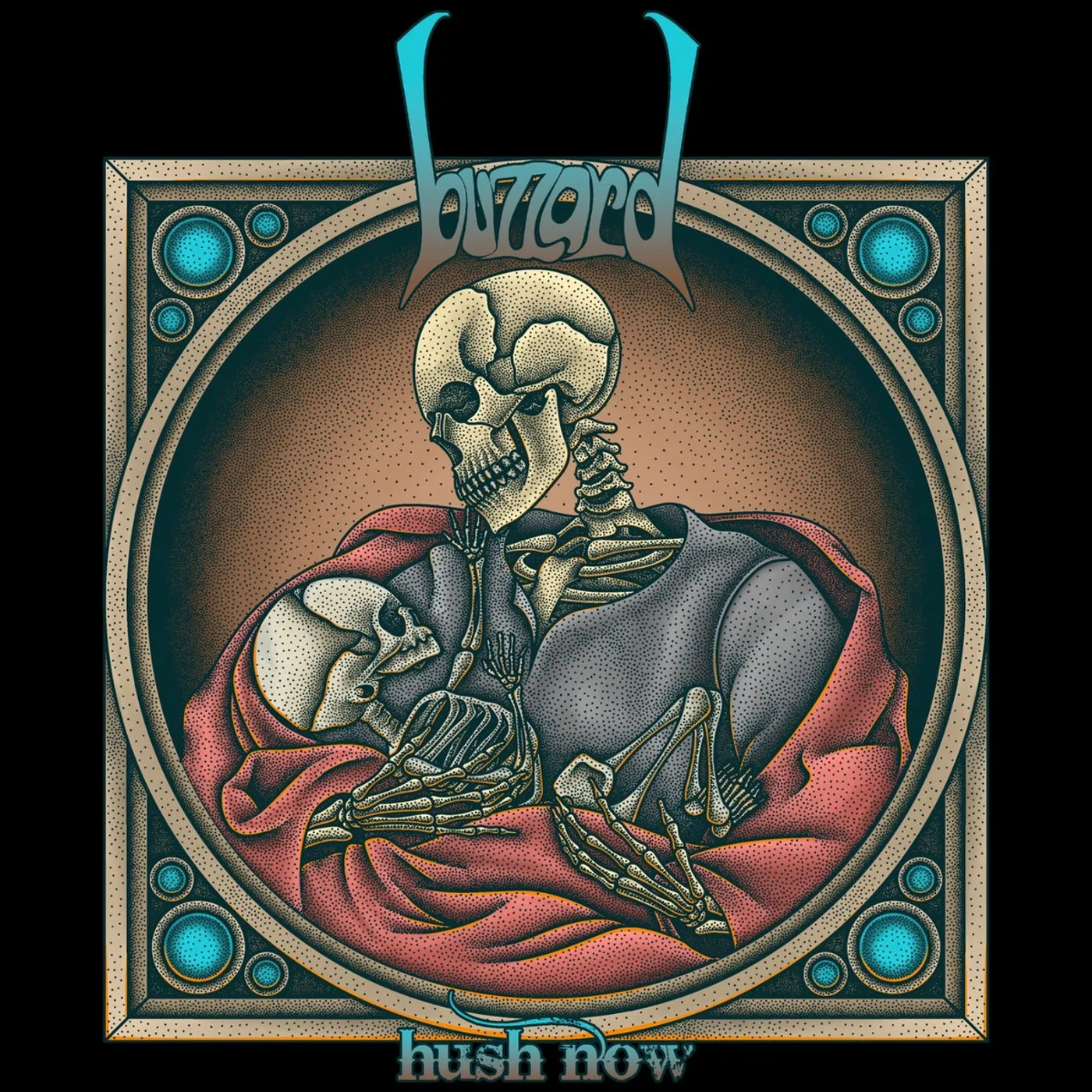
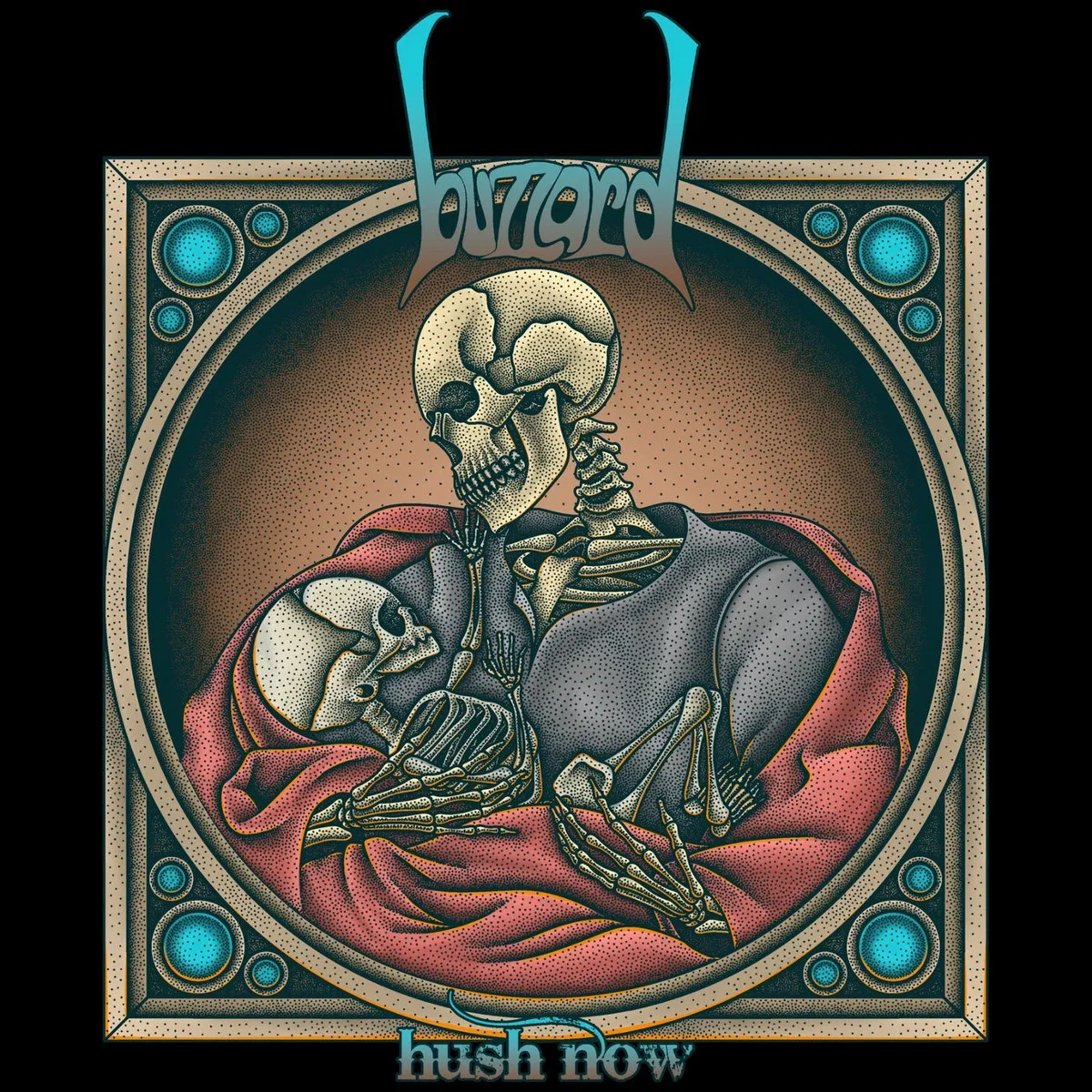
Buzzard is one person in western Massachusetts, and Hush Now is the fourth album. The titles tell you where it points before a note plays: “Disunion”, “Shutting Down”, “Contaminate, Consume”, “Ten Extinction Credits”. The delivery moves between spoken word and a low sung baritone, and it rarely raises itself, which on a record about collapse is more unsettling than shouting would have been.
Where the record breathes
Nine tracks in, “Take Comfort” drops almost everything. It is the quietest piece here, the darkest by a clear margin, and the one where an acoustic guitar carries the song instead of the fuzz. Measured, it has nearly a third of its energy in the low midrange, more than anything else on the album, which is what a record sounds like when the electric guitars step out and the wood steps in.
That it arrives at position nine is the smartest piece of sequencing on the album. Forty minutes of unbroken pressure would have flattened out somewhere around track seven. Instead the record takes its foot off, and then “Doomsayer Fairy Tale” comes back as the widest thing here, with the biggest distance between its quiet and loud passages of anything on the album.
The reservation
One voice at one register for forty-one minutes is a lot to ask, and the back half is where you notice. “Mount Din” and “Ten Extinction Credits” both sit at the tight end of the album’s range and both lean on the same spoken cadence, and across a full listen the approach starts to feel more like a setting than a choice. A guest, a key change, anything that broke the pattern once would have bought the record another ten minutes of attention.
Recommendation
Recommended, and particularly if you want a doom record where the lyrics are not optional. Elliott writes and performs all of it, the production puts the words where you cannot avoid them, and the acoustic turn at track nine shows a writer who knows the difference between relentless and monotonous. The reservation is that the difference is a narrow one here and the record walks close to the line in its final third. Start with “Doomsayer Fairy Tale”, then go back to “Take Comfort” to hear what the rest is built against.
“Take Comfort” is the outlier and it is the point of the record’s shape. It runs quieter than anything else here, sits lowest in the spectrum, and puts close to thirty-one percent of its energy in the low midrange where an acoustic guitar lives, against about twenty for the album’s heavier tracks.
The closer goes the other way. “Doomsayer Fairy Tale” opens to around fourteen decibels between its quiet and loud passages, where the tightest tracks on the album sit under six. Across the record the master is left with room in it, so the quiet passages stay quiet and the fuzz has somewhere to arrive from.
Standout tracks: Doomsayer Fairy Tale (Heavy Groove Story Time), Take Comfort, Satan, Your Kingdom Shall Come