 Bandcamp
 Halfway through Beltane the album shows what it can really do. “I Am The Black Hole” drops out to an intimate, electronic-led verse, lets the space open up, and then detonates into its chorus with the clean-to-shout vocal contrast doing genuine dramatic work, the cleanest separation and the most alive dynamics on the record. For three minutes the Perpignan trio sound like a band that could stand with the better names in the current occult-doom wave, the Green Lungs and Dead Witches they clearly admire. The frustration of the album is that it spends a lot of the surrounding forty minutes refusing to let the rest of the songs breathe the same way.
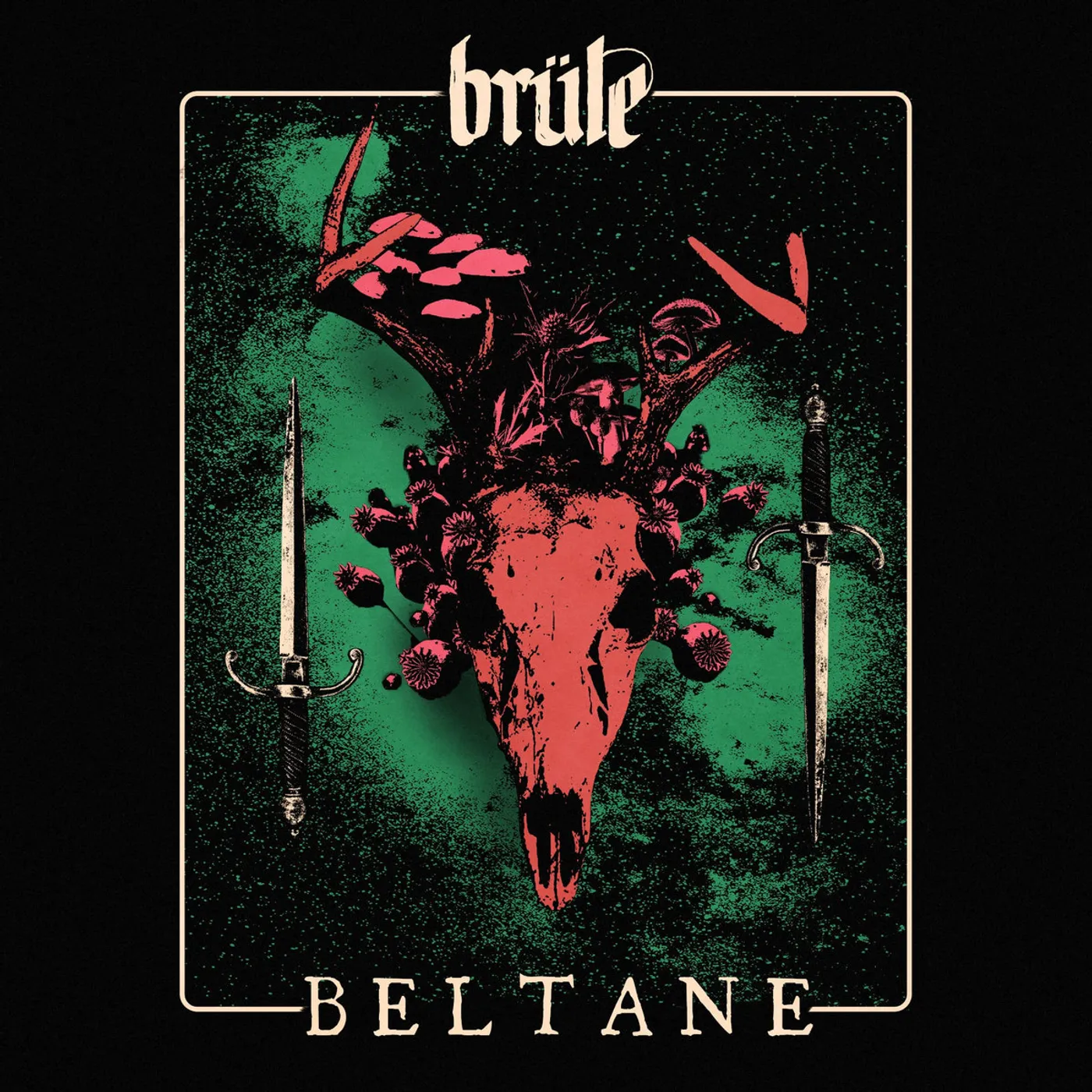
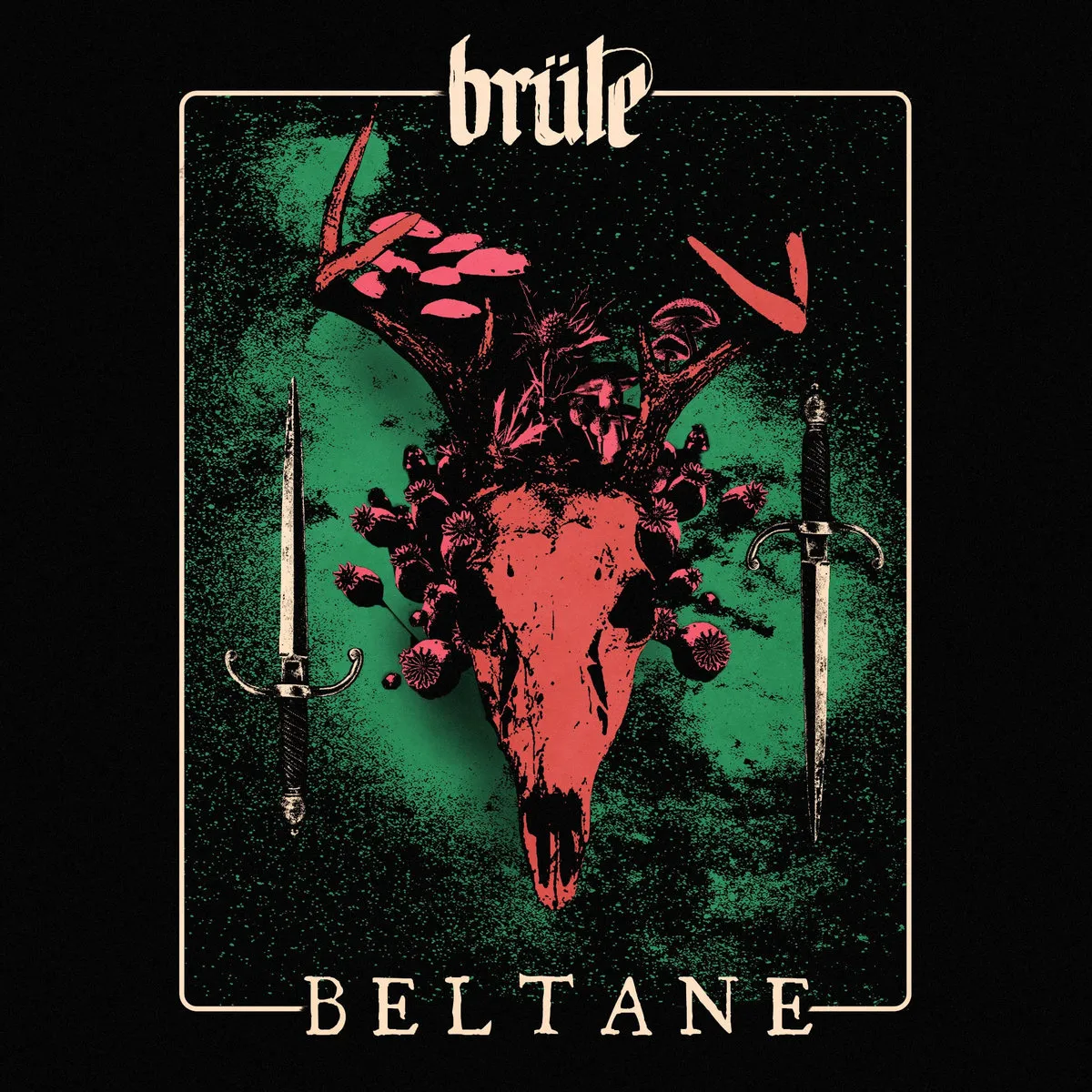
Brüle are a three-piece from the Catalan north of France, Arno Bechet on guitar and vocals, Jean-Marc Prats on bass, Carla Boccand on drums, and Beltane is their second record, self-released through their own Southern Dust imprint two years after their debut. The concept is right there in the title: the Celtic fire festival that marks the turn from dark to light, threaded through with the kind of occult reading the genre loves. “Thélème,” the opener, takes its name from Rabelais’s imagined abbey, the one whose single rule, do what thou wilt, Crowley would later borrow, and Bechet sings it in French because, as he’s said, it’s harder to hide behind. “Enter The Cult,” “Eyes Of God,” “The Wild Hunt,” “War Machine.” The imagery is pagan and cosmic rather than anything more troubling, occult convention played straight, and it suits the music’s slow, ritual pull.
When the band trusts atmosphere over force, it works. “Eyes Of God” builds a cathedral of reverb, the drums sitting wet and far back, the fuzz guitars massing into a genuinely heavy wall while the bass hums underneath, and it earns its doom by moving like doom, unhurried and wide. “I Am The Black Hole” earns it through contrast. Those two tracks are the album.
The reservation is the production, and in a doom record it matters more than usual. Most of Beltane is mastered loud and dense, pinned near the ceiling, and the relentless compression flattens exactly the micro-dynamics that give slow, heavy music its weight. The drums are processed to within an inch of their life, a hard clicking kick and a gated snare that read as mechanical rather than human, and on a record about pagan fire that machined precision pulls against the organic heaviness the riffs are reaching for. The bass too rarely growls, sitting as a clean sub-foundation instead of a second voice, so the low end goes thick without going deep. There’s an industrial edge to all of this that’s clearly partly deliberate, a hypnotic, forward-pushing mechanical drive that suits “War Machine” and the cult-march stomp of the heavier cuts. But intention and effect aren’t the same thing, and across a full album the wall gets tiring, the low mids stack up, and the atmospheric synths keep drowning behind the guitars. Doom is one of the few genres where lo-fi roughness or generous dynamic range almost always beats this kind of polished loudness, and Brüle have chosen the harder road to win on.
The first thing that defines this record is loudness: most of it is mastered dense and pinned high, and the constant compression flattens the micro-dynamics that doom depends on. The drums are the next tell, a clicking kick and a gated-reverb snare that feel machined rather than played, which gives the album a cold industrial pulse but works against the organic weight of the riffs. Guitars are the strength, a sandy, heavily saturated fuzz that still keeps enough chord definition to read in the wall; the bass is the weakness, precise but growl-less, a clean sub more than a voice, so the low end thickens without deepening. The French and English vocals are pushed forward and incantatory, intelligible but spatially isolated. The exceptions prove the rule: “Eyes Of God” opens up a wide, cathedral reverb and “I Am The Black Hole” keeps real dynamic range and clean separation, and they are immediately the two best-sounding tracks here.
Standout tracks: I Am The Black Hole for the dynamic contrast the rest of the album doesn’t allow itself. Eyes Of God for the cathedral-reverb doom that moves the way doom should. Thélème for the French-sung, Thelemic opener that sets the ritual tone.
A band with the riffs, the atmosphere and the concept to make a strong occult-doom record, who made a good one and left a better one inside it. The will is there, in the Crowleyan sense the album would appreciate. The next step is trusting the songs enough to turn the limiter down and let the fire actually breathe.