 Bandcamp
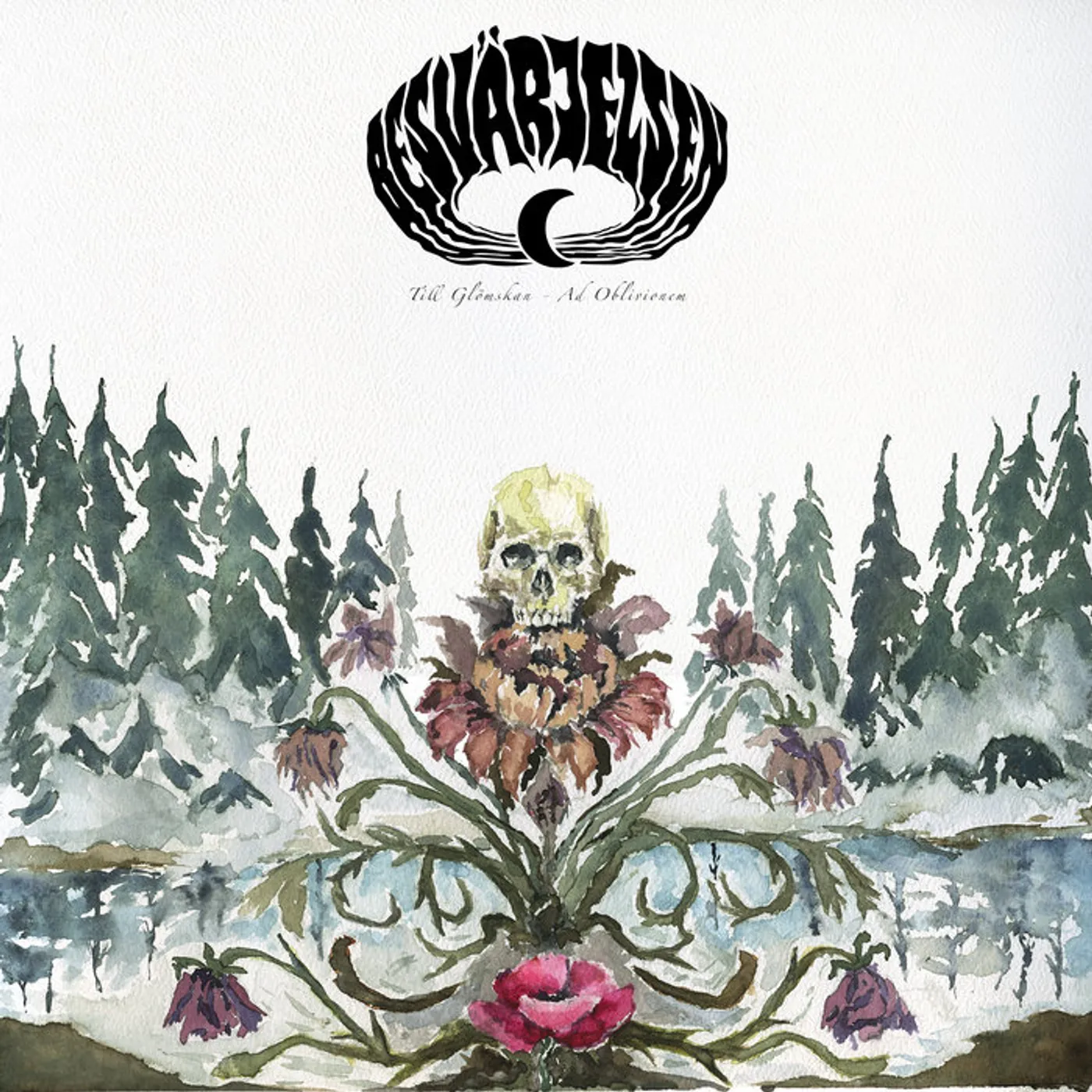
 Forest rock is their term, not ours. Besvärjelsen coined it as a Swedish answer to desert rock, and it is a good joke with a real idea inside it: same weight, same fuzz, different weather. Pine instead of sand, damp instead of heat.
The third album does not sound like a forest. It sounds like a very good, very expensive room with the windows shut.
That is worth stating plainly because everything else about Till Glömskan Ad Oblivionem is strong enough to make the production the main conversation. Lea Amling Alazam is an exceptional singer, with a rough soul edge under the clean tone that most heavy bands would build a whole identity around. “Battles” gives her a bass-led verse and enough space to work in, and it is the best thing here by some margin. “Counting Flies” goes the other way and buries her in fuzz thick enough to go slightly to mush on the chords, which sounds like a complaint and is actually the moment the record feels most like its own name.
The reservation is consistency of approach. Across eleven tracks the default setting is loud, wide and flattened: guitars tuned low and gated tight, a kick with a hard click on the front, a bass that mostly serves as a shelf rather than a voice, and vocals doubled, brightened and audibly pitch-corrected. On “Drifters on a Quiet Stream” the verse-to-chorus move is so evenly compressed that the chorus arrives without arriving. On “The Mountain” the same treatment works, because the song has somewhere to go and a guttural turn late on that earns the size.
None of that is incompetence and it is not an accident. This is the dialect of a band on Magnetic Eye aiming at rooms bigger than the ones a fuzz record normally fills, and plenty of it is well judged. The stereo picture is genuinely impressive, the low end never smears, and when they want a wall they get one that still lets you hear the notes.
Which makes “Interlude” the most interesting eighty seconds on the album. It is instrumental, it has a real room around the drums, the snare has wood in it, the cymbals are silk rather than glass, and nothing is shoved against a ceiling. Twin lead guitars carry it and the whole thing breathes. It is also the one track that could not be a single, and you can hear why the rest were treated differently.
“Oblivion” closes on piano and the widest dynamic swing here, and the Swedish-language middle section is the record at its most specific, the moment it stops sounding like it could be from anywhere. More of that and the forest would be a place rather than a name.
A very good band with an unusual singer made a record that will travel. It travels with the windows shut.
“Interlude” is the outlier and the only genuinely open recording on the album, a warm and roomy picture where the snare keeps its body, the cymbals stay soft and nothing is pushed against a limit. “Battles” holds the best balance of the vocal tracks, a growling and clean low end under a voice that sits forward without being polished flat. “Drifters on a Quiet Stream” is the most heavily mastered, its transients visibly squashed in the choruses and its kit sounding sampled rather than struck. “Oblivion” swings furthest between the quiet piano passages and the full weight, and pushes the master hardest at the peaks.
Standout tracks: Battles, Interlude, Oblivion