 Bandcamp
 Reunions usually get announced with the word chemistry. Aborym announced this one by listing who is in the room: Fabban back with drummer Atum and guitarist Munholy, the lineup that made Malfeitor, after many years apart. Then they filled the rest of the room with other people’s bands. Patrick Mameli of Pestilence, Tommy Talamanca of Sadist, Chris Cannella of Malevolent Creation, Noralf Venås of Helheim, Tapio Wilska formerly of Finntroll. That is not a guest list, that is a statement about which neighbourhood the record thinks it lives in.
What comes out is the loudest thing we have measured in months. Eight of the nine tracks sit within seven tenths of a decibel of each other at a level that leaves almost no headroom, and the distance between their peaks and their average stays around eleven decibels across the whole album. In most genres that would be the end of the conversation. Here it is more complicated, because industrial metal has used compression as an instrument since the eighties, and squashing a mix flat is a texture in this lineage rather than an accident.
The test is whether anything still moves underneath, and on two tracks it emphatically does. “Creatures of the Night” and “The Afterlife” open spans between their quiet and loud passages four to five times wider than their neighbours, which means the arrangements drop out and come back even though the ceiling never lifts. That is the difference between a record that has been flattened and a record that has been pressed. This one has been pressed, deliberately, and it knows where to let go.
Where it goes wrong is the middle. “Metachaos”, “Enshrined in Putrefaction”, “Satiate with my Sperm” and “The Crescendo of Demise” all run in a tight band with very little internal movement, four tracks in a row at one unbroken intensity, and across a forty two minute album that is where attention starts to slide off. The titles are trying hard in that stretch too. Aborym have always worked in provocation, and provocation is a register that goes stale faster than the riffs underneath it do.
Then the ninth track. “Voci Notturne” is credited on the release to Ugo Laurenti rather than to the band, and it measures like nothing else here: less than half the tonal centre of the album average, almost nothing above five kilohertz, more than a third of its energy down in the bass. After forty minutes of ceiling it drops into a room. Ending a violent record by handing the last three minutes to somebody else’s composition is the most interesting decision on the album, and it works because it is not a fade. It is a change of author.
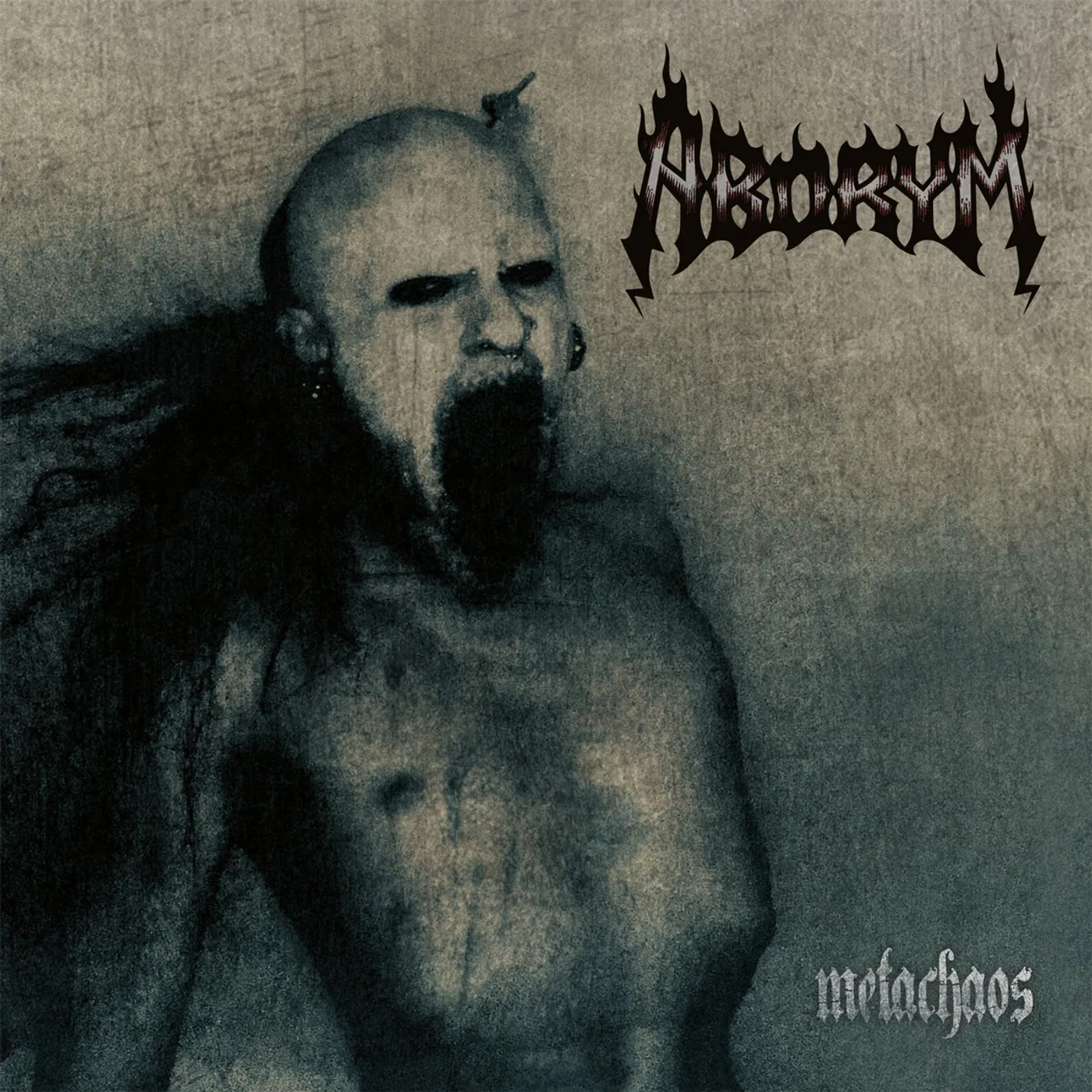
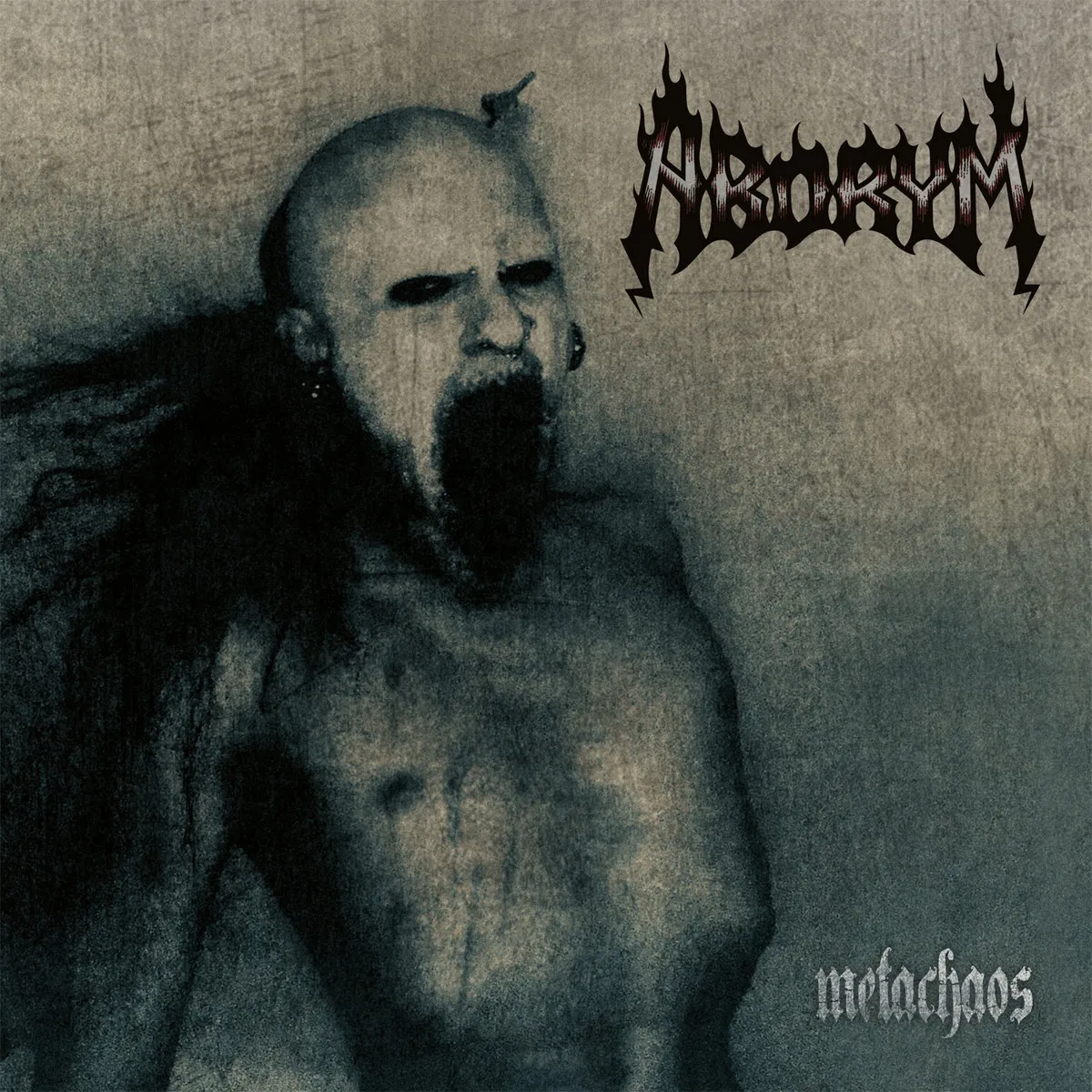
The sleeve refuses the theatre. A washed out green grey photograph, a bare chested figure with black smeared across the eyes and mouth, the mouth open and blurring into the smear. No fog, no forest, no staging. For a band whose visual history runs through latex and provocation, a portrait that looks like a hospital photograph is a harder image than another ritual tableau would have been.
Nine albums in and the thing Aborym still do better than most is refuse to sound comfortable. What they have not solved is the middle of a record, and no guest list fixes that.
So, plainly, because a review that makes you guess has failed at its job: this is worth your time, with caveats. It is at its best where it drops out and comes back, “Creatures of the Night” and “The Afterlife” are the two to put in front of somebody who has never heard the band, and the caveat is the four track stretch in the middle where nothing moves.
The loudness here is not a matter of taste, it is a number: eight of the nine tracks land within seven tenths of a decibel of one another, sitting close enough to the ceiling that the peaks stay barely eleven decibels clear of the average right across the album. By the usual yardstick that is a brickwalled master. The album is saved from inertness by what the arrangements do underneath it, and the two tracks that drop out and rebuild, rather than pushing continuously, stand four to five times further apart at their extremes than their neighbours do. Three pieces in the second third barely vary at all by that measure, which is where the running order sags. The closing piece obeys none of the album’s rules: it sits far lower in level, its centre of gravity falls to under half the record’s average, it carries over a third of its energy in the bass and almost none above five kilohertz. On the numbers alone it is a different recording attached to the end of this one.
Standout tracks: Creatures of the Night, The Afterlife, Voci Notturne