Interview · 31 October 2026
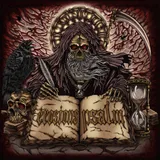
Two festival organisers start a record label and immediately rule out the thing every new label does first. No roster, no signings, no band to build around. Space Goat Records puts out limited splits and nothing else, and the first one, pairing Erosions with Psalm, runs to a hundred and sixty copies. Sean Brooks and Jason Doome answered six questions about why that is the plan, what a record does that a festival bill cannot, and what success would look like in two years. The most interesting answer is the one they apologised for: asked what gets lost when American regional music travels to European readers, they refused the question.
You both already put on festivals. What does releasing records let you do that booking a bill does not? From outside the two look like the same job, curating people onto one stage either way, and I suspect they feel nothing alike.
Jason: It allows us to reach more people, man. Plain and simple, really. The amount of people that are gonna hold our record in their hands is way more people that are gonna be able to come to our fests. Because logistically speaking, people, you know, from God knows who or where or in what country that would love to come to a show can’t necessarily come to our fests. In this way, with the music that we love and that we believe in, we can get this into the hands of a lot more people.
Sean: I agree and it’s really the difference is for me one you’re creating an experience, you know, the show itself which is amazing and we both love that, but the other but but creating a record is more a permanent thing. It’s like a tangible, permanent record of these two bands and where they were in a certain place in time and we’re capturing that. So it’s different. I just wanna experience a show while it happens, but a record I get to experience over and over again and I think that’s for me the big difference.
Splits only, and limited runs. That rules out what most new labels do first, which is sign one band and build around them. What is the thinking behind it? And is the limitation a principle or a budget?
Sean: Let’s answer the second part of that first. I’ve thought a lot about this. And our release is limited to just a hundred and sixty records the first time and that is probably budget related in a lot of ways. But we also wanna create a collector’s item in a way right out of the gate.
Jason: I totally agree, man. and you know, and and for one thing, just the hundred and sixty records just felt right, man, because we didn’t wanna, you know, shoot our whole load on the first thing and have you know, basically a dud have you know, what if the songs came out bad, man, and we had, you know, three hundred records that we’re sitting on, man, you know, so I think part of it was just being cautious on the first run and being realistic as to what we could sell with our limited reach at the at the time.
Sean: So ‘cause we decided we weren’t gonna sign bands in a traditional way. We really aren’t signing bands.
Jason: No, no. I think it just gives us flexibility, man. You know, it’s not it’s not putting us under the weight of having signed bands and having to cater to that band for this particular amount of time. and it also gives leeway for the bands themselves because then they’re not anchored down to a label that they feel pressured that they have to make music for. And so it’s just really kind of loosey goosey, man. And it’s like it’s really it is our label is for the bands. It really is. And being able to just ask some bands and if they dig the idea and go, hey man, yeah, we’ll contribute some songs and yeah, we get some vinyl out of it, everybody’s happy.
The model as I understand it is bands from different US regions on one record. What does a listener get from that pairing that two separate EPs would not give them? And when you choose the two, are you matching sound or matching scene?
Sean: I think what that really gives the listener is a built in variety of sound for one thing. You’re getting two bands for the price of one, but it’s also important to us that the bands that we put on our splits don’t sound exactly the same and you get a variety of heavy music, like there’s a lot of nuance to the underground rock scene and we wanna show people that and I think one of the easiest ways to show it is back to back, just flipping a record. It’s like, “Hey, this is a heavy band, this is a doomy band from St. Louis or from down in Illinois, and then man, check this out.” Flip the album over. And now you can hear this doomy band with a few different influences from Las Vegas. So not only are they influenced by different bands, but they’re influenced by a different region where they live. And you can hear the similarities and the differences. And we think that’s something that we’re interested in giving listeners.
Jason: I think the whole concept of the split EP was from back in the day when you buy a seven inch, like the Nirvana Jesus Lizard split, seven inch. you’re getting two bands, you know, and granted this is a seven inch, so you know, you’re spending four bucks, you get two bands, and you get to test these bands out and and hear on vinyl and see what they’re like. And that was before streaming. You know, yes, you can get it on streaming. I personally hold off until I get my record to listen to it. But you know, I think the whole concept behind the split EP is like what you said, man. You’re getting two bands for the price of one. And the whole different regions things, man, it’s fantastic because they’re gonna have different influences from different parts of the region. You know, they might have a couple bands in common that might influence them because everybody does. But, you know, like with Erosions, you can hear southern flare in there. And they’re from Southern Illinois. So, you know, you’re getting two completely different bands with two completely different sounds, with different environmental influences.
Sean: Yeah, they’re different ages. They’re like one band, Erosions, is guys in their fifties and Psalm are like kids in their like twenties and you know, those are the kind of contrasts we want to show because we think that the scene in the United States and in Europe is really like dynamic and and flush with different personalities and influences and and people of different races and ages and we think we can celebrate that, and this is our way of trying to do that.
Jason: Yep, absolutely, man.
Why Erosions and Psalm to open with, and did either of them need convincing?
Jason: I think both of us wanted to go for some relatively unknown bands. to introduce, you know, ‘cause what’s the whole point of if we put out an EP of bands that everybody knows about already? you know, that’s what their record labels are for. You know, but to grab some of these more underground bands like Erosions, but had a much smaller crowd than some following them, so the combination of wanting an unfamiliar band that you’re excited about that you are looking forward to introducing other people to; because you like them that much and you believe in them. And so, you know, in Erosions man, they just struck a chord and you know, to be honest, I kind of wondered what we’re gonna get from these guys.
Sean: I heard Psalm’s early recordings. I knew Ian the drummer for a couple of years. I saw him out in Las Vegas with Sonolith and we just got along really well and and you know, part of it part of the thing with this scene is it is personal because it’s small and you get to know people. And so I think so for Jason and I, for Psalm and Erosions, not only was there a musical element that we both believed in on these bands, and we wanted to see what they could do and they’ve really pushed it beyond what either one of us was expecting. We’re so happy. But but what we liked about these bands was that we liked the guys in these bands.
I mean neither band was calculated move, they were gut feelings.
Jason: One hundred percent gut feeling, for sure. It just felt right.
Sean: Yeah. And as far as convincing the bands, like short answers no.
A label run by two people who already run festivals has a lot of unpaid evenings. What does success look like for Space Goat in two years, and what would make you stop?
Sean: So for me and and I thought about this after I read this question this afternoon, I was like, in two years what I would like for Space Goat Records, where I’d like us to be, was I’d like to be have established a trust in our audience and when we can confidently put out split records that we know we can sell between three and five hundred copies of based on our ability to find bands that people enjoy listening to and Space Goat Records developing a relationship with its audience, and that audience believes in us. And for me, at that point we could start subscription services where people would order our albums in advance, maybe without necessarily knowing who’s gonna be doing the next record.
Like, I’d be really like if we could be there in two years doing that, like it’s still not even about the money at that point, but it’s about being trusted by our our audience and by people knowing that our ears are good and our hearts are in the right place and we’re introducing you to bands that deserve to be heard.
Jason: I like it. Yeah. I I mean pretty much that’s pretty much what I was thinking is you know, to be able to do three to five hundred pressings and knowing that we’re gonna sell them. So, you know, having the trust of the audience and people looking at us going, Man, these guys are putting out nothing but bangers. So I know the next one’s gonna be good. And sustainability, to the point where we can do this and and we’re you know, we’re selling enough records that we can just roll that back into the next record and continue to do that.
Most of our readers are in Europe and will never stand in a room in Freeport or Las Vegas. Is there anything about the American regional underground that gets lost in translation when it travels as a record, and is that something you think about when you pair bands?
Sean and Jason: We didn’t feel like we had a good answer to this question. Neither one of us really looks at our scene and divides it into american and european scenes. We see us all as one. We just hear rock bands, whether they be from the US or Mexico or Sweden or Tunisia. Rock is a universal language and we are glad people from all over the world speak it. We don’t want to only focus on US bands and we plan to add bands from all over the world to our list of splits in the future.
Photos: Andrea Thomas-Brooks