 Bandcamp
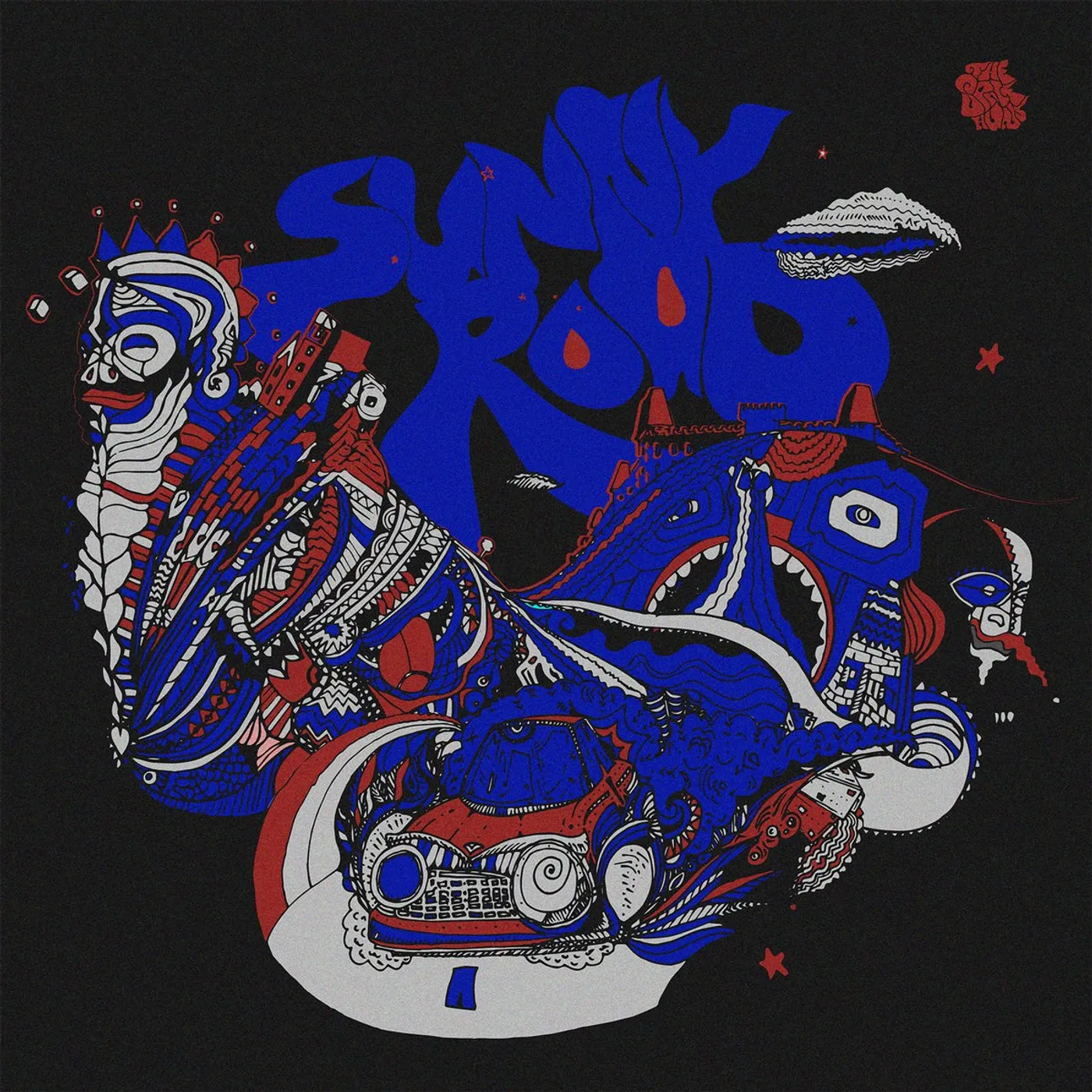
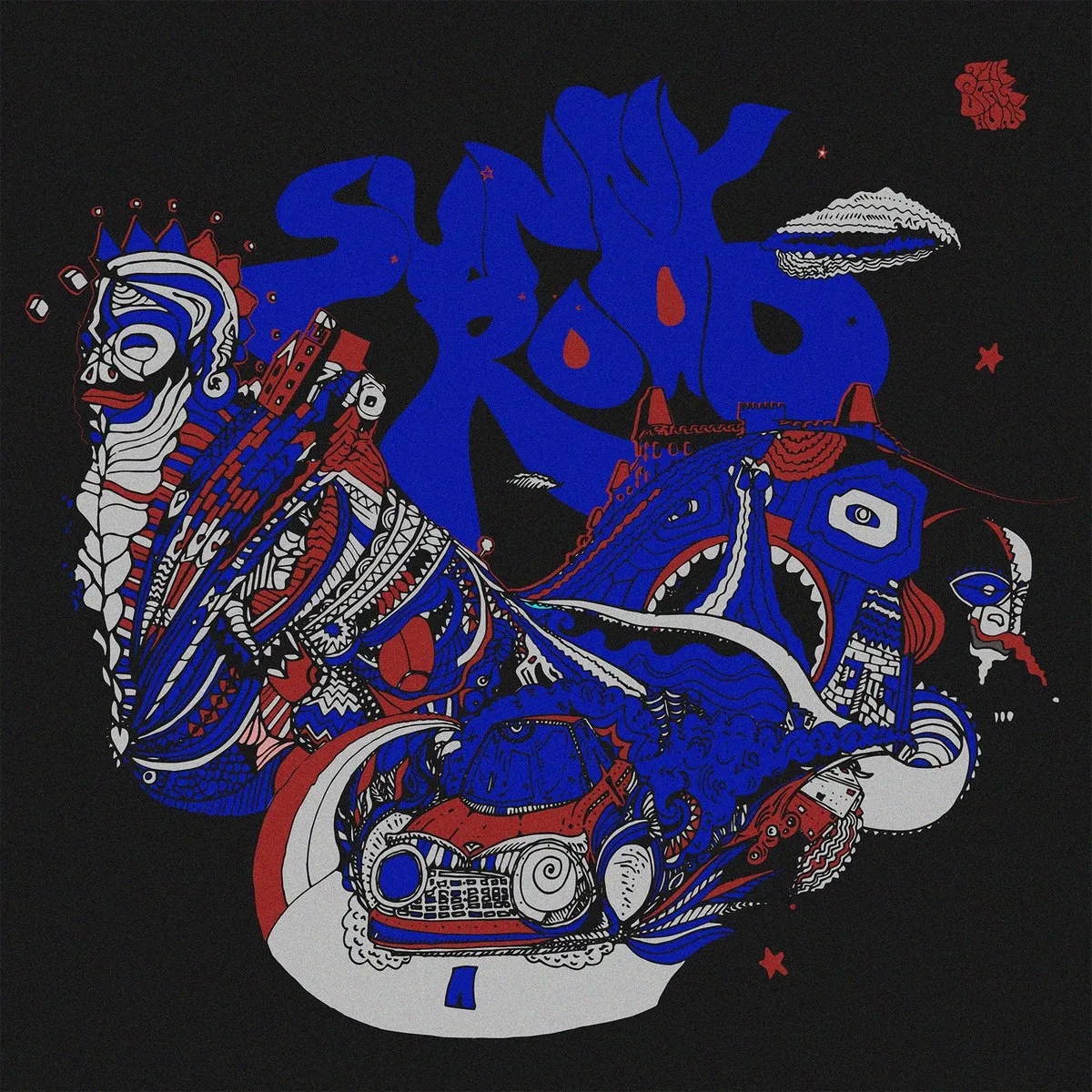
 The Space Huns are a Hungarian instrumental stoner trio — Csaba Szőke on guitar, Tamás Tikvicki on bass, Róbert Torma on drums — who have spent the last several years working a particular cross between psychedelic jam-band looseness and stoner-rock weight. Sunny Road, released May 21 on Minimal Bogart Records, is the new LP and the kind of record that announces its own approach in the band’s own framing: “took a trip to the Sunny Road and recorded some improvised stuff. Let them be the Sun, let them be the Road. Just Space Huns jammin’ the stoner blues on a distant ranch.”
The record’s other notable framing — and one that’s appearing more often in 2026 promo materials — is the explicit declaration in the credits: “No AI generated thing here on any level.” For a band whose work is built around improvised three-musician jams, that’s the right thing to say up front; the listener can take Sunny Road as a document of three players working a room together, with the consequent payoffs and trade-offs of that approach.
Six Jams
The album’s track names sketch out the Eastern-philosophy frame the band invoke (the credits quote Tao Te Ching Chapter 22): “The Nature of Water” at nine and fifty-seven minutes, “Tumble Weed” at nine, “Mr. Paddle and an Endless Tomorrow” at six and thirty-eight, “Mother Earth is Pregnant for the 3rd Time” at five, “Hazey Days” at eight and forty-two, “The Alchemist” at three and fifty-five. The two longer pieces opening the album set the band’s vocabulary — hypnotic mid-tempo riffs, warm fuzz saturation, drums that follow the jam rather than enforce a grid, bass that holds the foundation without trying to lead.
“The Nature of Water” opens the record in patient, almost trance-mode jam-rock territory, with the guitars carrying mid-saturated warmth and the drums leaning live-room organic. The cut accumulates rather than develops, which is the genre’s point. “Tumble Weed” at nine minutes works similar territory but pulls slightly tighter, with the rhythm-section interplay at its most locked-in. “Mr. Paddle and an Endless Tomorrow” is the album’s most compact piece and the closest the band gets to a tight rock-song shape; “Mother Earth is Pregnant for the 3rd Time” stays in five-minute jam mode with a more atmospheric register. “Hazey Days” at almost nine minutes is the album’s most fully realised long-form construction, with the band’s improvised approach landing tightest. “The Alchemist” closes the album in compact form at under four minutes — the shortest cut on the record and the one that signals the band can edit when they want to.
The Production Frame
The Rossz Records production (recording, mix, master all handled in-house) sits in the genre’s standing lo-fi-leaning territory: warm-but-soft mid-saturated guitars, prominent slightly-brummige bass, organic live-room drums without modern click processing, deliberate reverb-heavy spatial atmosphere on several tracks. There’s no brick-walled mastering chase, no triggered drum sounds, no surgical instrument separation. What you hear is what the three musicians played together at Rossz Records, with the production decisions made in service of the band’s improvised approach rather than against it.
The cost of that approach is the genre’s familiar one. The reverb-heavy passages on Sunny Road sometimes blur the rhythm-section presence; the bass-heavy low-mid stacking limits string definition on the densest passages; the kick-drum click is consistently understated in service of the room sound. None of that breaks the record for the corner of stoner-blues the band work in. Sunny Road is the kind of jam-band-instrumental album where the trade-offs are intentional and the result rewards a specific kind of patient listening.
Six tracks across forty-three minutes, recorded, mixed and mastered at Rossz Records by the band’s own team. Mix philosophy is consistently lo-fi-leaning across the album: warm mid-saturated guitars without sharp digital edges, prominent and slightly brummige bass, organic live-room drums with understated kick click and dry-ish snare body, reverb-heavy spatial atmosphere on multiple tracks. No vocals — the entire album is instrumental, and the melodic lead guitar carries the narrative role throughout. Dynamic argument works at the song-structure level rather than within sustained passages; the band rely on accumulation through riff-repetition rather than on traditional loud-quiet contrasts. Frequency stacking in the low-mids (where bass and rhythm guitar overlap) is the standing production trade-off and limits string definition on the densest passages. Mastering loudness is restrained — the album avoids the brick-walled compression of modern stoner-rock production and leaves the dynamic argument intact, which is the right call for the improvised three-piece-jam approach the album commits to.
Standout tracks: Hazey Days for the eight-and-a-half-minute long-form construction where the band’s improvised approach lands tightest. Tumble Weed for the rhythm-section interplay at its most locked-in. The Nature of Water for the patient nine-minute opener that establishes the album’s hypnotic jam vocabulary.
Worth your time if you appreciate Hungarian instrumental stoner-blues that commits fully to the improvised three-piece approach and doesn’t try to dress up the lo-fi production as something it isn’t. Sunny Road is the kind of jam-band record where the trade-offs are part of the project’s identity, and the band’s “no AI” declaration in the credits is a fitting summary of what the album asks the listener to value.