 Bandcamp
 There is a line in “Echoes Of Quiet Remain” where the language shifts from English to Dutch without warning. “Troosteloos en ongeborgen blijf ik achter,” Aaron Stainthorpe of My Dying Bride sings, or someone sings alongside him: inconsolable and unsheltered, I remain behind. The switch is not a stylistic choice. It is what grief sounds like when one language runs out of words.
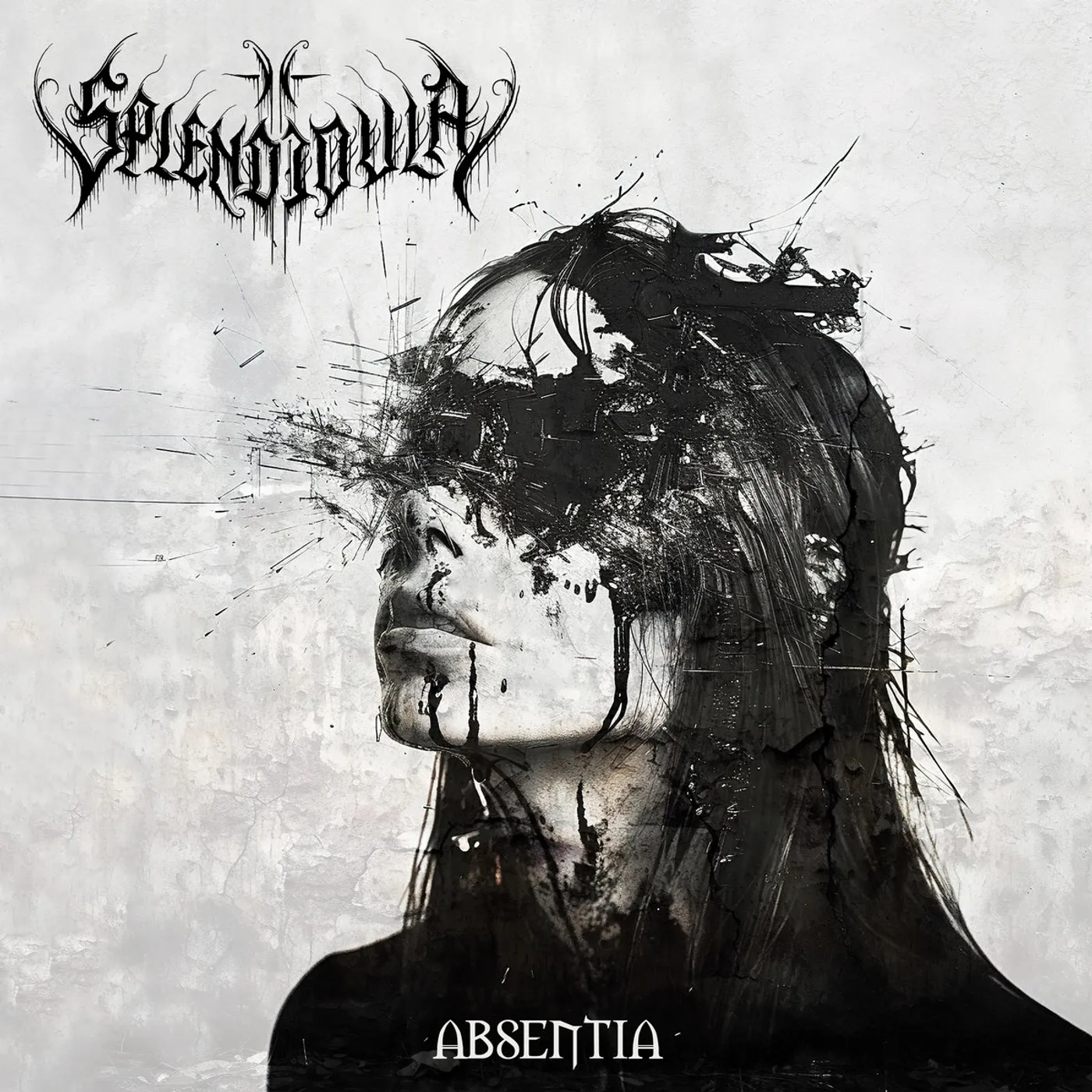
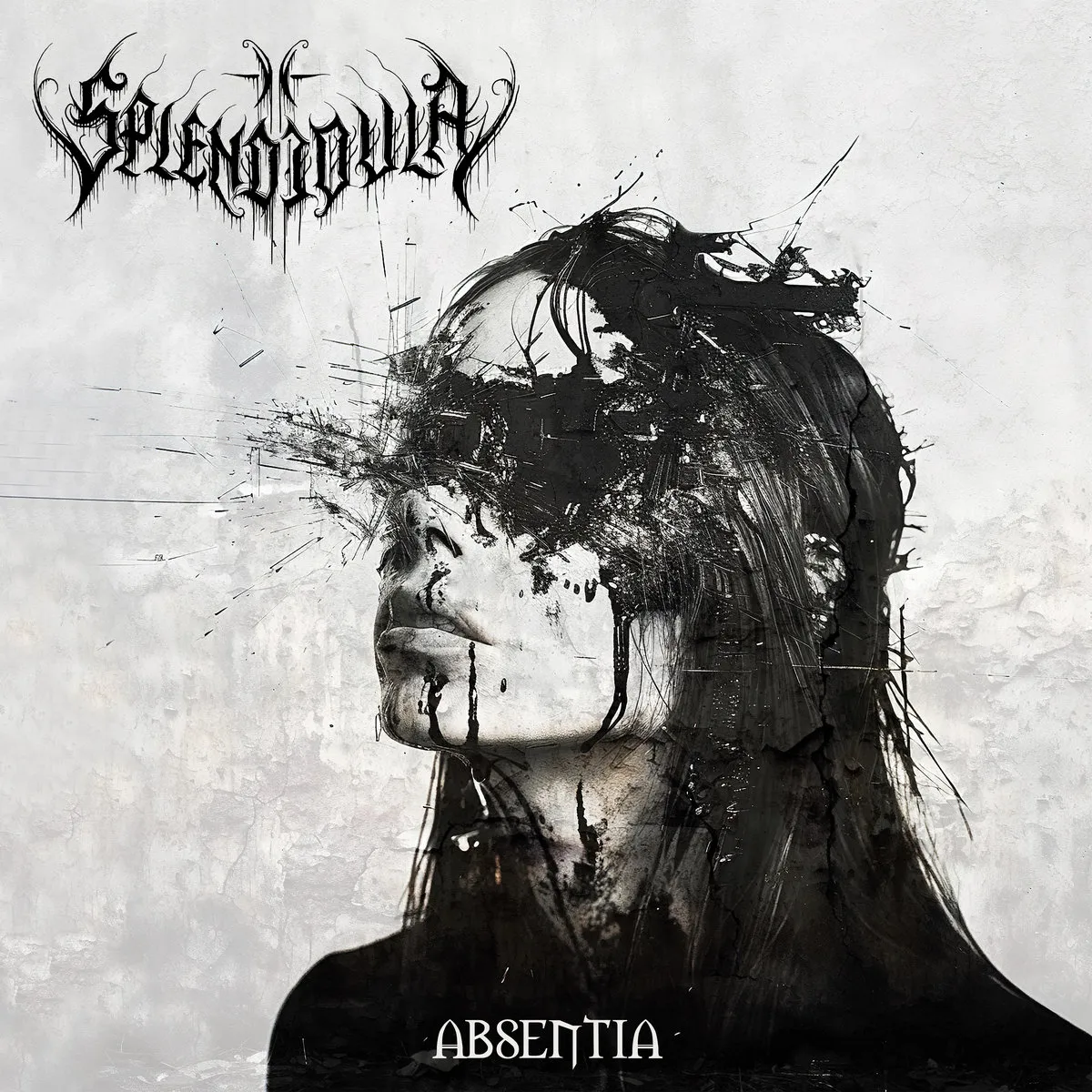
Absentia is Splendidula’s fourth album and their first since the death of bassist Peter Chromiak in 2022. That loss shapes everything here. The band, based in Temse, Belgium, have always worked in the space between atmospheric black metal and doom, but previous records kept their distance from the raw nerve. This one does not. Six tracks, two guest vocalists with decades of experience in the sound of loss, and a lyrical arc that moves from paralysis to a reluctant, exhausted acceptance.
The title track opens with Tim Yatras of Austere and Germ, whose contribution adds a DSBM edge to the atmospheric framework. “Demon, please leave my mind / Delusional fight / Beaten, feel so traumatised.” The music drives mid-paced with a brightness in the upper mid-range that keeps the wall of distortion from collapsing into murk. The production by JDB at Kosmik Womb is ambitious but not always successful. Tim De Gieter’s mix struggles with frequency stacking in the denser passages, where the layered guitars and the deep female vocals compete for the same spectral space. The vocals in particular never quite find their seat in the mix, sitting too far forward in some sections and swallowed by the distortion in others. When the arrangement thins out, the sound opens up and the individual elements breathe. When everything hits at once, it gets crowded.
“Echoes Of Quiet Remain” is the album’s longest track and its most ambitious. Stainthorpe’s presence transforms it into something that could sit on a My Dying Bride record without sounding borrowed. The Dutch verses are not translations of the English ones but a parallel text, a second grief running alongside the first. “Waar ik de woede die ik voel ooit kan begraven” — where I might someday bury the anger I feel. The two languages create a stereo effect that is emotional rather than spatial: the same wound seen from two distances.
The album’s second half is entirely in Dutch. “Donkerte” (darkness), “Dalkuldar,” and “Kilte” (coldness) strip the language back to essentials. “Dalkuldar” runs on barely three lines: “Dood en vrij / Neem me mee naar een andere tijd / Voor altijd.” Dead and free. Take me to another time. Forever. The minimalism is brutal in context. After the density of the first three tracks, these songs feel like someone who has run out of the energy to explain.
“Let It Come To An End” closes in English, circling back to the opening language with a directness that the Dutch passages had approached from oblique angles. “Break my chains / the hold that binds me evermore / fleeting existence / the velvet caress of death’s embrace.” It is not subtle, and it does not need to be. The album earns its final line: “The end is coming near.”
The mix is bright and driving, with pronounced energy in the upper mid-range that gives the tremolo guitars a cutting presence. The distortion is raw and dense, and when the arrangement is sparse, the sound works well. The problem surfaces in the fuller passages: the frequency stacking between guitars, bass, and the deep female vocals creates a congestion in the low-to-mid range that the mix does not fully resolve. The vocals need more carved-out space to sit properly, and they do not consistently get it. Alan Douches’s mastering pushes the loudness to typical modern metal levels, which compounds the issue in the denser sections by reducing the headroom that could have given the mix air. The drum patterns maintain an energetic pulse, and the harmonic complexity is high, reflecting the layered guitar work. When it works, it works well. It does not always work.
Standout tracks: “Echoes Of Quiet Remain” for the bilingual grief architecture and Stainthorpe’s presence. “Kilte” for the most emotionally direct songwriting on the record, where the Flemish language carries more weight than the distortion. “Let It Come To An End” because it closes the circle with an exhaustion that feels earned rather than performed.
“This is our pain,” the album description reads, and Absentia makes no attempt to universalize it or make it palatable. Splendidula have made a record about a specific loss that sounds like a specific loss, and the refusal to abstract it into something more comfortable is what makes it land. A tighter mix would have made it devastating. As it stands, the emotional weight outpaces the production, which is both the album’s limitation and, in a strange way, its honesty. Grief is not well-mixed either.