 Bandcamp
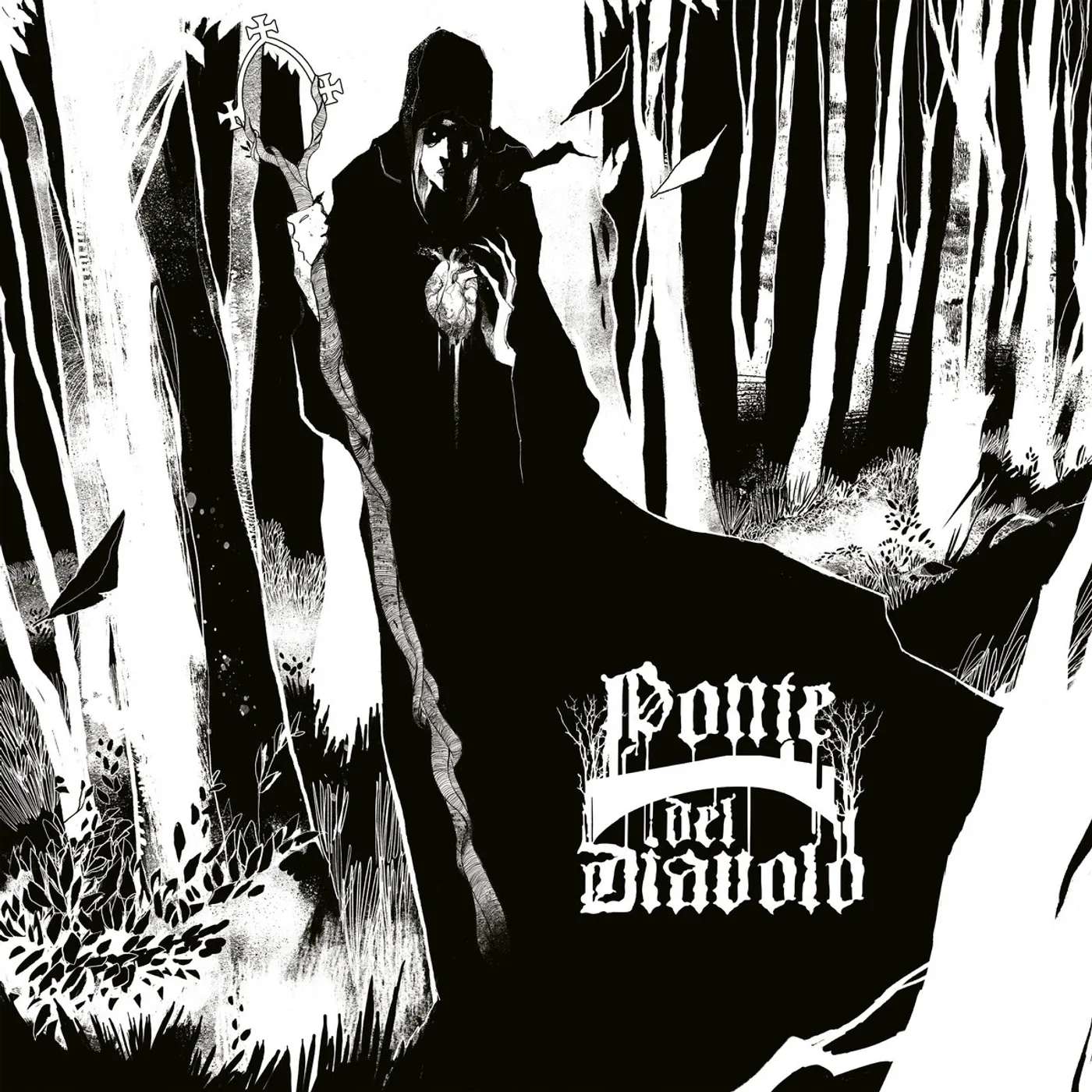
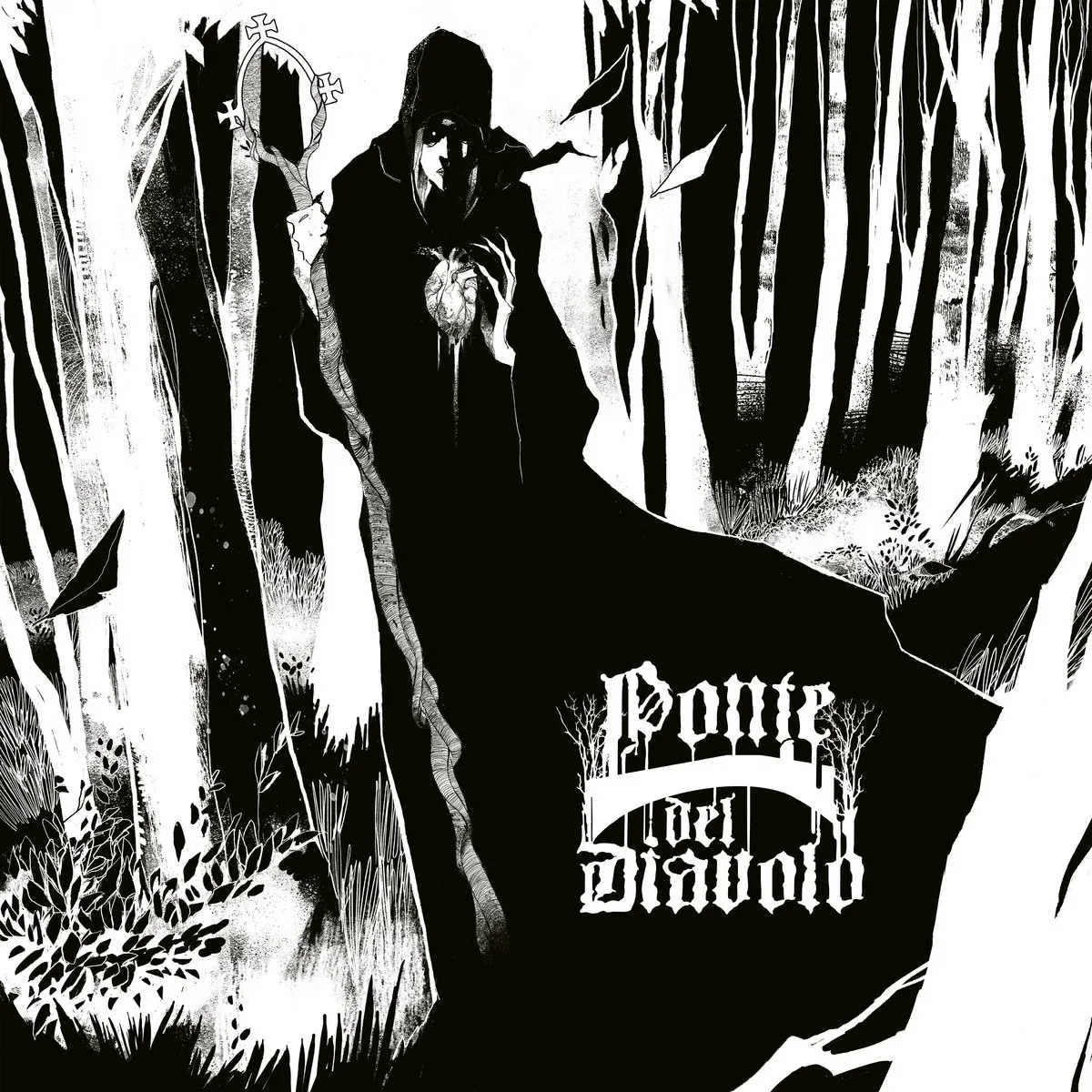
 The lineup tells you everything: Erba del Diavolo on vocals, Khrura Abro and Kratom on bass, Nerium on guitar, Segale Cornuta on drums. Two basses. One guitar. No second guitarist, no keyboards, no samples. The names are all botanical poisons. The band is called Devil’s Bridge. De Venom Natura, an alchemical meditation on the poisons of nature, is their debut on Season of Mist, and it sounds exactly like a band that chose to double down on low end rather than harmony.
The dual-bass setup creates a frequency landscape that most metal records cannot access. One bass holds the root, the other moves, and the result is a low-end density that makes the single guitar sound larger than it is. Nerium’s guitar work operates in the mid-to-upper range with a bright, cutting distortion, while the two basses fill everything below. The tempo sits fast for post-punk, aggressive for doom, and the band lives exactly in that gap.
“Every Tongue Has Its Thorns” opens with a statement that doubles as thesis: “This is the only way to realize / Life is perpetual death / And death teems with life.” The lyrics alternate between English and Italian across the album, the language switching not as decoration but as necessity. “Lunga vita alla necrosi” — long live necrosis — is entirely in Italian, its imagery of skulls cracking open to let the sun in rendered in the band’s mother tongue with a venom that translation would dilute.
“Il veleno della Natura” is the album’s most beautiful track and its most unsettling. “Io mi voglio avvelenare / Col piu soffice dei baci” — I want to poison myself with the softest of kisses. The Bauhaus influence that runs through the record surfaces most clearly here, the vocal delivery theatrical without becoming camp, the dual basses creating a warmth underneath that contradicts the lyrics. The closing “In the Flat Field” makes the Bauhaus connection explicit: a cover that earns its place by transforming the original through the band’s own instrumentation.
“Delta-9 (161)” is eight and a half minutes of the album’s most experimental writing. The lyrics are the chemical formula for THC repeated as incantation: “Delta-9 C21 H30 O2 / Getdown in reverse.” The track builds through hypnotic repetition into something genuinely psychedelic, the two basses creating a drone underneath that Nerium’s guitar cuts through like a blade. “161 the congregation of the Ethernal” repeats as the track ascends.
Danilo Battocchio recorded and mixed at The Deepest Sea in Turin, and the choice to record live gives the album a tension that overdubbed sessions would have smoothed away. Magnus Lindberg’s mastering at Redmount Studios keeps the rawness intact while giving the low end the definition that a dual-bass band requires.
The production is bright and aggressive, with the single guitar occupying the upper mid-range while the dual basses fill the low and low-mid frequencies with unusual density. The tempo is fast and driving throughout. The distortion is raw and textured, with high harmonic complexity reflecting the interplay between the two bass lines and the guitar. The live recording approach gives the sound a room quality that studio isolation would not achieve. The vocal placement sits within the mix rather than above it, theatrical but integrated.
Standout tracks: “Il veleno della Natura” for the most seductive songwriting on the record, where poison and beauty become indistinguishable. “Delta-9 (161)” for the eight-minute psychedelic ascent built on chemical formulas and repetition. “Every Tongue Has Its Thorns” because the opening thesis earns everything that follows.
Ponte del Diavolo emerged from Turin’s underground in 2020 from members of Feralia, Inchiuvatu, Abjura, and Askesis. De Venom Natura is the kind of debut that makes you wonder what took so long. Two basses, one guitar, botanical pseudonyms, a Bauhaus cover, and lyrics about poison in two languages. Nothing about it should work as well as it does. Everything about it works.